

Launching a new digital presence is a pivotal moment for any business, yet the path forward is often clouded by technical jargon and conflicting advice. Among the most frequent dilemmas entrepreneurs face is the debate surrounding WordPress vs. Custom-Built Websites. While WordPress dominates the market with its accessibility and vast ecosystem, custom development promises unparalleled flexibility and performance. Determining which route aligns with your specific goals requires more than just comparing price tags; it demands a deep understanding of functionality, scalability, and long-term maintenance.
Understanding the Core Differences Between WordPress and Custom-Built Websites
To make an informed decision, you must first grasp the fundamental distinctions between these two approaches. At its heart, WordPress is a Content Management System (CMS) built on PHP and MySQL. It provides a pre-structured framework where you install themes for design and plugins for functionality. This modular approach allows non-technical users to build and manage websites efficiently. Conversely, a custom-built website involves writing code from scratch using languages like HTML, CSS, JavaScript, and various backend frameworks. Every element is tailored specifically to your requirements, resulting in a unique architecture that does not rely on third-party templates or generic plugins.
The implications of this difference extend far beyond the initial build. With WordPress, you inherit the strengths and limitations of the platform. You benefit from a massive community and thousands of resources, but you also share the same underlying codebase as millions of other sites. A custom solution, however, offers complete ownership. You dictate the technology stack, ensuring that every line of code serves a purpose. Consequently, the choice often boils down to a trade-off between convenience and control. If you prioritize speed-to-market and ease of use, WordPress may be your ally. If you require bespoke functionality and granular performance tuning, custom development stands out as the superior option.
When WordPress Shines: Speed, Cost, and Content Management
Despite the allure of custom code, WordPress remains the engine behind over 40% of all websites on the internet. There are compelling reasons why this platform continues to thrive, particularly for small to medium-sized businesses, bloggers, and content-heavy organizations. Understanding these strengths helps clarify when WordPress is the right tool for the job.
Rapid Deployment and Budget Efficiency
One of the most significant advantages of WordPress is its ability to get you online quickly. Thanks to pre-designed themes and ready-made plugins, you can launch a functional site in days rather than months. This rapid deployment translates directly into cost savings. Custom development requires hiring specialized developers, designers, and testers, which significantly increases the upfront investment. For startups operating on tight budgets, WordPress offers a professional-looking foundation without the heavy financial burden associated with bespoke engineering.
- Lower Initial Costs: You only pay for hosting, a domain, and potentially premium themes or plugins.
- Faster Time-to-Market: Launch your MVP (Minimum Viable Product) rapidly to test market validation.
- Extensive Ecosystem: Access thousands of free and paid resources that solve common problems instantly.
User-Friendly Content Management
For teams that update their website regularly, WordPress provides an intuitive interface that empowers non-technical staff to manage content effortlessly. The visual editor allows you to publish blog posts, upload media, and adjust page layouts without touching a single line of code. This democratization of content management ensures that your marketing team can maintain momentum without waiting for a developer to implement minor changes. Furthermore, robust SEO plugins like Yoast or RankMath simplify optimization tasks, making it easier to rank well in search engines even if you lack deep technical expertise.
The Hidden Costs: Maintenance, Security, and Scalability Concerns
While WordPress offers undeniable benefits, relying on a DIY approach can sometimes lead to unexpected challenges. As your business grows, the limitations of a generic CMS may begin to surface, causing friction that hinders progress. Recognizing these pain points early is crucial for avoiding costly pitfalls.
Security Vulnerabilities and Plugin Bloat
Because WordPress is open-source and widely used, it becomes a prime target for malicious actors. Hackers frequently scan for known vulnerabilities in outdated core software, themes, or plugins. Moreover, the reliance on multiple plugins can introduce “bloat”—excessive code that slows down your site and creates conflict points. Each plugin adds another layer of complexity and potential risk. If you neglect regular updates, your site becomes vulnerable to breaches that could damage your reputation and result in data loss. DIY website owners often underestimate the time required to monitor security, apply patches, and troubleshoot plugin incompatibilities.
Performance Limitations at Scale
As traffic increases, WordPress sites can struggle to maintain optimal performance without significant optimization efforts. Generic databases and inefficient query structures within certain themes may cause load times to spike during traffic surges. While caching solutions and managed hosting can mitigate these issues, they often come with additional costs. In contrast, a custom-built website can be engineered for efficiency from the ground up, utilizing advanced database indexing and optimized server configurations. If your business model relies on handling high volumes of concurrent users or complex transactions, the performance ceiling of WordPress might eventually constrain your growth.
Custom-Built Sites: Flexibility, Performance, and Unique Functionality
When your business requirements exceed the capabilities of standard CMS features, custom development becomes the logical choice. This approach is ideal for companies seeking to differentiate themselves through unique user experiences or those building complex web applications.
Tailored Functionality and Seamless Integrations
A custom website allows you to build exactly what you need, nothing more and nothing less. Whether you require a sophisticated booking system, a custom CRM integration, or a proprietary algorithm, developers can craft solutions that fit your workflow perfectly. This level of customization ensures that your website acts as a powerful business tool rather than just a digital brochure. Additionally, custom APIs enable seamless communication between your website and third-party services, streamlining operations and enhancing the user experience.
Superior Performance and Security Baseline
By eliminating unnecessary code and focusing only on essential features, custom websites typically load faster and consume fewer server resources. This lean architecture not only improves user satisfaction but also positively impacts search engine rankings, as page speed is a critical ranking factor. From a security perspective, custom sites offer “security through obscurity” combined with tailored protection measures. Since the code is unique to your project, automated bots cannot easily exploit common vulnerabilities found in popular platforms. Developers can implement rigorous authentication protocols and encryption standards specific to your data sensitivity requirements.
Decision Matrix: Which Path Fits Your Business Goals?
Choosing between WordPress and custom development ultimately depends on a holistic assessment of your current needs and future ambitions. To help you navigate this decision, consider the following checklist and scenarios.
Red Flags for DIY WordPress
You should reconsider a DIY WordPress approach if:
- Your project requires highly complex functionality that cannot be achieved with existing plugins.
- You anticipate rapid scaling with high traffic volumes that demand peak performance.
- You handle sensitive customer data and require enterprise-grade security controls.
- Your brand identity demands a completely unique design that templates cannot replicate.
Green Lights for Custom Development
Opt for custom development if:
- You have the budget and timeline to invest in a long-term, scalable asset.
- Your competitive advantage relies on unique software features or integrations.
- You want full ownership of the codebase without dependency on third-party providers.
- You need a website that can evolve alongside your business without being constrained by CMS limitations.
Additionally, remember that hybrid approaches exist. Some businesses start with WordPress to validate their idea and later migrate to a custom architecture as they grow. Others use headless WordPress, where the backend manages content while a custom frontend delivers the experience. Evaluating your roadmap carefully will help you select the strategy that minimizes disruption and maximizes ROI.
Conclusion: Making the Right Choice for Your Digital Presence
The debate between WordPress vs. Custom-Built Websites is not about declaring a universal winner; rather, it is about matching the right tool to your specific context. WordPress excels in providing an affordable, fast, and manageable solution for content-driven sites and small businesses. However, it can break under the weight of complexity, poor maintenance, or excessive scale. Custom-built websites offer unmatched flexibility, performance, and security, making them ideal for ambitious projects with distinct requirements and the resources to support them.
Your takeaway should be to align your technical choice with your business objectives. Ask yourself honest questions about your budget, technical capacity, and growth trajectory. If you value speed and simplicity, WordPress is a proven powerhouse. If you demand uniqueness and scalability, custom development is worth the investment. By understanding when DIY breaks and when it works, you can build a digital foundation that supports your success for years to come.
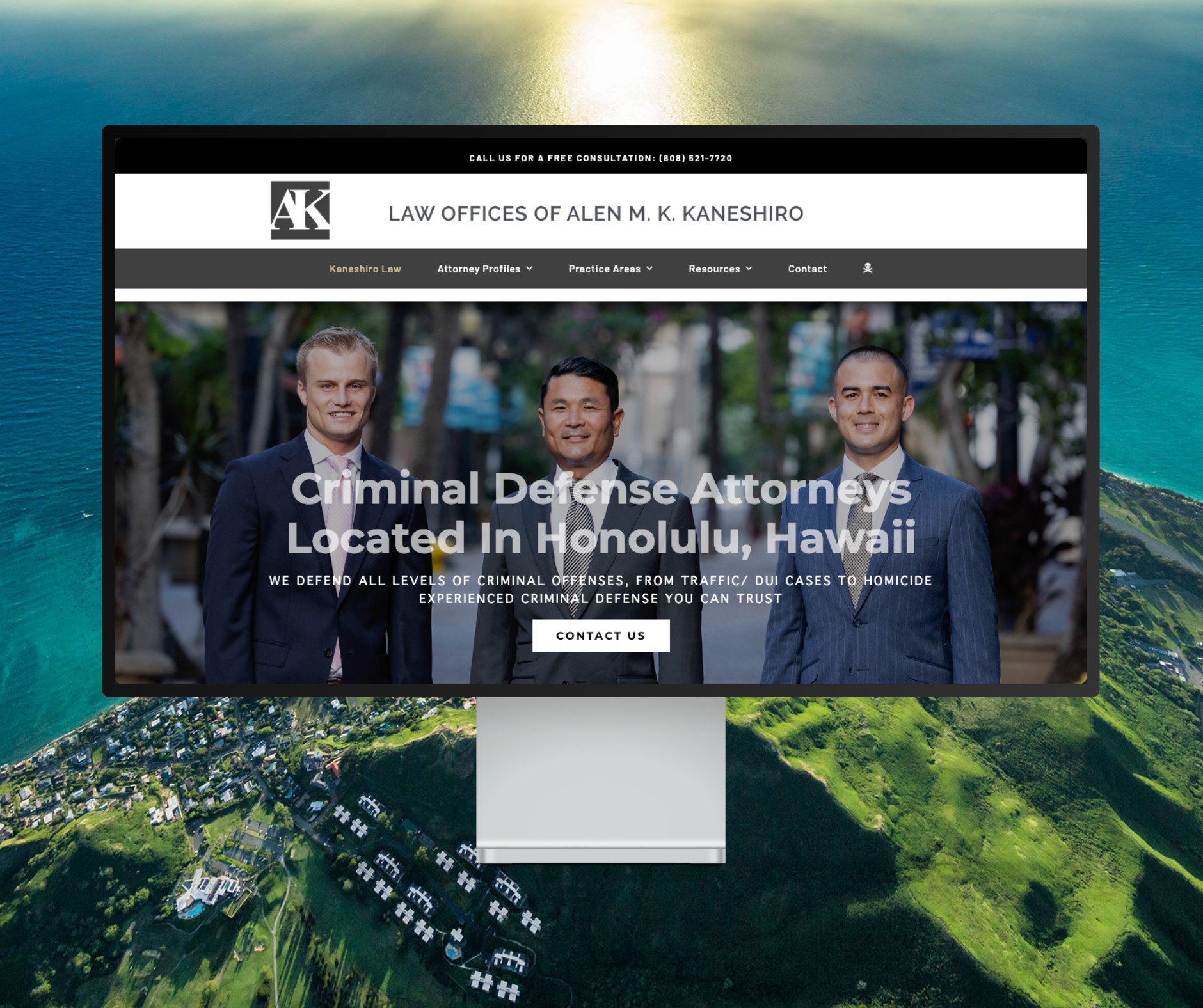
Featured Website: www.kaneshirolaw.com
Kaneshiro Law Firm, one of Hawaii’s most respected legal practices, partnered with The X Digital three years ago for a complete website redesign. Since then, we’ve maintained an ongoing relationship—handling updates, optimizations, and technical support around the clock. Our dedicated team ensures they’re never without assistance, while our enterprise-grade hosting provides 24/7 uptime monitoring and reliability. Kaneshiro Law Firm is one of many long-term clients who trust us to keep their digital presence running flawlessly.