
News

Google Ads Limited Serving Now Applies to Shopping Campaigns: What Changed
Google just quietly changed the rules for who gets to show Shopping ads—and most e-commerce advertisers didn't even know it happened. In August 2026, Google expanded its Limited Ad Serving policy from a narrow slice of Search and YouTube inventory to cover every Google Ads surface, including Shopping campaigns, Performance Max, Demand Gen, Gmail, the Play Store, and Discover. This isn't a policy violation you can fix by tweaking ad copy. It's an account-level throttle that can cut your impressions in half without disapproving a single ad or turning anything red in your interface. If you're running product ads

Navigating Google’s 2026 Policies: What Advertisers Must Know to Stay Compliant
For many small businesses, Google Ads is one of the fastest ways to generate calls, form submissions, bookings, and sales. It’s also a platform where a small compliance issue can turn into a disapproved ad, limited delivery, or—far worse—a suspended account. Navigating Google’s 2026 Policies requires more than checking a headline for prohibited words. Google increasingly evaluates the relationship between your ad, landing page, business identity, payment details, targeting, and overall customer experience. That matters whether you run a local service company, e-commerce store, healthcare business, tourism brand, or professional practice. In this guide, we’ll explain the most important

Google Ads Limited Serving Just Hit Display and Video: What Changed
In August 2026, Google quietly expanded one of its most misunderstood policies — and if you run Display or Video campaigns, you may have already felt the impact without knowing why. The Limited Ad Serving policy, which previously applied mainly to Search and YouTube, now covers every Google Ads product. That means Display, Performance Max, Demand Gen, Shopping, Gmail, Discover — everything. And unlike a policy violation that disapproves your ads, this one just makes them show less often, with no warning banner and no clear fix. If your impressions have dropped across Display or Video campaigns in recent

Understanding Google’s Enhanced AI Transparency Features for Ads
Google’s enhanced AI transparency features for ads are changing how advertisers and consumers understand AI-generated ads. As Google adds more automation to campaign creation, targeting, creative production, and optimization, businesses need to know what is being disclosed, where those disclosures appear, and what still remains the advertiser’s responsibility. The good news is that these updates aren’t designed to punish ordinary businesses for using AI. They’re intended to make advertising more understandable while preserving safeguards against misleading content. In this guide, we’ll explain Google’s latest AI transparency updates, how the “How this ad was made” panel works, what advertisers need

How to Choose the Right CMS for Your Business Needs
Choosing a content management system (CMS) is one of the most consequential decisions you'll make for your website. It affects how fast your site loads, how easily your team can publish content, what you'll pay each month, and whether you can grow without rebuilding from scratch. The stakes are real: approximately 70% of businesses report that their website directly impacts revenue growth, and around 43% of all websites globally run on a CMS-powered platform. Yet most business owners approach this decision without a clear framework—they pick what they've heard of, or what their developer recommends, without understanding their own

Google Ads Limited Serving Policy Expansion: What Happens When Your Account Loses Visibility
If your Google Ads impressions suddenly drop, your campaigns may not be “broken” in the usual sense. You may be seeing the effects of the Google Ads Limited Serving Policy Expansion—a shift toward evaluating advertiser trust, brand clarity, account maturity, and user experience before allowing ads to serve broadly. In 2026, this matters especially for newer accounts, generic lead-generation ads, reseller campaigns, affiliate-style landing pages, and ads that reference another company without clearly explaining the relationship. The confusing part is that limited serving usually isn’t the same as a suspension. Your ads may still show as eligible, your campaigns

Fixing Broken Website Links: A Small Business Guide to Boost SEO & User Trust
Fixing broken website links may seem like a minor maintenance task, but it can have a noticeable effect on your search visibility, conversions, and reputation. When a visitor clicks a link and lands on a 404 error page, they may assume your business is inactive, careless, or difficult to work with. Search engines also use links to discover and understand your website, so a site filled with dead ends can create unnecessary SEO problems. The good news is that you don’t need a large technical team to improve the situation. In this guide, we’ll explain what broken links are,

Optimizing E-commerce Product Pages for AI Search
Your customers have started asking a chatbot what to buy. "What's the best budget espresso machine under $200?" "Which running shoes are good for flat feet?" These aren't Google searches anymore — they're prompts typed into ChatGPT, Perplexity, or Gemini, and the answers come back with product recommendations, brand names, and sometimes a shopping carousel with prices attached. If your brand isn't in that answer, you're invisible to a growing slice of buyers who never scroll past the first response. That's the uncomfortable part. The encouraging part is that the fundamentals of solid e-commerce product pages still matter —

Why Every Local Business Needs a Mobile-First Website Strategy
For a local business, your website may be the first interaction a potential customer has with your company. Increasingly, that interaction happens on a phone while someone is searching from a driveway, a parking lot, or the next neighborhood over. That’s why a mobile-first website strategy is no longer a nice upgrade—it’s a practical requirement for being found, trusted, and contacted online. A mobile-first approach means designing and building your site around the small-screen experience first, then expanding it for tablets and desktops. In this guide, we’ll explain why mobile matters so much for local businesses, how it affects

Website Backups for Small Businesses: What to Back Up and How Often
Your website is one of your business’s most valuable assets—and one of the easiest to take for granted. A failed update, hacked plugin, hosting error, or accidental deletion can take your site offline in minutes. For a small business, that may mean missed calls, lost bookings, abandoned purchases, and a damaged reputation. That’s why website backups for small businesses aren’t an optional technical detail. They’re part of protecting your revenue. The good news is that you don’t need a complicated enterprise system to create a reliable backup plan. You need to know what to save, where to store it,

How to Prepare Your Website for the Rise of Voice Search in 2026
Voice search optimization is no longer just about getting a smart speaker to read your website aloud. In 2026, people are asking Google, Siri, Alexa, and AI assistants longer, more conversational questions—and expecting useful answers immediately. Google’s Search Live, launched in English in the United States in September 2025, lets people have interactive voice conversations with Search while sharing camera context. Google also says AI Mode surpassed one billion monthly users one year after launch, with queries more than doubling every quarter. ([blog.google](https://blog.google/products-and-platforms/products/search/search-live-tips/?utm_source=openai)) That shift matters whether you run a plumbing company, vacation rental business, medical practice, online store,

Google Ads Conversion Tracking Is Breaking in 2026: What to Fix Now
Google Ads conversion tracking is quietly breaking for thousands of advertisers in 2026, and most won't notice until the numbers stop making sense. Standard browser-based tracking now misses between 30 and 50 percent of actual conversions—not because your campaigns are failing, but because the infrastructure that connects clicks to customers has fundamentally changed. Ad blockers, iOS privacy restrictions, consent requirements, and Google's own platform consolidation have all converged at once, and if your tracking setup hasn't been audited in the last six months, you're almost certainly losing data. This article walks through what broke, why it matters, and the
Why AI Chatbots Miss Qualified Leads (And How to Train Yours to Actually Convert)
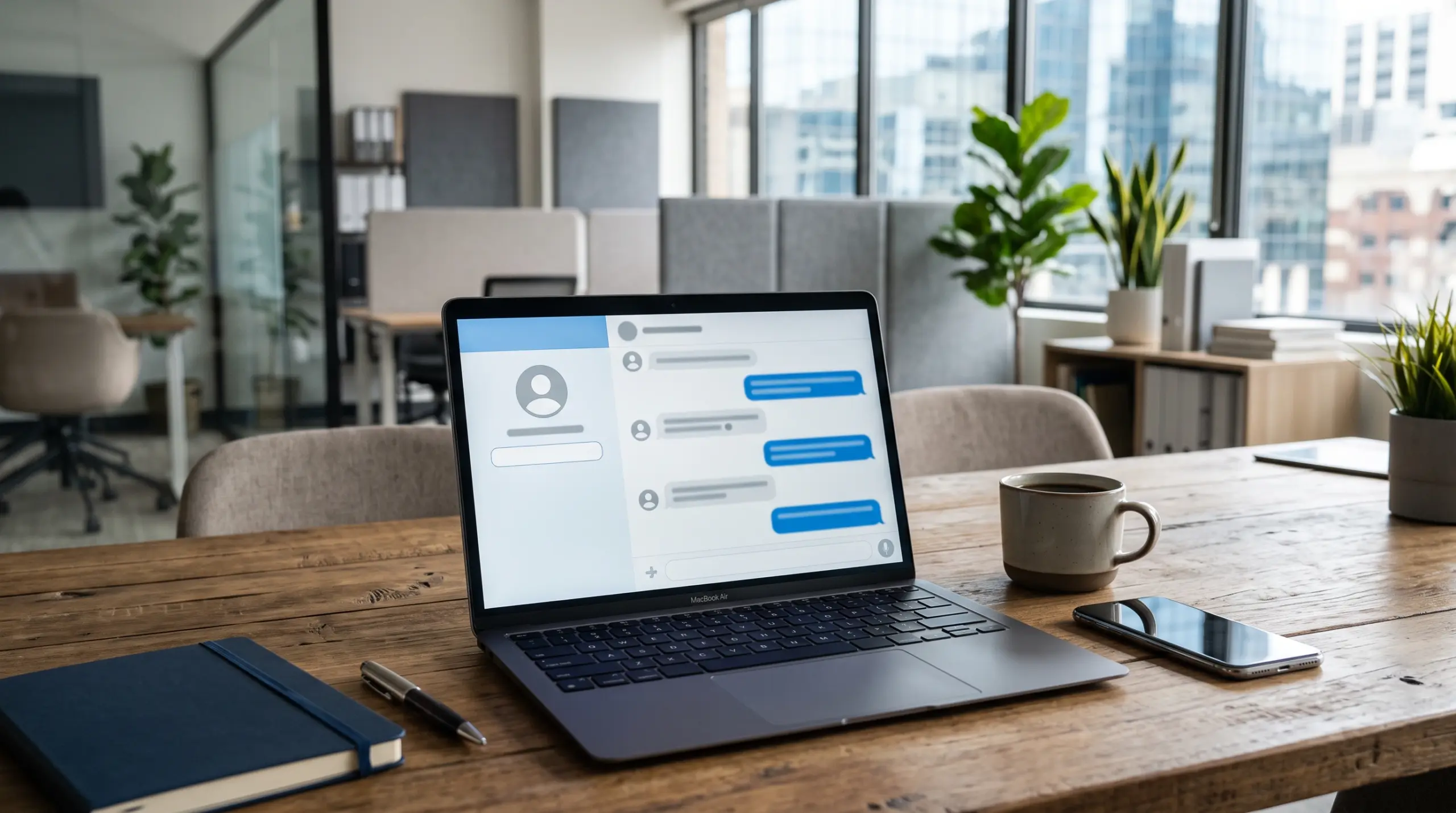
Your AI chatbot captures contact information. It collects names, email addresses, and phone numbers. Your dashboard shows dozens of new leads every week. But when your sales team follows up, half of them never respond. The other half say they were "just browsing" or ask questions that reveal they're nowhere near ready to buy. You deployed automation to qualify leads, not just collect them — yet you're still manually sorting through tire-kickers, competitors, and people who thought your chatbot was customer support. This isn't a technology failure. The AI works. The problem is that most businesses configure their chatbot

Google Just Killed Zero-Click Searches: What It Means for Your Business
The headline might sound backwards, but it's true: Google didn't kill zero-click searches in 2026—it turbocharged them. And if your business depends on organic traffic from search, what's happening right now isn't just a trend. It's a structural shift in how people find information online, and it's rewriting the ROI of every dollar you've spent on SEO. In the first four months of 2026, 68% of Google searches ended without a single click to any website. That's up from 60% in 2024 and 49% in 2019. The culprit? AI Overviews—those AI-written summaries Google now places at the top of

Why Your Website Ranking Dropped After Google’s March 2026 Core Update
If you logged into Google Search Console in late March or early April 2026 and saw your traffic graph take a nosedive, you're not imagining things. Google's March 2026 core update hit harder than any algorithm change we've seen in the past two years, and the data tells a sobering story: 79.5% of top-three URLs changed position, and roughly one in four pages that were sitting comfortably in the top 10 dropped completely out of the top 100. This wasn't a gentle reshuffling. It was a deep reset of how Google evaluates content quality, expertise, and the structural signals


