

How to Audit Your Website Content for AEO Success starts with a simple reality: answer engines do not recommend websites because they contain the most words. They surface content that is useful, trustworthy, easy to understand, and relevant to the question being asked. That includes Google AI Overviews and AI Mode, ChatGPT Search, Perplexity, Claude, and other AI-powered discovery tools.
For a small business, this changes how a website content audit should be approached. You are not only checking rankings, broken links, or outdated pages. You are checking whether your content gives people—and the systems interpreting your content—clear answers they can trust. In this guide, we’ll show you how to audit your existing pages, identify content gaps, improve answer-readiness, and prioritize the changes most likely to strengthen your AI search visibility.
How to Audit Your Website Content for AEO Success: Begin With a Complete Inventory
AEO, or Answer Engine Optimization, is the process of improving content so answer engines can understand it, use it, and potentially cite or recommend it. The foundation is still strong SEO. Google’s current guidance says its generative AI features rely on core Search systems and publicly accessible, crawlable content. In other words, AEO is not a replacement for SEO; it is a more specific way to make valuable content understandable in AI-powered search experiences.
Before rewriting anything, create a clear inventory of what you already have. Export your URLs from your content management system, Google Search Console, analytics platform, and sitemap. Then group the pages into practical categories:
- Service and product pages
- Location or area pages
- Blog posts and educational resources
- Frequently asked questions
- Case studies, reviews, and testimonials
- Pricing, policy, process, and comparison pages
- Old, duplicate, thin, or abandoned pages
Match every page to a real customer question
Next, identify the purpose of each page. A service page may answer, “Who provides this service and why should I choose them?” A blog post may answer, “How do I solve this problem?” A pricing page may answer, “What will this cost and what is included?”
If you cannot explain the question a page answers, that is an audit finding. The page may be too broad, poorly organized, or created only because a keyword looked attractive. Google’s people-first content guidance specifically encourages site owners to ask whether their content serves an existing audience and leaves readers feeling they have learned enough to accomplish their goal.
Record the primary question, search intent, target audience, business goal, and current performance for each important URL. This prevents a common mistake: optimizing every page in the same way. A local service page needs strong relevance, location signals, proof, and conversion elements. An educational guide needs clarity, depth, sources, and a logical path to the next step.
Find pages that deserve attention first
Do not start by rewriting your entire website. Prioritize pages that already have one or more of these characteristics:
- They receive organic impressions but few clicks.
- They rank on page one or two for valuable questions.
- They generate leads, sales, or assisted conversions.
- They cover a topic customers frequently ask about.
- They contain outdated information but have backlinks or authority.
- They are strategically important but currently underperforming.
These pages often produce faster gains than publishing a large batch of new articles. In our experience, improving a useful existing page is usually more efficient than adding another generic post to an already crowded blog.
Evaluate Whether Each Page Gives a Clear, Complete Answer
Answer engines need to understand the central answer before they can use the surrounding details. That means your content audit should examine not only whether a page contains the right keywords, but whether it answers the main question directly and thoroughly.
Put the answer near the top
Review the first 100 to 150 words of every priority page. Can a reader quickly tell what the page is about, who it is for, and what answer or outcome it provides? If not, revise the introduction.
A strong answer-first opening might define a term, give a recommendation, state a typical cost range, or summarize the process. The rest of the page can then explain the reasoning, exceptions, examples, and next steps.
For example, a cleaning company writing about move-out cleaning should not begin with three paragraphs about its history. It should first explain what move-out cleaning includes, when customers need it, and what affects the price. A contractor discussing roof replacement should quickly address expected lifespan, warning signs, project variables, and how homeowners can request an inspection.
Use headings that mirror natural questions
Review your headings as if they were a customer’s questions. Replace vague headings such as “Our Approach” or “Important Information” with specific ones such as:
- How much does a commercial cleaning service cost?
- What is included in a standard roof inspection?
- How long does a WordPress website redesign take?
- Is this service available in my area?
- What should I do before scheduling?
This does not mean every heading should be written as a question. It means the structure should reflect the way people seek information. Clear headings help readers scan, help search engines interpret sections, and give AI systems distinct passages to evaluate.
Make each section self-contained enough to make sense on its own. Avoid placing the answer to a heading several paragraphs later. Define specialized terms the first time you use them, explain acronyms, and use short paragraphs when the subject is complex.
Look for missing decision-making information
A page may technically answer a question while still failing the customer. During your content optimization review, check whether the page covers the information someone needs before taking action:
- Who is the service or product best suited for?
- What does it include—and what does it not include?
- What does it typically cost?
- How long does the process take?
- What are the alternatives?
- What risks, limitations, or requirements should customers know?
- What is the next logical step?
Honest limitations are especially valuable. A page that explains when a service is not appropriate can appear more credible than one that promises to solve everything.
Audit Trust, Originality, and Evidence
AI search visibility depends on more than clean formatting. Your content must give systems a reason to treat your business as a credible source. That requires an audit of experience, evidence, authorship, and originality.
Show what your business actually knows
Generic advice is easy to generate and difficult to distinguish. First-hand details are harder to copy. Strengthen pages with information that comes from doing the work:
- Real project examples and before-and-after results
- Photos, videos, or screenshots from your own work
- Specific process details customers would not know otherwise
- Common mistakes you have seen in the field
- Local conditions, regulations, materials, or seasonal considerations
- Clear explanations of how you reached a recommendation
For a tourism company, that might mean explaining the best pickup times based on traffic and weather. For a senior care provider, it could mean outlining the questions families should ask during an initial consultation. For an e-commerce brand, it might include fit guidance, care instructions, or honest comparisons between materials.
Google’s current guidance for generative AI features emphasizes valuable, non-commodity content and unique points of view. A page that merely summarizes ten other pages gives an answer engine little reason to select it over the original sources.
Check authorship and source quality
Review every important article for an accurate author or reviewer, a short biography where appropriate, and links to relevant credentials or experience. Health, financial, legal, and safety-related content deserves especially careful review because inaccurate advice can cause real harm.
Check statistics, dates, product specifications, laws, prices, and claims. Remove unsupported superlatives such as “best,” “leading,” or “guaranteed” unless you can substantiate them. When information comes from another organization, cite the original source rather than repeating an unattributed claim.
If artificial intelligence helped create a draft, treat the draft as unfinished. Google’s guidance on generative AI content warns that automatically generating many pages without adding value may violate its scaled-content-abuse policies. More importantly, unreviewed AI writing often contains vague statements, incorrect details, and no genuine experience. Use AI to assist research, outlining, and editing—but keep human judgment responsible for accuracy and usefulness.
Check Technical Accessibility and Content Connections
A strong answer cannot be cited if the relevant page cannot be found, crawled, or interpreted. Your website content audit should therefore include basic technical and internal-linking checks.
Confirm that important content is accessible
For each priority page, check that it is indexable, loads successfully, appears in your XML sitemap when appropriate, and is not accidentally blocked by robots.txt, noindex directives, login requirements, or broken navigation. Make sure the primary information is available in visible HTML rather than hidden entirely inside an image, inaccessible script, or interactive element.
Use descriptive page titles, headings, image alt text, and link text. Google’s Search Essentials documentation recommends crawlable links and descriptive language that helps search systems understand a page and its relationships to other pages.
Build logical internal links
Internal links help users move from a broad answer to a more specific one. They also show how your content fits together. Link a guide about choosing a service to the relevant service page. Link a service page to pricing, FAQs, case studies, and contact options. Use natural anchor text that describes the destination.
Think in topic clusters, not isolated blog posts. A local plumber, for example, might connect articles about water heaters, emergency repairs, leak detection, and maintenance to the core plumbing service page. This creates a clearer knowledge structure for both visitors and search systems.
Do not add links merely to increase the number of links. Each one should help answer the next question a reader is likely to have.
Prioritize AEO Improvements and Measure the Results
After reviewing your pages, create a simple scoring system. We recommend rating each priority URL from one to five for answer clarity, completeness, originality, trust, technical accessibility, and business value. Pages with low content scores but high business value should usually come first.
Your action plan might look like this:
- Rewrite unclear introductions and page titles.
- Add direct answers to the questions customers ask most often.
- Break long sections into descriptive headings.
- Update outdated facts, prices, policies, and examples.
- Add first-hand proof, author information, and reputable sources.
- Improve internal links and fix crawl or indexation problems.
- Combine duplicate pages or remove content with no useful purpose.
Measurement is more difficult than traditional rankings because AI answers do not always provide a complete, transparent reporting system. Still, you can monitor meaningful signals: organic impressions, clicks, conversions, branded searches, referral traffic, assisted conversions, and the questions people ask your sales team.
Google has also introduced a Generative AI performance report in Search Console to help site owners understand how content is discovered through generative AI features in Google Search. Treat the report as one input, not a complete measure of AEO success.
You can also run recurring prompt checks. Ask ChatGPT, Perplexity, Google, or another answer engine the questions your best customers ask. Record which businesses and sources appear, whether your company is mentioned, and whether the answer is accurate. This is not a guaranteed ranking test—results can vary by location, wording, account, and time—but it can reveal gaps in your public content and brand visibility.
Conclusion: Make Your Website the Source an Answer Engine Wants to Use
AEO success is not about writing for robots or inserting artificial question-and-answer blocks throughout your site. It is about making your expertise easier to find, understand, verify, and apply.
Start with a focused website content audit. Identify the pages tied to real business value, match each page to a clear customer question, and improve the answer before adding more words. Then strengthen the content with first-hand experience, accurate sourcing, useful internal links, and a technically accessible structure.
Google’s guidance continues to point toward the same durable principle: helpful, reliable, people-first content remains the foundation. That is good news for small and mid-sized businesses. You do not need the biggest content library. You need clear answers, genuine expertise, and a website that makes it easy for people—and answer engines—to trust what you say.
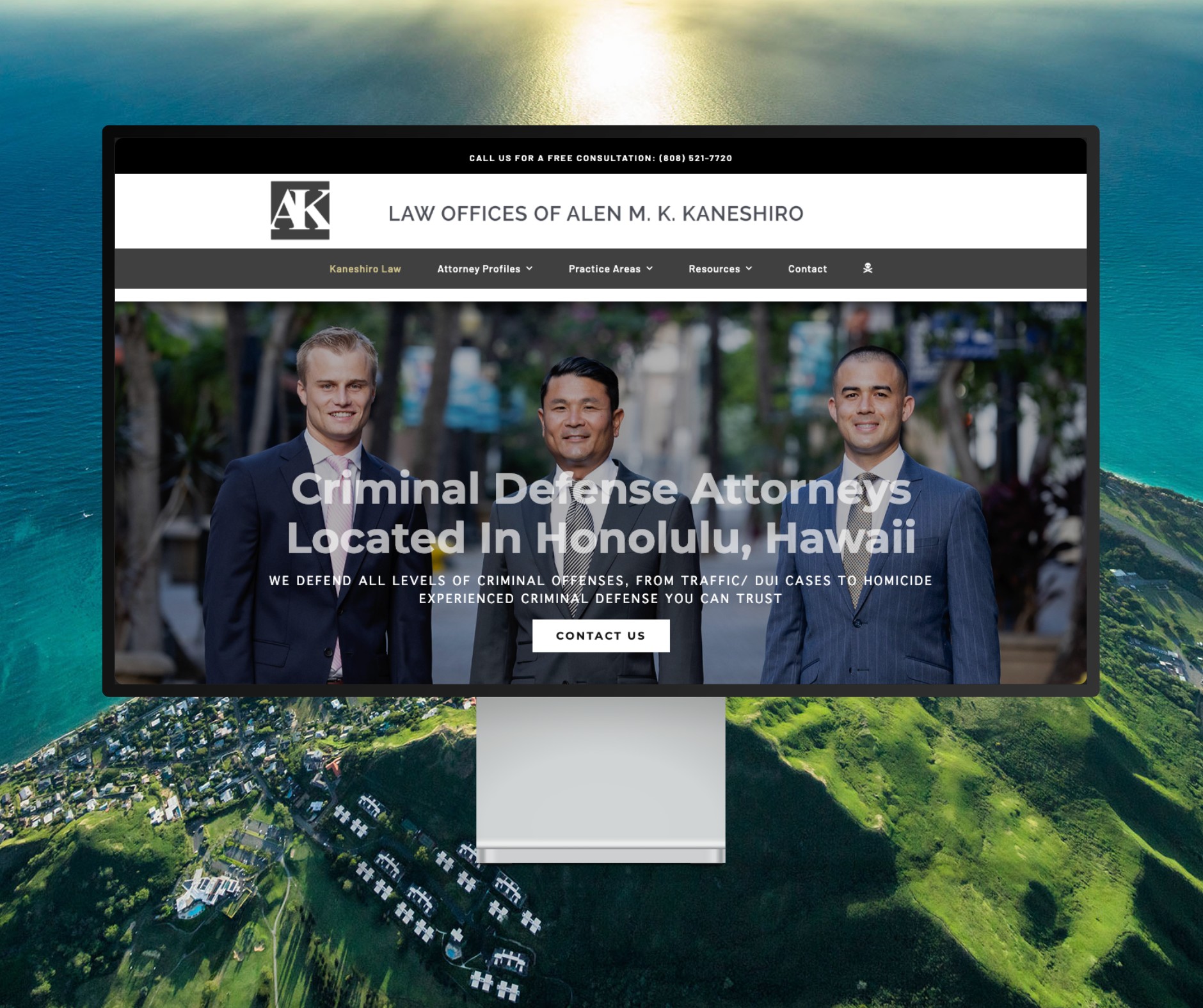
Featured Website: www.kaneshirolaw.com
Kaneshiro Law Firm, one of Hawaii’s most respected legal practices, partnered with The X Digital three years ago for a complete website redesign. Since then, we’ve maintained an ongoing relationship—handling updates, optimizations, and technical support around the clock. Our dedicated team ensures they’re never without assistance, while our enterprise-grade hosting provides 24/7 uptime monitoring and reliability. Kaneshiro Law Firm is one of many long-term clients who trust us to keep their digital presence running flawlessly.