

Defining the Terms: What Is a Rebrand vs. a Refresh?
Before you can decide whether you need a rebrand or refresh, you must understand the fundamental difference between the two. While they are often used interchangeably in casual conversation, they are vastly different in scope, cost, and execution. A brand refresh is a tactical update. It is like repainting your house and buying new furniture; the structure remains the same, but it feels modern and clean. A rebrand, on the other hand, is a strategic overhaul. It is like knocking down the walls and rebuilding the foundation because the house no longer serves your needs.
To put it simply: a refresh updates your look, while a rebrand changes your story. Your visual identity—the logo, color palette, and typography—is only the surface. Beneath that lies your brand’s mission, values, voice, and target audience. If your company has pivoted its services, merged with another entity, or discovered that your current name no longer reflects what you sell, a refresh will not fix the disconnect. You need a rebrand.
However, if your business is solid and your messaging is accurate, but your website looks like it was built in 2008, a full rebrand is overkill. You just need a refresh. The decision hinges on whether you are solving a visual problem or a positioning problem. In the following sections, we will break down the diagnostic questions you need to ask yourself to determine which path is right for you.
The Diagnostic: 5 Questions to Ask Before You Decide
Jumping straight into a redesign without a strategic audit is a recipe for disaster. You need to evaluate your current brand equity and your business goals. This process is not about gut feelings; it is about data, customer feedback, and market positioning. Here are the five critical questions to ask yourself and your leadership team.
Question 1: Has Your Target Audience Changed?
If you started your business selling to teenagers but now your primary buyer is a 45-year-old corporate executive, your brand voice and visuals are likely misaligned. A rebrand is necessary to speak the language of your new audience. Conversely, if your audience is the same but their tastes have evolved—think of how fashion trends cycle—a refresh is usually enough to stay relevant.
Question 2: Are You Competing in a Different Market?
Geographic expansion or moving from a budget niche to a luxury niche requires a rebrand. Your pricing and positioning dictate your visual cues. A $5 coffee shop and a $15 artisanal coffee bar cannot share the same brand aesthetic. If you have changed your business model, your brand must change to match the new value proposition.
Question 3: Is Your Brand Recognizable?
Conduct a “recognition test.” Show your logo to a stranger without any context. Can they guess roughly what industry you are in? If your logo is a generic globe or swoosh that looks like every other tech startup, you lack differentiation. If the issue is simply that your logo is dated (think gradients and drop shadows from the early 2000s), a refresh is sufficient.
Question 4: What Does Customer Feedback Say?
Don’t guess. Look at your reviews, social media mentions, and survey data. Are customers complaining about your product quality (a rebrand won’t fix that) or are they complaining that your website is hard to navigate (a refresh will help)? If customers are saying, “I didn’t know you offered that service,” you have a messaging problem that a refresh can solve by reorganizing content and visuals.
Question 5: Is Your Brand Strategy Still Accurate?
This is the most crucial question. Pull out your original business plan. Does your mission statement still reflect what you do? If you started as a “bookstore” but now make 80% of your revenue from online courses and coaching, you are no longer a bookstore. You need a rebrand to align your identity with your actual revenue streams. If the mission is intact, you only need a refresh.
If you answered “yes” to questions 1, 2, or 5, you likely need a rebrand. If your issues lie primarily with visuals and user experience, a refresh is the better investment.
When to Choose a Brand Refresh (And What It Includes)
A brand refresh is often the smarter business decision because it preserves the equity you have built. If your customers already know your name and trust your logo, changing it completely forces them to relearn who you are. This is risky. A refresh allows you to modernize without losing that recognition. Think of companies like Pepsi or Starbucks; they rarely change their logos drastically. They tweak the font, adjust the colors, and clean up the lines. This is the essence of a refresh.
The Tactical Checklist for a Refresh
If you decide a refresh is right, your scope of work should include the following elements. This is not a complete brand overhaul, but a systematic update of your touchpoints.
- Logo Modernization: Updating the typography, removing unnecessary clutter, or simplifying the color palette for digital screens.
- Website UI/UX: Improving navigation, speeding up load times, and updating the layout to current web standards (like mobile-first design).
- Content Tone: Adjusting your brand voice to be more conversational or more professional, without changing the core mission.
- Photography and Graphics: Replacing stock photos with custom imagery and updating your iconography to match the new style.
The Budget and Timeline
A refresh is significantly cheaper and faster. You can typically complete a refresh in 4–6 weeks. It involves your graphic designer and web developer, but it does not require extensive market research. You are working within the existing framework. This is the ideal “quick win” if you feel your brand is just looking a bit tired.
When to Commit to a Full Rebrand (And How to Survive It)
A rebrand is a massive undertaking. It is not just a new logo; it is a new name, a new voice, and often a new company culture. This is a strategic pivot that affects your legal documents, your domain name, your signage, and your marketing materials. You should only do this when the cost of staying the same is higher than the cost of changing. If your brand name is actively holding you back or causing confusion, a rebrand is mandatory.
Signals That You Need a Rebrand
There are specific red flags that indicate a refresh will not solve your problems. If you notice any of the following, you need to start from scratch:
- Negative Connotations: Your brand name has been associated with a scandal, or it has a negative meaning in a new market you are entering.
- Mergers and Acquisitions: You have merged with another company and need a new identity to represent the combined entity.
- Major Strategy Shift: You have completely changed what you sell or who you sell it to. Your old brand is a barrier, not a bridge.
The Rebranding Process: A Strategic Approach
Surviving a rebrand requires a clear roadmap. You cannot simply wake up one day and change your logo. You must start with discovery and strategy. This involves interviewing stakeholders, analyzing the competitive landscape, and defining your new brand architecture. Once the strategy is locked, you move to creative development. This is where you design the new identity, which includes naming, logo design, and brand guidelines.
Finally, you must plan the launch. A silent rebrand is a wasted opportunity. You need a “reveal” campaign to explain to your audience why you are changing. This is crucial. If you don’t tell them why, they will assume you are just trying to fix a broken reputation. You need to frame the rebrand as an evolution and a promise of better things to come.
Conclusion: Making the Strategic Choice
Choosing between a rebrand and a refresh does not have to be a paralyzing decision. The key is to look at the root cause of your dissatisfaction. Are you unhappy with the way your brand looks, or are you unhappy with the way your brand performs? If it is a performance issue—meaning your brand no longer attracts the right customers or reflects your services—you need a rebrand. If it is merely a relevance issue—meaning you are being overlooked because you look outdated—a refresh is the perfect solution.
Take the time to audit your business honestly. Look at your analytics, listen to your customers, and review your strategy. A refresh is a low-risk investment that can yield immediate improvements in engagement. A rebrand is a high-stakes move that can unlock entirely new markets. Both are powerful tools, but they serve different purposes. By following the diagnostic questions above, you can confidently choose the path that aligns with your business goals and ensures your brand remains a valuable asset for years to come.
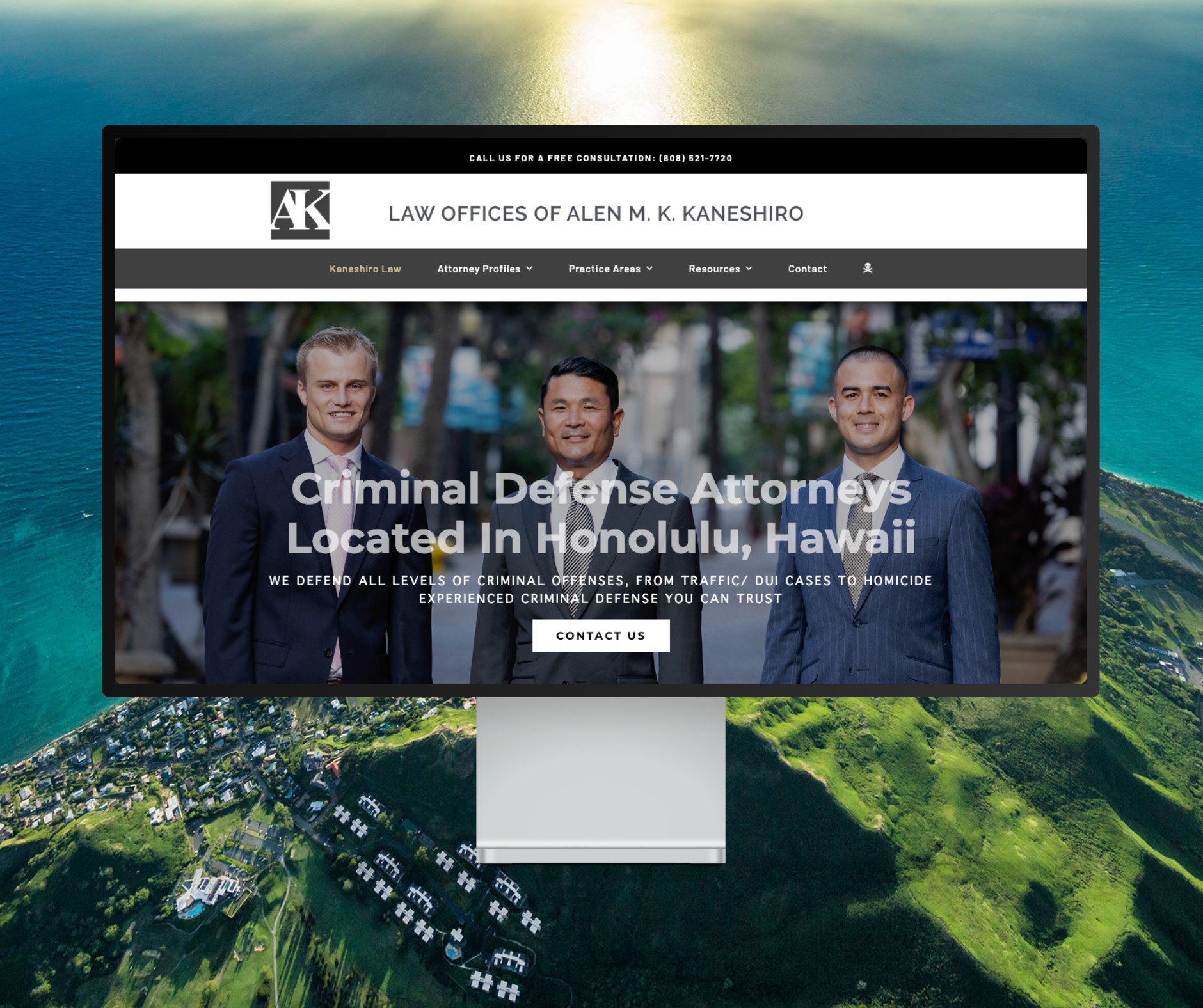
Featured Website: www.kaneshirolaw.com
Kaneshiro Law Firm, one of Hawaii’s most respected legal practices, partnered with The X Digital three years ago for a complete website redesign. Since then, we’ve maintained an ongoing relationship—handling updates, optimizations, and technical support around the clock. Our dedicated team ensures they’re never without assistance, while our enterprise-grade hosting provides 24/7 uptime monitoring and reliability. Kaneshiro Law Firm is one of many long-term clients who trust us to keep their digital presence running flawlessly.