

Website migration can improve speed, security, design, and conversions—but a poorly planned move can also erase search visibility overnight. The risk is usually not the new design itself; it’s broken URLs, missing redirects, blocked search engines, or important pages that quietly disappear.
This practical website migration checklist explains how to move a website without losing SEO. You’ll learn what to document before the move, how to handle redirects and technical settings, and which numbers to watch after launch. Whether you’re changing domains, moving from an old platform to WordPress, switching hosts, or relaunching an existing site, the same principle applies: preserve what search engines already understand before you improve anything.
Website Migration Checklist: What to Do Before the Move
The safest migration starts with a complete inventory of the current website. Before anyone changes the server or redesigns a page, record the URLs, titles, metadata, traffic, rankings, backlinks, and conversions associated with the existing site.
Document the current website
Export a list of every important URL, including pages that may not appear in the main navigation. Your list should include service pages, location pages, blog posts, product pages, PDFs, images that attract traffic, and any URL receiving visits from search, referrals, or paid campaigns.
- Current URL and planned new URL
- Organic traffic and ranking keywords
- Page title, meta description, and heading structure
- Backlinks and referring websites
- Leads, purchases, calls, or other conversions
Also crawl the existing site and download a current XML sitemap. Google Search Console and analytics data can reveal valuable pages that a basic crawl misses. In our experience, old service pages and specific blog articles are often the URLs most likely to be overlooked.
Set up the new site privately
Build and test the new website on a staging domain or password-protected environment. Make sure the staging version is not indexable by using password protection or a noindex setting. Do not rely on a robots.txt file alone, because that can prevent crawling without reliably preventing indexing.
Compare the staging site with your inventory. If a page has no direct replacement, decide whether it should be recreated, redirected to the closest relevant page, or retired with a proper 410 response.
How to Move a Website Without Losing SEO
To move a website without losing SEO, preserve valuable URLs whenever possible and create a clear one-to-one redirect map for every URL that must change. A redirect tells browsers and search engines where the old page now lives.
Use permanent redirects correctly
For most migrations, use server-level 301 redirects from each old URL to its most relevant new equivalent. Avoid sending every old page to the homepage. That creates a poor user experience and may cause search engines to treat the redirects as soft errors.
Redirect chains are another common problem. If URL A redirects to URL B, which redirects to URL C, simplify the rule so URL A goes directly to URL C. Check for redirect loops, incorrect protocols, capitalization changes, and trailing-slash inconsistencies.
Preserve important on-page signals
A migration is not the right time to change every title, heading, URL, and piece of content at once. If the new website has a different design, keep the strongest existing content and SEO elements unless there is a clear reason to improve them.
Before launch, verify that the new site has:
- Self-referencing canonical tags on indexable pages
- Correct internal links using the new URLs
- Updated XML and HTML sitemaps
- Properly configured robots.txt rules
- Fast-loading, mobile-friendly templates
- Working forms, phone links, checkout, and tracking
For a domain change, update references to the old domain in analytics, Google Search Console, Google Business Profile, email systems, advertising platforms, schema markup, and social profiles.
Website Relaunch SEO: Launch-Day and Post-Launch Checks
Website relaunch SEO depends on catching small technical mistakes before search engines recrawl the new site. Create a launch checklist and assign one person responsibility for verifying each item.
Check the site immediately after launch
Visit the homepage and several important pages from different devices. Test forms, menus, images, checkout steps, redirects, and contact information. Then crawl the live website and look specifically for 404 errors, redirect chains, duplicate pages, missing titles, broken canonical tags, and accidental noindex directives.
Confirm that the live site is not still password-protected or carrying staging rules that block search engines. Check the source code of key pages rather than assuming the content management system is configured correctly.
Monitor traffic and rankings
Expect some fluctuation after a major migration, particularly when URLs or domains change. However, a sharp drop in organic traffic, indexed pages, or leads requires investigation rather than patience alone.
For at least four to eight weeks, monitor:
- Organic sessions and conversions
- Search Console impressions, clicks, and indexing
- Top landing pages and ranking changes
- 404 errors and redirect activity
- Server uptime, speed, and crawl responses
Submit the new sitemap in Google Search Console and inspect important URLs manually. If the domain changed, use Google’s Change of Address tool where applicable. Keep the old domain and hosting environment available long enough for redirects and email services to remain reliable.
Conclusion: Make the Migration Boring
The best website migration is deliberately uneventful. Preserve valuable URLs, map redirects before launch, keep search engines out of staging, test the live site carefully, and monitor both rankings and leads after the change.
One illustrative example: a contractor moving from an outdated platform might keep the existing service URLs while redesigning the templates. That approach protects the pages already earning visibility, while new content and better conversion paths can be added gradually. Changing the domain, URLs, content, and tracking all at once makes it much harder to identify the source of a traffic loss.
If you’re planning a redesign, host change, or platform migration and want a second set of eyes, request a free website review. We’ll help identify the URLs, technical settings, and launch risks that deserve attention first.
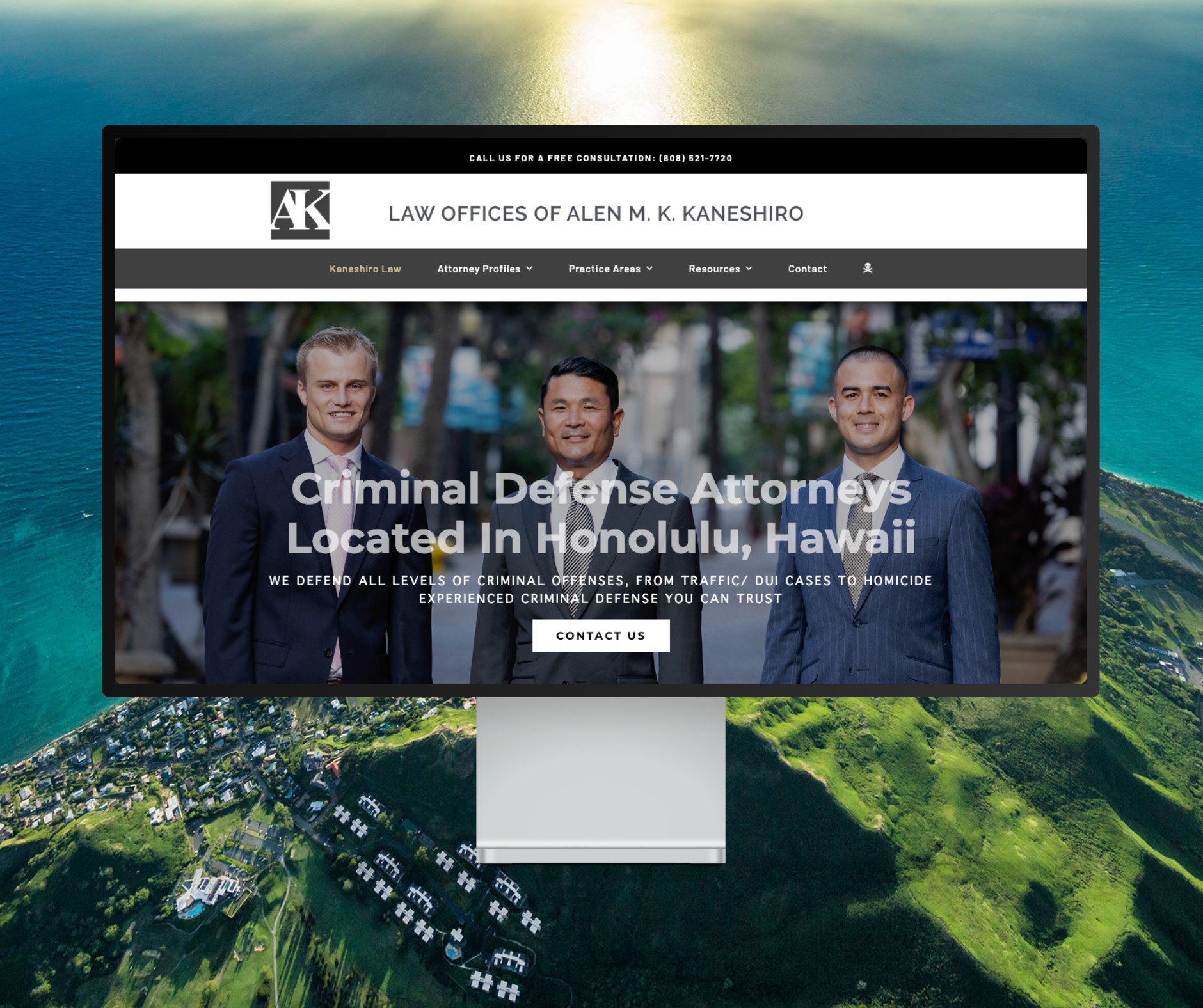
Featured Website: www.kaneshirolaw.com
Kaneshiro Law Firm, one of Hawaii’s most respected legal practices, partnered with The X Digital three years ago for a complete website redesign. Since then, we’ve maintained an ongoing relationship—handling updates, optimizations, and technical support around the clock. Our dedicated team ensures they’re never without assistance, while our enterprise-grade hosting provides 24/7 uptime monitoring and reliability. Kaneshiro Law Firm is one of many long-term clients who trust us to keep their digital presence running flawlessly.