

Google AI Overviews traffic loss is no longer a theoretical SEO concern. If your website answers common questions, compares products, explains services, or publishes educational content, Google may now answer the searcher before they ever reach your page. That can mean fewer clicks even when your rankings look healthy.
There is, however, a difference between losing visibility and losing relevance. Google’s AI Overviews and AI Mode still rely on web content, links, and established search signals. The opportunity is to become one of the sources Google trusts, then give searchers a strong reason to continue to your website.
In this guide, we’ll explain what is changing, how to diagnose the impact, how AEO (answer engine optimization) fits into your SEO strategy, and what actually improves your chances of getting cited by Google AI. No secret schema trick is required. The fundamentals still matter—but the fundamentals need to be applied more deliberately.
Google AI Overviews Traffic Loss Is Real—but the Picture Is More Nuanced
Google introduced AI Overviews in the United States in 2024 and expanded its generative search experience through AI Mode during 2025. By 2026, AI search results are no longer limited to a small experiment. They are an increasingly visible part of how people research products, services, health questions, travel plans, and local businesses.
Google says AI Overviews are designed to summarize complex topics and provide links for users who want to explore further. Its official guidance also says that the same SEO fundamentals remain relevant: crawling, indexing, helpful content, strong page experience, and clear site structure still matter. Read Google’s documentation on AI features and your website for the company’s current position.
That does not mean clicks are unaffected. A July 2025 analysis from Pew Research Center examined 68,879 Google searches from 900 U.S. adults. Searches that produced an AI summary resulted in a click on a traditional result just 8% of the time, compared with 15% when no AI summary appeared. Clicks on links inside the AI summary occurred in only 1% of visits.
The same research found that 18% of the Google searches studied produced an AI summary. Longer, question-based searches were much more likely to trigger one: 53% of searches containing 10 or more words generated a summary, compared with just 8% of one- or two-word searches.
In other words, informational content is especially exposed. A page targeting “how often should you change an HVAC filter?” may receive fewer visits if Google provides a satisfactory answer immediately. A page that helps someone choose an HVAC company, understand a complicated repair, or request a quote has more opportunities to win the next step.
How to Rank in Google AI Overviews: Start With Traditional SEO
There is no separate “AI ranking button.” Google’s 2026 guidance says there are no additional technical requirements or special optimizations needed to appear in AI Overviews or AI Mode. That is important because it cuts through much of the hype surrounding artificial intelligence search.
If Google cannot reliably crawl, understand, and trust your website, adding an AI-generated paragraph or an experimental file will not solve the problem. Start with the foundation.
Make your important pages easy to find and understand
- Keep your site crawlable. Check robots.txt, XML sitemaps, redirects, canonical tags, and noindex settings.
- Use clear page structure. Each page should have one obvious topic, descriptive headings, useful internal links, and a title that matches the searcher’s intent.
- Write direct answers. Put the short answer near the top, then provide the explanation, examples, qualifications, and next steps below it.
- Demonstrate first-hand experience. Explain what you have done, tested, repaired, installed, photographed, or learned from working with customers.
- Keep business information consistent. Your name, address, phone number, service area, hours, and credentials should agree across your website and important third-party profiles.
Google’s own guide to optimizing for generative AI features reinforces this approach. It emphasizes that normal SEO best practices remain the foundation for appearing in AI-generated search features.
Do not confuse “being summarized” with “being chosen”
A page can be useful to Google’s summary without becoming the page a customer visits. That is why your content needs two layers:
- An extractable answer: a clear definition, recommendation, process, statistic, or explanation that an answer engine can understand.
- A valuable destination: original detail, tools, examples, photos, pricing context, case studies, comparisons, or a service pathway that the summary cannot fully replace.
This is the central principle of AEO answer engine optimization. You are not trying to hide the answer so people must click. You are proving that your business is the best source for the complete answer.
Getting Cited by Google AI Requires More Than Publishing More Content
Many businesses respond to traffic declines by publishing dozens of short AI-generated articles. That usually creates the opposite of what they need: a larger website with less original value and weaker differentiation.
Google’s systems need reasons to trust a source. For a local service business, that may be evidence of real projects, local knowledge, qualifications, reviews, and clear service details. For an e-commerce brand, it may be original product information, accurate specifications, customer guidance, and useful comparisons. For a professional service firm, it may be expertise, named authors, examples, methodology, and transparent limitations.
Create content around real customer decisions
Instead of asking, “What keyword can we write about?” ask:
- What does a potential customer need to know before contacting us?
- What mistakes cause people to waste money?
- What alternatives are they comparing?
- What information would help them decide whether they need our service at all?
- What local, technical, or practical context do generic websites miss?
Those questions lead to content that can perform in both classic search and AI search results in 2026. They also lead to better leads because the reader arrives with more understanding and stronger intent.
Use specific language. Say who the advice applies to, when it does not apply, what the process costs or involves, and what a reasonable next step looks like. Clear qualification is not a weakness. It is one of the easiest ways to make content more credible and useful.
Build citation-worthy evidence
Google does not need another page repeating the same generic advice found everywhere else. Strengthen your content with:
- Original data from your projects or customers
- Before-and-after examples
- Photos, videos, diagrams, or screenshots
- Named experts and reviewed content
- Detailed service areas and location-specific information
- Clear explanations of your process and pricing factors
- References to reputable primary sources where appropriate
Research from Seer Interactive illustrates why citation visibility matters. Its April 2026 update analyzed a full year of data across 53 brands, 5.47 million tracked queries, and 2.43 billion organic impressions. The study reported that being cited in an AI Overview delivered two to five times the organic click-through rate of not being cited during 2025, even while overall click-through rates were compressed.
The lesson is not that every citation will restore your old traffic. It is that appearing inside the answer can be more valuable than ranking below it without being mentioned. The goal is to compete for both traditional rankings and inclusion in the answer layer.
What to Do When Your Organic Traffic Drops
Before rewriting your entire website, diagnose the loss. AI Overviews are not the only reason traffic changes. Algorithm updates, seasonality, competitors, technical problems, changing search demand, and tracking errors can all produce similar symptoms.
Compare impressions, clicks, rankings, and conversions
Open Google Search Console and compare the period before and after your decline. Look for patterns by query, page, country, device, and search appearance. Then compare the data with analytics and actual business results.
- Impressions down: You may have lost rankings, demand, indexing, or relevance.
- Impressions stable but clicks down: SERP features, AI Overviews, stronger competitors, or weaker titles may be reducing click-through rate.
- Clicks stable but leads down: The problem may be conversion quality, page experience, offer clarity, or tracking.
- Informational traffic down but commercial traffic stable: Google may be answering early-stage questions directly while decision-stage pages remain valuable.
Do not judge your strategy by traffic alone. Track qualified calls, form submissions, purchases, booked appointments, email signups, and branded searches. A smaller number of better visitors can be a healthier outcome than a large volume of people who never needed your service.
Separate pages to improve from pages to reposition
Some pages should be updated for greater visibility. Others should be changed because their original purpose was simply to capture an easy informational click.
For example, a basic definition page might become a stronger guide with examples, a decision checklist, related services, and an invitation to get help. A local business could turn “how much does a roof inspection cost?” into a page explaining inspection factors, what the customer receives, common warning signs, and how to request an inspection.
Also review your titles and descriptions. If the AI Overview already answers the question, your search snippet must communicate a stronger reason to choose your page: local expertise, original research, a useful tool, a comparison, or a practical next step.
Use AEO Alongside SEO, Not Instead of It
AEO answer engine optimization is best understood as an extension of good SEO. It means making your business easy for answer engines to interpret, verify, summarize, and recommend across Google AI Overviews, AI Mode, ChatGPT, Claude, Perplexity, and similar systems.
That requires consistency beyond your blog. Your website, Google Business Profile, review platforms, industry directories, social profiles, and third-party mentions should reinforce the same facts about your business. Search engines are more likely to trust a clear entity with consistent information than a website making unsupported claims about itself.
For local businesses, strengthen service pages and location pages rather than creating thin pages for every nearby town. Include real service details, driving areas, project examples, customer questions, and clear contact options. For e-commerce brands, improve product information, comparison content, buying guides, and post-purchase support. For professional services, publish practical expertise that shows how you think—not just pages describing that you are “the best.”
Finally, keep measuring visibility in more than one place. Monitor Search Console, analytics, rankings, branded searches, referral data, leads, and manual checks of important questions. AI answers can change by location, device, wording, and time, so one screenshot is not a strategy.
Conclusion: Stop Chasing Clicks and Become the Source
Google AI Overviews are changing the value of a search impression. A ranking can still matter, but the searcher may see an answer, a list of cited sources, and several follow-up options before reaching the traditional results.
The practical response is not panic, mass-produced content, or a secret AI markup tactic. Fix the technical foundation. Answer questions clearly. Add first-hand evidence. Build recognizable expertise. Create pages that provide value beyond the summary. Then measure qualified business outcomes, not just sessions.
At The X Digital, we approach this as a combination of technical SEO, useful content, conversion strategy, and AEO—not as a shortcut around proven search fundamentals. If your Google AI Overviews traffic loss is affecting leads or sales, start by identifying which pages and queries changed. From there, you can decide what to improve, what to reposition, and where becoming the cited source is worth pursuing.
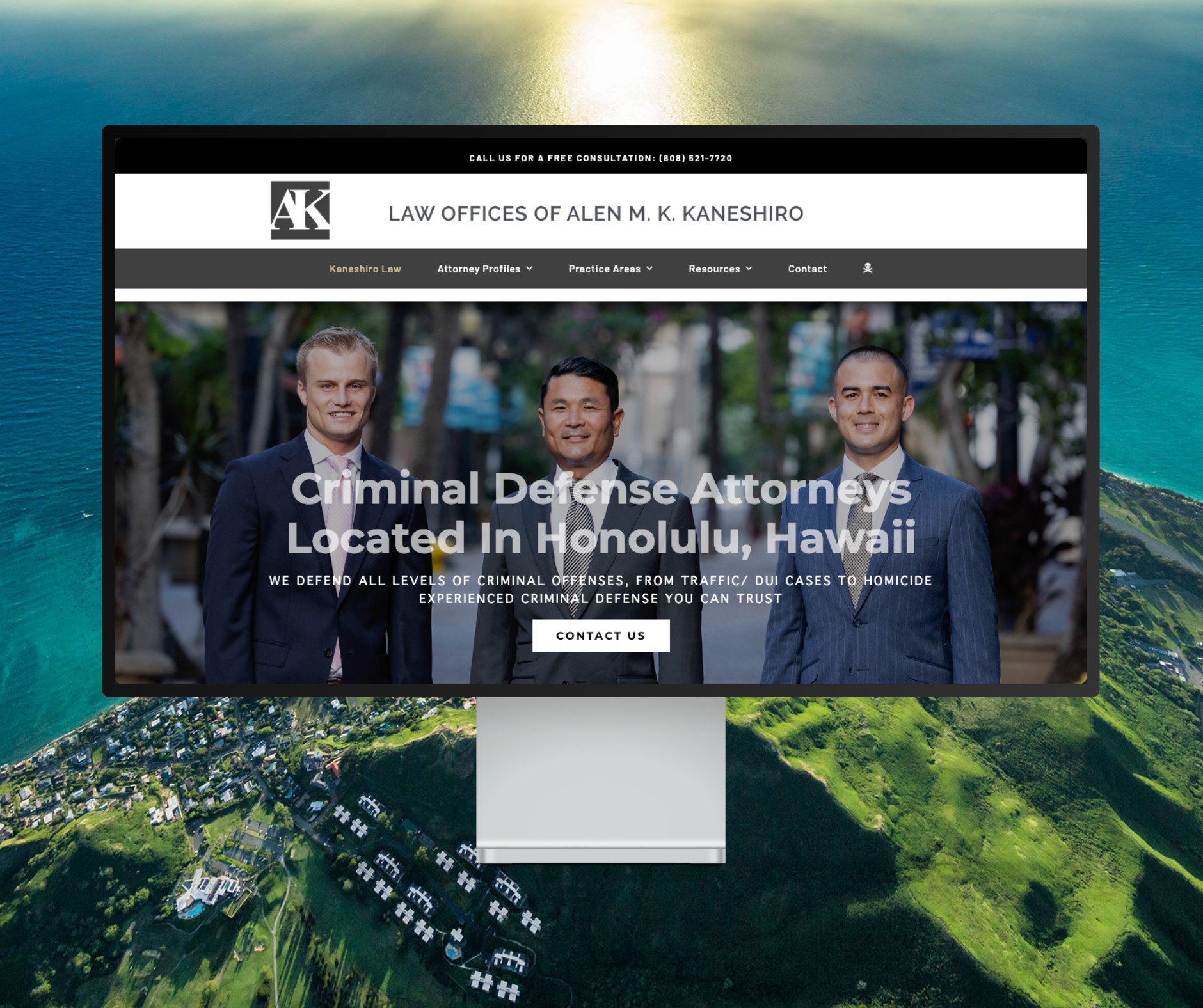
Featured Website: www.kaneshirolaw.com
Kaneshiro Law Firm, one of Hawaii’s most respected legal practices, partnered with The X Digital three years ago for a complete website redesign. Since then, we’ve maintained an ongoing relationship—handling updates, optimizations, and technical support around the clock. Our dedicated team ensures they’re never without assistance, while our enterprise-grade hosting provides 24/7 uptime monitoring and reliability. Kaneshiro Law Firm is one of many long-term clients who trust us to keep their digital presence running flawlessly.