

If you run a Shopify store, there’s a good chance your products are invisible to the fastest-growing source of high-intent buyers online: AI search. We’re not talking about a hypothetical future problem. According to Shopify’s own Q2 2026 data, AI-referred sessions grew 197% year-over-year, and those shoppers convert at nearly double the rate of organic search visitors in research-heavy categories. But here’s the catch: most Shopify stores aren’t showing up in those results at all—not because of a technical glitch, but because of how their product data is structured (or isn’t). In this article, we’ll walk you through exactly why Shopify sites are getting left behind by AI search, what the data actually shows, and the specific fixes that make your catalog visible to the platforms sending the most qualified traffic right now.
Why AI Search Matters for Shopify Stores (and Why Most Are Invisible)
AI search platforms like ChatGPT, Perplexity, and Microsoft Copilot don’t work like Google. When someone asks “What’s the best waterproof hiking boot for wide feet under $150?” these systems don’t just return a list of blue links. They synthesize an answer, recommend specific products, and often link directly to product pages—skipping your homepage, your category pages, and your carefully crafted buying guides entirely.
According to Shopify’s Q2 2026 insights, 50% of AI-referred sessions land directly on product detail pages (PDPs). That’s 2.5 times higher than traditional organic search. When these shoppers arrive, they’ve already done their research inside the AI conversation. They’re not browsing—they’re ready to buy. The conversion rate reflects it: AI-referred visitors convert about 80% better overall than organic search, and roughly twice as well in spec-intensive categories like electronics, outdoor gear, and health products.
But most Shopify stores never get that referral. The reason isn’t that AI platforms are excluding them on purpose. It’s that the product data these systems rely on—structured fields, clear use-case descriptions, compatibility details, complete schema markup—simply isn’t there. Your store might rank fine on Google for “men’s running shoes,” but when an AI agent queries its catalog for “breathable trail running shoe with ankle support for overpronators,” your product drops out of consideration because the data needed to match that intent doesn’t exist in a machine-readable format.
The Data Quality Gap That Kills AI Visibility
Here’s what most Shopify product pages look like to an AI system: a product title, a price, maybe a handful of bullet points written for humans who are already on the page. What’s missing is the structured context that AI agents use to evaluate fit. Does this product solve the specific problem the shopper described? How does it compare to alternatives? What are the actual specs, materials, dimensions, compatibility constraints?
Shopify found that when AI search used clean, structured Shopify Catalog data to recommend products, the referred shoppers converted at 2x the rate of those coming from sessions where the AI relied on scraped or third-party feeds. The difference wasn’t the platform—it was the quality and completeness of the product information the AI had access to when making its recommendation.
Most product descriptions are written to persuade someone who’s already looking at the product. They describe features and benefits in marketing language. What they don’t do is answer the pre-purchase research questions a buyer types into ChatGPT before they ever visit your site: “Is this compatible with X?” “Will this work for someone who needs Y?” “How does this compare to Z?”
How AI Search Actually Works (and Why It’s Different from SEO)
Understanding why Shopify sites struggle with AI search visibility requires understanding how these systems make recommendations. As Shopify President Harley Finkelstein explained, “While search engines rank by popularity against a handful of keywords, AI agents make multiple calls into Shopify’s catalog, working with richer structured data to match products with the buyer’s specific intent, rather than just keywords.”
This is what’s called query fan-out. When someone asks an AI assistant a shopping question, the system breaks that single prompt into 5–10 sub-queries covering different angles: use case, price range, compatibility, reviews, comparison points, material requirements. Each sub-query runs against available product data. If your product page answers “what is this product” but not “is this the right product for someone who needs waterproof, wide-fit, under $150,” it falls out of most of those sub-queries. The AI doesn’t have enough information to confidently recommend it.
The Intermediate Layer Is Being Consumed
Here’s the part that should worry content-heavy e-commerce strategies: the category pages, comparison guides, and “best of” listicles that traditional SEO depends on are increasingly being bypassed. When an AI referral lands on a product page, the narrowing and filtering that those pages used to do has already happened inside the model. The buyer arrives having already chosen.
This is buyer journey compression, and it’s showing up in the traffic patterns. Research from Pew on Google AI Overviews found users clicked a traditional search result on only 8% of visits where an AI summary appeared, compared to 15% where none did. Sessions ended outright—no click at all—on 26% of pages with a summary versus 16% without. For stores, this is actually good news, because the destination is the page that takes money. For sites whose entire business model is the intermediate layer, it’s the same mechanism pointed the other way.
What Shopify’s Q2 2026 Data Actually Shows About AI Search and E-commerce
Let’s get specific about what’s happening with real numbers. Shopify analyzed traffic and conversion data across its merchant base for Q2 2026 and published findings that should reshape how e-commerce operators think about discoverability. Here are the patterns that matter:
- AI-referred sessions grew 197% year-over-year, while organic search grew 12% on top of a much larger base. Both channels are growing, but AI is growing from a smaller base at a much faster rate.
- AI-referred shoppers convert about 80% better overall than organic search when they reach a product page, with the gap widening to roughly 2x in spec-led categories like electronics, outdoor gear, and health products.
- Average order values from AI referrals run 14% higher than organic search, suggesting these shoppers are either more confident in their choice or purchasing more premium products.
- 50% of AI-referred sessions land directly on product pages, compared to about 20% for organic search. These shoppers aren’t browsing—they’re arriving with intent.
- AI introduces new customers at about 1.3x the rate of organic search, even in taste-led categories where shoppers typically already know what brand or style they want.
Where AI Search Adds the Most Value
The conversion advantage isn’t uniform across all product types. AI search appears particularly well-suited to research-intensive purchase journeys—categories where shoppers need to compare specifications, check compatibility, evaluate use cases, read reviews, and understand tradeoffs before buying. Think electronics, outdoor equipment, health and wellness products, baby gear, and technical apparel.
In these spec-led categories, the gap is stark: AI-referred shoppers convert at roughly twice the rate of organic-referred shoppers. The pattern makes intuitive sense. When a purchase requires figuring out which product fits a specific set of criteria, AI’s current strengths—synthesizing information, comparing options, matching requirements—align perfectly with the buyer’s needs.
In taste-led categories—fashion, home decor, art, jewelry—where shoppers already have a brand or style in mind and want to steer the experience themselves, organic search still dominates for discovery and browsing. But even here, AI is introducing net-new customers at higher rates, suggesting shoppers use it to find brands they wouldn’t have discovered through traditional search.
The Specific Fixes That Make Shopify Stores Visible to AI Search
The good news is that the optimization work that makes your products visible to AI also improves organic search performance, on-site filtering, and conversion rates. You’re not building a separate strategy—you’re upgrading the quality and structure of your product data across the board.
1. Implement Complete Product Schema Markup
AI agents rely heavily on structured data to understand and recommend products. At minimum, your product pages need schema.org Product markup with complete offers data (price, availability, currency), aggregateRating if you have reviews, and detailed attributes like material, size, color, and compatibility. BreadcrumbList schema helps AI understand your catalog hierarchy. Organization schema with your brand name, logo, and social profiles signals that you’re a known, trustworthy entity rather than an anonymous URL.
Most Shopify themes include basic Product schema, but it’s often incomplete. Check what’s actually being output using Google’s Rich Results Test or Schema.org’s validator, and fill in the gaps.
2. Rewrite Product Descriptions to Answer Research Questions
Stop writing product descriptions that only describe what the product is. Start writing descriptions that answer whether this is the right product for specific use cases, needs, and constraints. Include the questions shoppers actually ask before buying:
- What problem does this solve, and for whom?
- What are the detailed specifications (dimensions, materials, weight, capacity)?
- What is this compatible or incompatible with?
- How does this compare to common alternatives?
- What are the actual use cases where this performs well or poorly?
Look at the language real customers use in reviews, support emails, and chat conversations. That’s the language AI agents are matching against when they fan out queries. If your product page doesn’t include that language in a structured, readable way, the AI can’t confidently recommend it.
3. Use Shopify Catalog and Structured Metafields
Shopify Catalog, enabled by default on all stores following the Spring ’26 Edition, syndicates your product details to ChatGPT, Copilot, the Shop app, and other AI surfaces without requiring separate feeds. But “available” isn’t the same as “optimized.” The system works best when you use Shopify’s product taxonomy and custom metafields to record product details as discrete, machine-readable fields rather than burying everything in prose descriptions.
Define fields for material, dimensions, compatibility, use case, care instructions, certifications—anything a buyer might filter or compare on. The same structured data powers on-site filtering, feeds, and how AI systems interpret your products from a single source of truth.
4. Optimize Product Pages for High-Intent Arrivals
Remember that half of AI-referred sessions land directly on your product page. These shoppers have already done their research. The page’s job is to confirm the product matches their needs, build trust, and make buying easy. Include:
- Clear, detailed product descriptions with specs and use cases
- High-quality images from multiple angles
- Customer reviews and ratings
- Shipping, delivery, and return information
- FAQs that address common objections or questions
- Comparison-friendly details (size charts, compatibility lists, material breakdowns)
When a shopper arrives with context and intent, friction is your enemy. Remove anything that makes them second-guess the research they already did.
What This Means for Your Shopify Store Right Now
AI search isn’t replacing organic search—both are growing, and organic still drives more total sessions. But AI is growing faster, sending higher-intent shoppers, and those shoppers are converting at materially higher rates. The stores that will benefit are the ones that treat product data quality with the same seriousness they gave keyword rankings in 2022.
If you’re on Shopify, check the Agentic section of your admin. It shows the top AI search queries in your category and how your products rank against them. That’s your starting point: see the language shoppers actually use, then turn that language into structured product data that AI systems can query and cite.
This isn’t about chasing a new platform or rewriting your entire site. It’s about making the product information you already have accessible to the systems that are increasingly mediating how shoppers discover and evaluate products. The work you do now—better schema, clearer descriptions, structured attributes—will serve you across every channel where product data matters.
At The X Digital, we’ve been helping e-commerce businesses optimize for answer engines and AI search as part of our broader AEO (Answer Engine Optimization) practice. If your Shopify store is getting traffic but losing visibility in AI-driven discovery, or if you’re not sure where your product data stands, we can audit what you have and show you exactly what needs to change. The window to get this right is open now—before AI search consolidates around the same handful of well-optimized catalogs in every category.
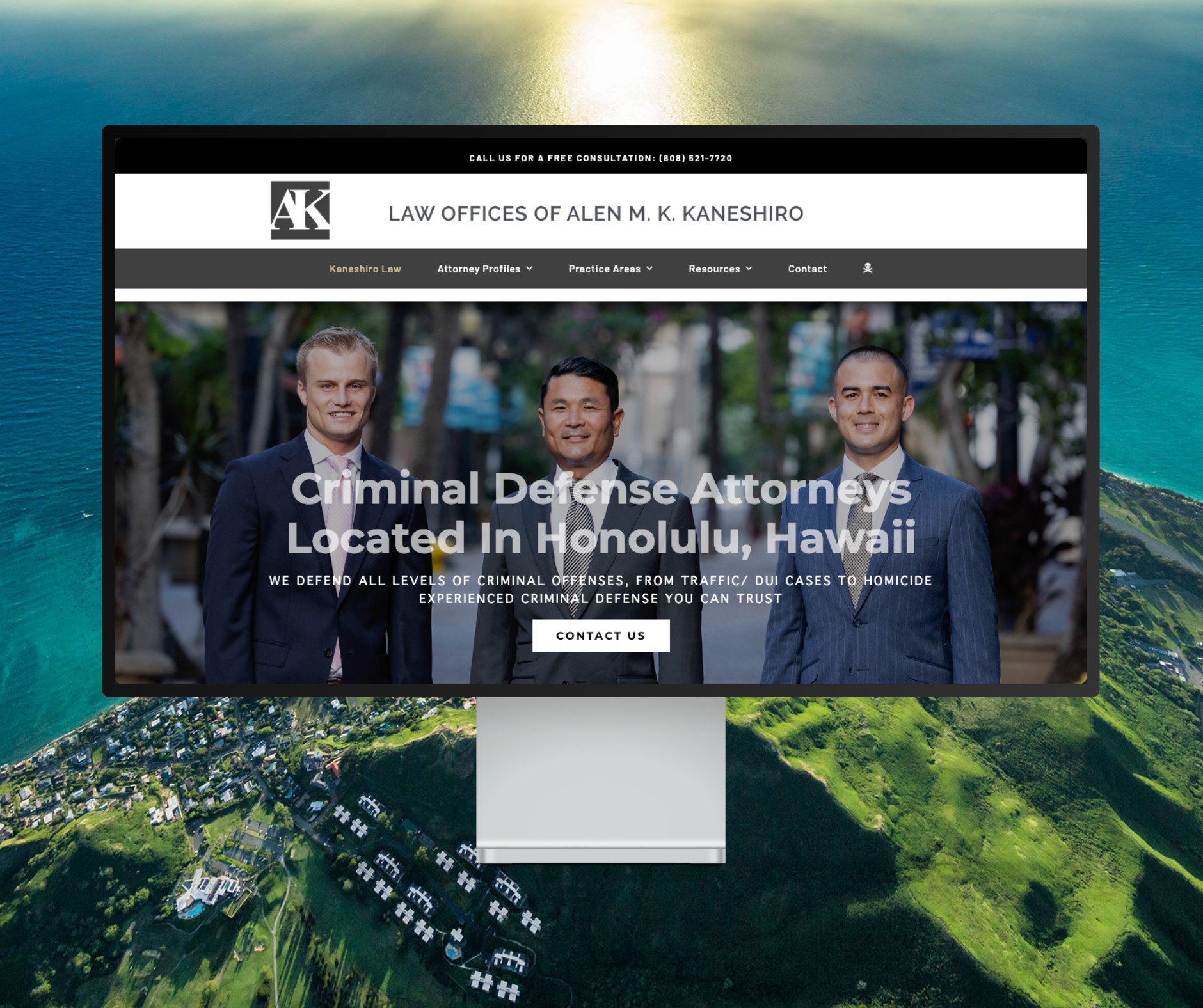
Featured Website: www.kaneshirolaw.com
Kaneshiro Law Firm, one of Hawaii’s most respected legal practices, partnered with The X Digital three years ago for a complete website redesign. Since then, we’ve maintained an ongoing relationship—handling updates, optimizations, and technical support around the clock. Our dedicated team ensures they’re never without assistance, while our enterprise-grade hosting provides 24/7 uptime monitoring and reliability. Kaneshiro Law Firm is one of many long-term clients who trust us to keep their digital presence running flawlessly.