

Google Ads Performance Max campaigns promised to revolutionize digital advertising when they launched, using machine learning to automatically place your ads across Search, YouTube, Display, Discover, Gmail, and Maps. For many local service businesses in 2026, however, Performance Max has become an expensive lesson in why automation without control rarely delivers what you actually need: qualified leads at a profitable cost.
If you’re a plumber, electrician, contractor, or home service provider spending $2,000 to $5,000 per month on Google Ads and your Performance Max campaigns are underperforming, you’re not alone — and you’re probably not doing anything wrong. The problem is structural. According to recent analysis from Praxxii Global, many Performance Max campaigns claiming impressive ROAS numbers are actually just taking credit for branded search traffic that would have converted anyway, while burning the rest of the budget on low-quality impressions across Google’s network.
This article explains exactly why Performance Max campaigns fail for local businesses, what the data actually shows in 2026, and what you should do instead if you want more qualified leads without wasting your advertising budget.
Why Performance Max Campaigns Local Business Strategies Miss the Mark
Performance Max was designed for e-commerce businesses with large product catalogs, high conversion volumes, and clear purchase signals. A Shopify store selling 500 products with 200 transactions per day gives Google’s machine learning exactly what it needs: massive amounts of conversion data to optimize against.
Local service businesses operate in the opposite environment. You might generate 30 to 50 form submissions or phone calls per month, your “conversion” is a lead rather than a completed sale, and Google cannot see whether that $50 cost-per-lead turned into a $5,000 job or a tire-kicker who hung up after ten seconds.
The Conversion Volume Problem
Google’s own guidance recommends campaigns generate at least 30 conversions in a 30-day period for optimal performance. For a service business spending $1,500 to $3,000 per month, that threshold can be difficult to reach — and when you do reach it, you’re often counting low-quality leads alongside genuine opportunities.
The math gets worse when you consider that Performance Max needs to learn across six different channels simultaneously. According to analysis from Foundgrove, at typical 2026 home improvement CPCs of $8.33 and an 8.05% conversion rate, generating 30 conversions costs roughly $3,100 in clicks for a single channel. Performance Max splits that same signal six ways, meaning the machine learning model is trying to optimize with statistically insufficient data across most of the inventory it’s bidding on.
The Brand Cannibalization Issue
The most expensive pattern we see in Performance Max accounts is brand traffic cannibalization. Your campaign reports strong performance — maybe 40 conversions at $45 each with a 4.2x ROAS. But when you dig into the search category report, you discover that 60% of those conversions came from people searching for your business name, your phone number, or “[your company] reviews.”
Those searches would have found you organically anyway. Performance Max is paying $5 to $8 per click for traffic that would have clicked your free organic listing, then reporting those conversions as campaign wins. An Optmyzr study across 503 Google Ads accounts found that 91.45% of accounts had keyword overlap between Search campaigns and Performance Max, and in those scenarios, Search campaigns won on conversion performance nearly twice as often.
For a local business with a $3,000 monthly budget, this means you might look at your dashboard and see 30 conversions at $50 each. But if 15 of those are branded searches you would have captured for free, and another 10 are low-quality leads that never book, your real cost per acquired customer is $150 — not $50 — and your profitability just disappeared.
What Google Ads Performance Max Not Working Actually Looks Like
Performance Max failures follow predictable patterns. Here’s what underperformance actually looks like in 2026 for local service businesses:
High Impression Volume, Low Lead Quality
Your campaign delivers 50,000 impressions and 200 clicks per month, generating 25 conversions. The cost per conversion looks acceptable at $60. But when you call those leads back, half don’t answer, a quarter say they were “just looking,” and only five turn into booked jobs. Your real cost per customer is $300, and you’re losing money on every job that doesn’t exceed $1,500 in margin.
This happens because Performance Max, without strict audience and placement controls, defaults to spending 40% to 60% of budget on Display and YouTube impressions. Those channels generate cheap clicks and form submissions, but the intent level is far lower than someone actively searching “emergency plumber near me” on Google Search.
Geographic Leakage
You serve a 15-mile radius around your city, but Performance Max is showing your ads to users 30 miles away because Google’s location targeting interprets “people in or regularly in your target location” more broadly than you intended. You’re paying for clicks from people you cannot serve, and those conversions count against your campaign metrics even though they’ll never become customers.
For businesses spending $2,000 to $5,000 per month, every dollar routed to a low-intent query or out-of-area user is a dollar that didn’t reach a homeowner in your service area ready to book a service call.
Opaque Reporting That Hides the Problems
Performance Max provides less transparency than any other Google Ads campaign type. You cannot see which keywords triggered your ads. You cannot see placement-level performance. The search terms report shows only a fraction of the queries that generated clicks. You’re flying blind, making optimization decisions based on aggregate metrics that hide whether your budget is going to high-intent commercial searches or informational YouTube views.
Performance Max vs Search Campaigns: The Data in 2026
The comparison between Performance Max and well-structured Search campaigns is not close for local service businesses. Here’s what the data shows:
- Conversion quality: Search campaigns targeting commercial-intent keywords (“plumber near me,” “emergency AC repair,” “kitchen remodeling contractor”) deliver leads with 2x to 3x higher close rates than Performance Max leads from Display and YouTube inventory
- Cost per acquisition: When you exclude brand traffic cannibalization, Performance Max CPAs for local service businesses typically run 40% to 70% higher than Search campaigns targeting the same service area
- Budget efficiency: Search campaigns allow you to allocate budget precisely to high-intent queries and pause spending on underperforming terms. Performance Max makes those decisions for you, and the algorithm consistently overweights impression volume over lead quality
- Transparency: Search campaigns show you exactly which keywords drove conversions, what you paid, and where the traffic came from. Performance Max shows you aggregate numbers and expects you to trust the black box
For a local business spending $1,500 to $4,000 per month, a well-built Search campaign will deliver more qualified leads at a lower cost per acquisition with far more control over where your money goes.
When Performance Max Makes Sense (and When It Doesn’t)
Performance Max is not universally bad. It has legitimate use cases for local service businesses — but only as a secondary layer on top of a healthy Search account, not as your primary acquisition channel.
Performance Max Works When:
- Your Search campaigns are already mature and profitable, with average Quality Scores above 7 and cost per lead within 15% of your target
- Your monthly conversion volume exceeds 50 events with reliable server-side conversion tracking
- Your total ad budget exceeds $8,000 per month, allowing Performance Max to run at $1,000 to $2,000 per month without starving your Search campaigns
- You configure it as a retargeting layer targeting only past site visitors and Customer Match audiences, with brand keyword exclusions enabled and final URL expansion turned off
- You’re expanding into new geographic markets where you have no Search history and want machine learning to test channel mix
Performance Max Fails When:
- It’s your only campaign type, with no dedicated Search campaigns capturing high-intent commercial queries
- Your conversion tracking fires on a thank-you page load rather than an actual qualified submission, causing the algorithm to optimize for volume instead of quality
- Your monthly budget is under $5,000 and you cannot generate sufficient conversion volume for the algorithm to optimize effectively
- You haven’t applied brand keyword exclusions, account-level negative keywords, or disabled final URL expansion
- You’re treating it as a “set it and forget it” solution rather than monitoring search category reports and audience signals weekly
The Local Service Business Google Ads Strategy That Actually Works in 2026
If Performance Max is underperforming or you’re considering whether to use it, here’s the strategy that consistently delivers qualified leads at profitable costs for local service businesses:
Step 1: Build Search Campaigns First
Your Search campaigns should capture 70% to 80% of your total Google Ads budget. Structure them around commercial-intent keywords specific to your services and service area. Use exact match and phrase match keywords, not broad match. Write ad copy that speaks directly to the problem your customer needs solved right now. Send traffic to service-specific landing pages, not your homepage.
This is your foundation. Everything else is supplemental.
Step 2: Add Local Services Ads If You Qualify
If you’re in an LSA-eligible vertical (plumbing, HVAC, electrical, locksmith, house cleaning, and others), Local Services Ads will deliver lower cost per lead than any Performance Max configuration. Run LSAs through the separate LSA console, not through Google Ads. For most local service businesses, LSAs are the single highest-ROI channel Google offers.
Step 3: Consider Performance Max Only After Steps 1 and 2 Are Profitable
If your Search campaigns and LSAs are generating leads profitably and you have budget headroom, then you can test Performance Max as a 10% to 20% budget allocation for retargeting and geographic expansion. Configure it with strict constraints: brand keyword exclusions, final URL expansion disabled, audience signals limited to Customer Match and past site visitors, and account-level negative keywords applied.
Run it for 60 days, track lead quality separately from lead volume, and compare the true cost per booked job against your Search campaigns. If Performance Max cannot beat or match Search on cost per acquisition and lead quality, pause it and reallocate the budget back to Search.
Conclusion: Automation Is a Tool, Not a Strategy
Google Ads Performance Max campaigns fail for local businesses in 2026 because the campaign type was designed for a different business model with different conversion signals and different budget scales. The machine learning needs more data than most local businesses can provide, the multi-channel approach dilutes budget into low-intent inventory, and the lack of transparency makes it nearly impossible to diagnose problems before they consume thousands of dollars.
The businesses winning with Google Ads in 2026 are not the ones chasing automation. They’re the ones running disciplined Search campaigns that target commercial-intent keywords, tracking lead quality all the way to booked jobs, and treating their ad spend like the investment it is — with accountability, transparency, and constant optimization based on what actually drives revenue.
If you’re struggling with Google Ads performance, underperforming Performance Max campaigns, or need help building a strategy that actually delivers qualified leads for your local service business, our team has managed hundreds of accounts across every major service vertical. We’ll audit your current setup, identify where your budget is leaking, and build campaigns that turn clicks into customers. Reach out — we’d be happy to take a look.
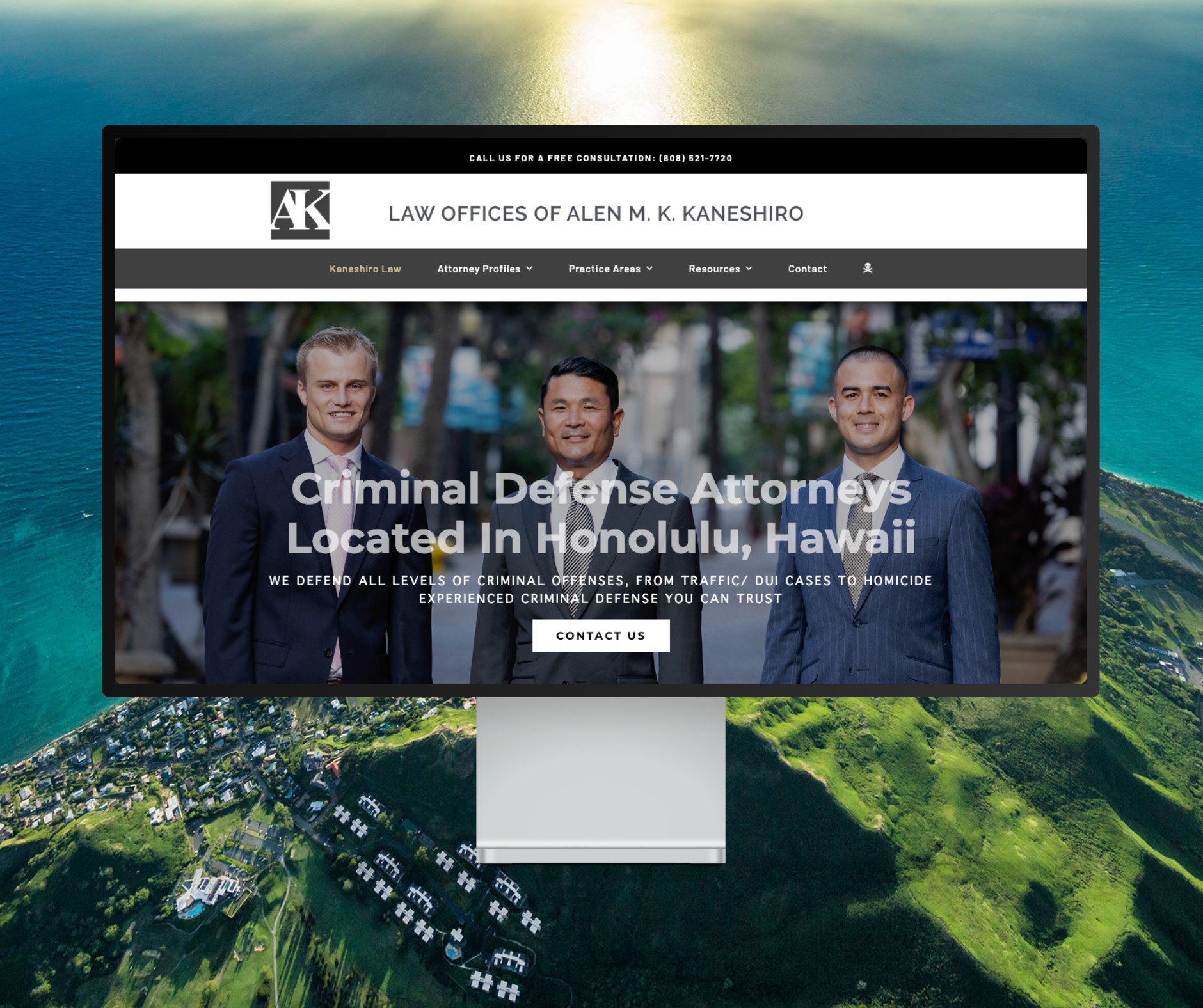
Featured Website: www.kaneshirolaw.com
Kaneshiro Law Firm, one of Hawaii’s most respected legal practices, partnered with The X Digital three years ago for a complete website redesign. Since then, we’ve maintained an ongoing relationship—handling updates, optimizations, and technical support around the clock. Our dedicated team ensures they’re never without assistance, while our enterprise-grade hosting provides 24/7 uptime monitoring and reliability. Kaneshiro Law Firm is one of many long-term clients who trust us to keep their digital presence running flawlessly.