

Voice search optimization is no longer just about getting a smart speaker to read your website aloud. In 2026, people are asking Google, Siri, Alexa, and AI assistants longer, more conversational questions—and expecting useful answers immediately. Google’s Search Live, launched in English in the United States in September 2025, lets people have interactive voice conversations with Search while sharing camera context. Google also says AI Mode surpassed one billion monthly users one year after launch, with queries more than doubling every quarter. ([blog.google](https://blog.google/products-and-platforms/products/search/search-live-tips/?utm_source=openai))
That shift matters whether you run a plumbing company, vacation rental business, medical practice, online store, or professional services firm. Your potential customers may not search for “Maui plumber” or “best senior care near me.” They may ask, “Who can fix a leaking water heater near me today?” or “What’s the best place to stay near the beach for a family with two children?”
This guide explains how to prepare your website for the rise of voice search in 2026. You’ll learn what is changing, how to create content that AI voice assistants can understand, how to strengthen your local search signals, and which technical improvements are worth prioritizing.
Why Voice Search Optimization Matters More in 2026
Voice search has been growing for years, but the experience is changing quickly. Traditional voice assistants typically returned one short answer or a list of search results. Newer AI-powered search experiences can understand context, ask follow-up questions, compare options, and connect users with websites or businesses.
Google’s Search Live is a clear example. As of September 24, 2025, Google said users in the United States could start an interactive voice conversation in the Google app without joining a Labs experiment. Users can speak naturally, share their phone’s camera feed, and receive web links for deeper research. ([blog.google](https://blog.google/products-and-platforms/products/search/search-live-tips/?utm_source=openai))
Google also reported in May 2026 that AI Mode had passed one billion monthly users globally, while queries were more than doubling every quarter since launch. That is not the same thing as saying one billion people use voice search. It does show, however, that search is moving toward longer, more conversational interactions—and voice is one of the most natural ways to use them. ([blog.google](https://blog.google/products-and-platforms/products/search/search-io-2026/?pubDate=20260520&utm_source=openai))
Voice search is becoming part of AI search
For business owners, the important distinction is this: optimizing for voice search is increasingly connected to optimizing for AI-generated answers. The assistant needs to understand what your business does, where you operate, who you serve, what you offer, and why someone should trust you.
Google’s May 2025 AI Mode update described users asking longer questions, using follow-up questions, and discovering new websites and businesses through conversational search. Google also highlighted local results containing ratings, reviews, opening hours, and other business details. ([blog.google](https://blog.google/products-and-platforms/products/search/ai-mode-updates-may-2025/?utm_source=openai))
In practical terms, a website that is clear, current, technically sound, and well-supported by trustworthy business information has a better chance of being considered for both traditional search results and AI-assisted answers.
Build Content Around Real Questions, Not Just Keywords
People tend to type short phrases but speak in complete questions. That does not mean you should abandon keyword research. It means your content should reflect the way customers actually describe problems, compare options, and ask for recommendations.
For example, a landscaping company might target “landscaping services Honolulu” as a traditional keyword. That is still useful. But its content should also answer conversational questions such as:
- “How much does landscaping maintenance cost in Honolulu?”
- “Who can remove an overgrown yard near me?”
- “What plants are easiest to maintain in Hawaii?”
- “Can someone provide weekly lawn care for a rental property?”
These questions reveal intent. One person wants pricing, another needs an urgent service, another wants advice, and another may be a property manager looking for an ongoing contract. A strong website addresses each need directly instead of forcing every visitor to decode vague marketing copy.
Use question-based headings and direct answers
Organize service pages and articles around the questions your customers ask before contacting you. Use a descriptive heading, answer it clearly in the first paragraph, and then add useful detail.
For example:
How quickly can you repair a broken water heater?
“We typically respond to emergency water-heater repair calls the same day in our service area. Availability depends on the location, time of day, and required parts.”
This format helps people and search systems. It also gives AI assistants a concise passage they can interpret without guessing. Avoid making unsupported promises just to sound more competitive. Accuracy is more valuable than a clever answer that creates the wrong expectation.
Write naturally, but don’t manufacture awkward questions
Good SEO for voice search does not mean repeating phrases such as “best plumber near me” dozens of times. It means using natural language, related terms, clear explanations, and specific details.
Include the words customers genuinely use, but prioritize clarity. A page titled “Emergency Water Heater Repair in Honolulu” is better than a page stuffed with variations of “Honolulu emergency water heater repair near me.”
Strengthen Your Local Business Information
Local businesses have a major opportunity because many voice searches have immediate local intent. Someone asking, “Where can I get my car detailed today?” is not looking for a general article about car detailing. They want a real business, a location, a phone number, current hours, and confidence that the company can help.
Google’s Search Central documentation says businesses should maintain a Google Business Profile when they want to appear in local results. Google also recommends LocalBusiness structured data, which helps describe information such as the business name, address, phone number, opening hours, geographic coordinates, services, and other details. ([developers.google.com](https://developers.google.com/search/help/site-appearance-faq?hl=en&utm_source=openai))
Make your business details consistent
Review your website, Google Business Profile, Apple Business Connect listing, Bing Places listing, social profiles, and major directories. Your business name, address, phone number, service area, hours, and website URL should match wherever possible.
Pay particular attention to details that change:
- Holiday and seasonal hours
- Temporary closures
- Service-area boundaries
- Appointment requirements
- Emergency or after-hours availability
- Current services and product inventory
Voice assistants are not reading your intentions. They rely on available data. If your website says you close at 5:00 p.m. but your business profile says 7:00 p.m., a customer asking for an open business may receive an answer you cannot control.
Use LocalBusiness schema carefully
Structured data is code that helps search engines identify what a page represents. For a local business, it can describe the organization, location, phone number, opening hours, and services in a standardized format.
Google does not guarantee that structured data will produce a rich result, and adding markup does not automatically earn a voice answer. ([developers.google.com](https://developers.google.com/search/docs/appearance/structured-data/local-business?product=breeze&utm_source=openai)) Still, accurate structured data removes ambiguity and gives search systems better information to work with.
Use the most specific business type available, keep the markup consistent with visible page content, and test it after implementation. If you operate multiple locations, create accurate location pages rather than copying the same generic page across every city.
Make Your Website Easy for AI Assistants to Understand
AI voice assistants and answer engines need more than keywords. They need clear relationships between your business, services, locations, people, products, and claims. This is where technical SEO and AEO—Answer Engine Optimization—overlap.
Start with a simple question: if an assistant summarized your business in two sentences, would it get the important facts right?
Your homepage and primary service pages should make these points obvious:
- What you do
- Who you help
- Where you work
- What makes your approach different
- How customers can contact or book you
- What evidence supports your claims
Use descriptive page titles, logical headings, short paragraphs, internal links, and plain-language explanations. Google says useful page titles help both the search engine understand a page and users decide whether to click. ([developers.google.com](https://developers.google.com/search/help/site-appearance-faq?hl=en&utm_source=openai))
Create concise answer sections
Add short FAQ sections to service pages when they genuinely help customers. Good questions include pricing ranges, service areas, timelines, requirements, policies, and common problems. The answers should be complete enough to be useful but concise enough to understand when read aloud.
For example, a rental company might answer, “Do you offer airport pickup?” in two or three sentences, then explain the available options. A healthcare provider might answer, “Do I need a referral?” while making it clear that requirements can vary by insurance plan.
Do not add FAQ content solely to chase a search feature. Google’s structured-data documentation makes clear that eligibility does not guarantee a particular appearance in results. ([developers.google.com](https://developers.google.com/search/docs/appearance/structured-data/local-business?product=breeze&utm_source=openai)) Your first goal should be helping customers make a decision.
Consider audio-friendly content
Google’s speakable documentation recommends concise sections that take roughly 20 to 30 seconds to read aloud—about two or three sentences. It also says speakable markup is designed to identify sections suitable for text-to-speech and remains a beta feature subject to change. ([developers.google.com](https://developers.google.com/search/docs/appearance/structured-data/speakable?hl=en&utm_source=openai))
For most small businesses, speakable markup is not the first task to complete. However, the underlying writing principle is useful: write short, self-contained answers that make sense without visual context. Avoid relying on tables, images, captions, or “as shown below” references when the answer needs to work through audio.
Improve Speed, Mobile Experience, and Trust
Voice search may begin with a spoken question, but the customer often ends up visiting your website, calling, requesting directions, booking an appointment, or buying something. That next step needs to be easy.
Google’s AI search updates increasingly connect conversational answers with websites, local business information, product details, and direct links. In May 2026, Google described updates intended to help users find relevant websites, original content, and direct links within AI-generated responses. ([blog.google](https://blog.google/products-and-platforms/products/search/explore-web-generative-ai-search/?utm_source=openai))
If someone taps through to your site and it loads slowly or is difficult to use on a phone, the opportunity is wasted.
Prioritize:
- Fast hosting and image compression
- A responsive mobile layout
- Large, easy-to-tap phone and booking buttons
- Simple navigation with clear service categories
- Secure HTTPS and updated WordPress software
- Readable text with sufficient contrast
- Accurate contact and location information
Trust matters just as much as technical performance. Add real customer reviews, author or practitioner information where appropriate, clear policies, project examples, credentials, and a physical business identity. AI systems are more likely to understand and recommend a business when the site consistently demonstrates who is behind it and why the business is qualified.
Do not publish thin AI-generated articles simply to create more pages. Google’s evolving search experience is designed to help people find useful information and original content. Your advantage is not producing the most content; it is publishing information based on real experience that answers customer questions better than generic competitors do.
A Practical Voice Search Optimization Checklist for 2026
You do not need to rebuild your entire website overnight. Start with the pages closest to revenue and work through this checklist:
- List real customer questions. Review calls, emails, chat conversations, sales objections, and Google Business Profile questions.
- Improve your top service pages. Add direct answers, service areas, pricing guidance where appropriate, process details, and clear calls to action.
- Update local information. Check your business name, address, phone number, hours, services, and service areas across major platforms.
- Add accurate structured data. Use relevant LocalBusiness, Organization, Product, or Service markup that matches visible content.
- Make mobile actions obvious. A voice-search visitor should be able to call, book, get directions, or request a quote in a few taps.
- Measure outcomes. Track calls, form submissions, direction requests, bookings, branded searches, and qualified leads—not just rankings.
Some businesses may benefit from advanced monitoring of AI citations and answer-engine visibility. Others should first fix outdated hours, slow pages, weak service descriptions, or broken contact forms. The right order depends on the condition of your website and the type of customer you serve.
Conclusion: Prepare for Voice Search by Becoming Easier to Understand
The future of website voice search is not a single ranking trick. It is a more conversational, context-aware search environment where people ask complete questions and expect assistants to recommend useful next steps.
The businesses best positioned for 2026 will be the ones with accurate local information, fast mobile websites, clear service pages, trustworthy content, and answers based on real expertise. You do not need to predict every change Google, Apple, Amazon, or AI companies make. You need to make your business easy for both people and machines to understand.
At The X Digital, we approach voice search optimization as part of broader SEO and AEO—not as a separate gimmick. We help businesses clarify their content, strengthen technical foundations, improve local visibility, and turn search traffic into calls and customers. Start with the pages that generate revenue, fix the information customers rely on, and build from there.
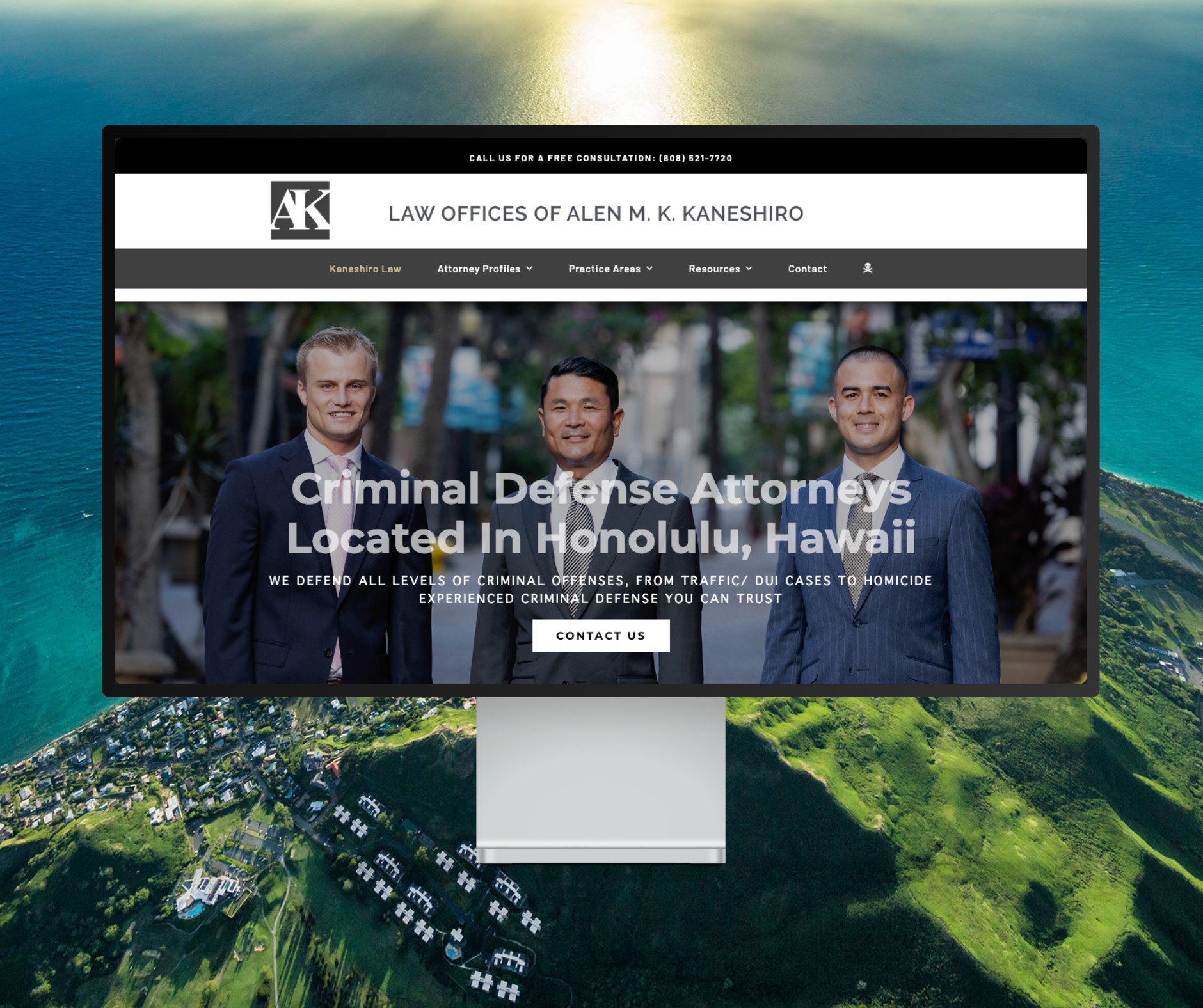
Featured Website: www.kaneshirolaw.com
Kaneshiro Law Firm, one of Hawaii’s most respected legal practices, partnered with The X Digital three years ago for a complete website redesign. Since then, we’ve maintained an ongoing relationship—handling updates, optimizations, and technical support around the clock. Our dedicated team ensures they’re never without assistance, while our enterprise-grade hosting provides 24/7 uptime monitoring and reliability. Kaneshiro Law Firm is one of many long-term clients who trust us to keep their digital presence running flawlessly.