

Boosting your local business with AI in Los Angeles doesn’t require a massive technology budget or a complicated software stack. It starts with using AI to solve practical problems: responding to leads faster, creating useful local content, improving customer follow-up, and helping your team spend less time on repetitive tasks.
Los Angeles is a competitive market. A customer looking for a plumber in Pasadena, a wellness provider in West Hollywood, or a photographer in Santa Monica has plenty of options—and often chooses the business that responds first and communicates most clearly. AI can help you compete, but only when it supports a sound marketing strategy rather than replacing one.
In this guide, we’ll cover practical AI for local businesses, including lead generation, customer interaction optimization, local SEO Los Angeles strategies, and content creation. These are approaches we’d recommend to a busy owner-operator who wants measurable improvements without adding unnecessary complexity.
How Boosting Your Local Business with AI in Los Angeles Starts with Better Leads
Many local businesses don’t have a traffic problem. They have a follow-up problem. A potential customer visits the website after hours, submits a form, and waits until the next business day for a response. By then, they may have contacted three competitors.
One of the most useful applications of AI is handling the first stage of that conversation. An AI-powered website assistant can answer common questions, identify what a visitor needs, collect contact information, and direct serious inquiries to your team. This is where lead generation AI can create a direct business impact.
Use AI to qualify, not pressure
A good AI chatbot should feel like a helpful front desk—not a salesperson that interrupts every visitor. It can ask questions such as:
- What service are you interested in?
- Which Los Angeles neighborhood or service area are you located in?
- How soon do you need help?
- What is the best way to contact you?
That information gives your team context before making contact. A contractor can distinguish between an emergency repair and a future remodeling project. A med spa can separate appointment requests from general treatment questions. A senior care provider can understand whether the inquiry is from a family member looking for immediate support.
The goal isn’t to automate every conversation. The goal is to make sure qualified opportunities are captured and routed correctly.
Connect AI to your existing workflow
AI works best when it connects to the tools you already use. Leads might be sent to your customer relationship management system, email inbox, calendar, or text-message workflow. If your team still has to copy information manually from a chatbot into a spreadsheet, much of the benefit disappears.
Before choosing a platform, map your current process. Where do leads enter? Who responds? How quickly? What happens when someone asks a question the system can’t answer? Clear answers to those questions matter more than choosing the newest AI product.
At The X Digital, we build and use AI tools such as Zao Chat with this practical mindset. Technology should support the way your business actually operates, not force you into a process designed for someone else.
Apply AI to Local SEO in Los Angeles Without Losing Your Local Voice
AI can help you produce and organize content, but it cannot replace genuine local knowledge. Search engines and customers both have a reason to distrust generic pages that simply repeat a city name. Strong local SEO Los Angeles work connects your services to real customer needs, locations, questions, and experiences.
Create useful location-based content
Consider how customers in Los Angeles search. They may use a neighborhood, landmark, service area, or specific situation in their query. Someone might search for “emergency electrician near Silver Lake,” “commercial cleaning in Downtown LA,” or “family-friendly activities near LAX.” Those searches reveal intent, which means the visitor may be ready to take action.
AI can help your team organize these opportunities and create an editorial plan. It can group related questions, identify gaps in your existing website, and turn frequently asked customer questions into article outlines. However, the final content should include details only your business can provide:
- Which neighborhoods you actually serve
- How your pricing or estimates work
- Common local access, parking, or scheduling issues
- What customers should prepare before contacting you
- Real examples, project types, or service limitations
This information makes a page useful instead of merely optimized.
Improve your Google Business Profile
Your Google Business Profile remains one of the most important assets for a local company. AI can help draft responses to reviews, identify recurring customer questions, suggest updates, and organize potential Google Business Profile posts. But every response should be reviewed by a person before publication.
Reviews are especially important. A thoughtful response should acknowledge the customer’s specific experience rather than rely on a generic “Thank you for your feedback.” AI can create a first draft, but your team should add the human detail. If a customer mentions a technician, neighborhood, appointment, or result, respond to that detail when appropriate.
Also keep your core business information consistent across your website, directories, and social profiles. Correct name, address, phone number, hours, and service information help customers and search engines understand your business. AI can help audit these details, but it should not be allowed to make unsupervised changes to important listings.
Build Los Angeles Business Strategies Around Real Customer Behavior
AI is most valuable when it helps you understand what customers are already doing. It can review website searches, contact-form submissions, call transcripts, email questions, and frequently visited pages. These sources often reveal marketing opportunities that are easy to miss when you’re focused on daily operations.
For example, a Los Angeles home service company may discover that many visitors ask whether technicians serve apartment buildings. A healthcare practice may find that patients want to know about parking, insurance, or evening appointments. A tourism business may see repeated questions about pickup locations, traffic, and what to bring.
Turn repeated questions into conversion assets
Once you identify recurring questions, use them to improve the customer journey. You might add:
- A clearer FAQ section
- Service pages organized by customer need
- Short videos explaining what to expect
- Better form fields that reduce back-and-forth
- Automated appointment reminders and follow-ups
This is customer interaction optimization in practical terms. You’re removing friction at the points where people hesitate, abandon a form, or decide to contact another company.
Use AI for personalization carefully
Personalization does not have to mean complicated tracking. Even simple changes can improve relevance. A visitor who arrives on a commercial cleaning page should see a clear commercial call to action, while a homeowner should be guided toward residential services. A chatbot can ask which service the visitor needs and display the appropriate next step.
Be transparent about data collection. Don’t ask for sensitive information unless it is necessary, and don’t make promises about privacy that your systems cannot support. For businesses handling health, financial, or other sensitive information, review your obligations with a qualified professional before introducing automation.
AI should also know when to hand a conversation to a person. If someone is upset, asks a complex question, or needs professional judgment, a fast human response is better than an extended automated exchange.
Use AI Content Tools Without Publishing Generic Articles
Consistent content can help a local business earn search visibility, answer customer questions, and build trust. Yet producing content every week is difficult when you’re also managing staff, jobs, inventory, or appointments. AI can reduce the time required for research, outlining, drafting, repurposing, and editing.
The mistake is treating AI as a button that creates finished articles without direction. That approach usually produces vague content that sounds like every competitor. It may also introduce inaccurate claims, outdated information, or advice that doesn’t fit your services.
A practical AI content workflow
- Start with real questions. Review sales calls, emails, chat conversations, and questions your staff hear repeatedly.
- Define the customer and location. Explain who the content is for, what service area matters, and what action the reader should take.
- Use AI to organize ideas. Ask it to create an outline, identify missing questions, or suggest clearer explanations.
- Add firsthand expertise. Include your process, examples, limitations, pricing factors, and local context.
- Fact-check and edit. Review dates, regulations, service claims, statistics, and anything that could affect a customer’s decision.
- Publish and improve. Track engagement, inquiries, rankings, and conversions instead of judging success by publication volume alone.
For businesses serving Los Angeles, local context is particularly important. A useful article might explain how traffic affects appointment windows, how parking changes an on-site service visit, or how customers should plan around a major event. Those details make content more credible and more helpful than a generic city landing page.
Tools like Zao Flo can help businesses maintain a consistent publishing process, but automation should remain supervised. The purpose is to make expertise easier to share—not to hide the lack of expertise.
Measure What AI Is Actually Improving
Before investing in AI, establish a baseline. How many qualified leads do you receive each month? How quickly does your team respond? What percentage becomes a consultation, appointment, or sale? How much time do employees spend answering repetitive questions?
Then select a small number of measurable goals. Useful metrics may include:
- Lead response time
- Completed contact forms and booked appointments
- Qualified leads by service or location
- Conversion rate from key landing pages
- Calls or inquiries generated from local search
- Hours saved on repetitive administrative work
Don’t assume that more chatbot conversations or more AI-generated articles automatically equal better marketing. A tool can increase activity while producing no additional revenue. The important question is whether the technology helps the right customer take the next step.
For example, if an AI assistant generates many conversations but few qualified inquiries, its questions or targeting may need adjustment. If content earns traffic but no calls or form submissions, the page may have weak intent, unclear calls to action, or a mismatch between the topic and your services.
Start with one use case, test it for a reasonable period, and improve it based on real results. This approach is safer and usually more affordable than trying to automate your entire business at once.
Conclusion: Make AI Useful Before Making It Bigger
AI for local businesses is not about replacing the relationships that make a company successful. It’s about helping your team respond faster, communicate more clearly, and stay consistent when the workload grows. For a business competing in Los Angeles, those improvements can make a meaningful difference.
Start with the bottleneck closest to revenue. That might be missed after-hours leads, slow follow-up, confusing service pages, or a lack of useful local content. Choose one process, define a measurable goal, and keep a person involved wherever judgment, empathy, or accuracy matters.
If you need help deciding where AI fits into your website, local SEO, or lead-generation process, The X Digital can help you evaluate the options without adding unnecessary complexity. We build websites, SEO systems, and AI solutions for businesses that want dependable long-term growth—not technology for its own sake.
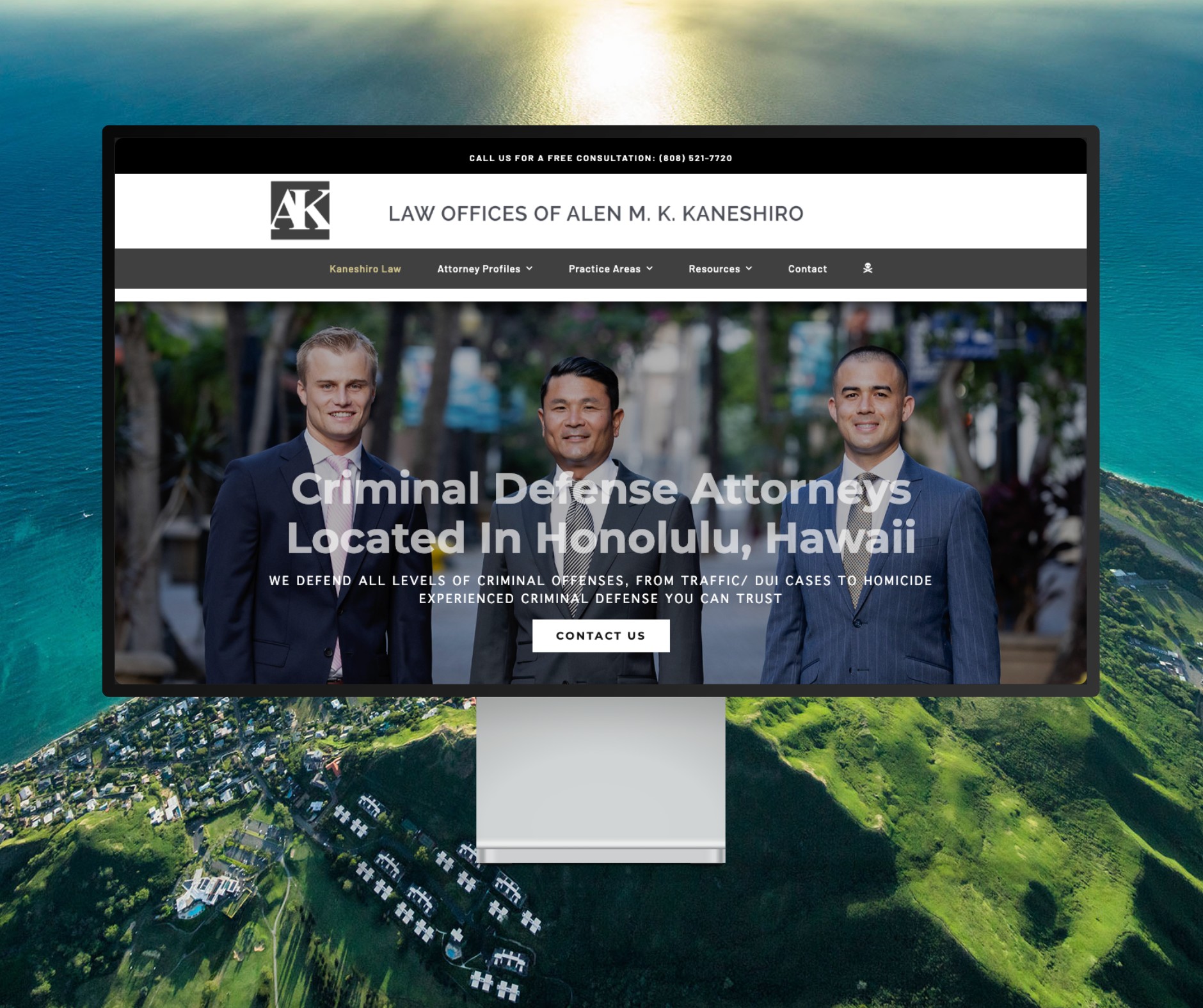
Featured Website: www.kaneshirolaw.com
Kaneshiro Law Firm, one of Hawaii’s most respected legal practices, partnered with The X Digital three years ago for a complete website redesign. Since then, we’ve maintained an ongoing relationship—handling updates, optimizations, and technical support around the clock. Our dedicated team ensures they’re never without assistance, while our enterprise-grade hosting provides 24/7 uptime monitoring and reliability. Kaneshiro Law Firm is one of many long-term clients who trust us to keep their digital presence running flawlessly.