

Search behavior is changing faster than most small businesses can adjust. A potential customer can now ask Google a detailed question, read an AI-generated answer, compare local options, check reviews, and decide what to do next without visiting a single website. That’s the reality behind accelerated zero-click searches.
For businesses that depend on organic traffic, this can feel alarming. However, SEO is not disappearing. The objective is expanding. Your website still needs to rank, but it also needs to become a source that Google, AI assistants, and answer engines trust enough to summarize, cite, and recommend. In this guide, we’ll explain how to adjust your SEO strategy, measure online visibility more intelligently, and use Answer Engine Optimization alongside traditional search optimization.
How to Adjust Your SEO Strategy in the Era of Accelerated Zero-Click Searches
A zero-click search happens when someone finds an answer directly on the search results page and does not click through to a traditional website. This may happen because of a featured snippet, local business information, a knowledge panel, a map result, or an AI-generated summary.
The trend is significant. SparkToro’s 2024 study, based on clickstream data from Datos, found that 58.5% of U.S. Google searches ended without a click. Only 360 out of every 1,000 U.S. searches resulted in a click to a non-Google-owned, non-ad-paying website. The study also noted that nearly 30% of clicks went to Google-owned properties such as YouTube, Google Maps, Google Flights, and Google Images. You can review the methodology and limitations in the 2024 Zero-Click Search Study from SparkToro.
Google AI Overviews add another layer. In a July 2025 analysis, Pew Research Center found that approximately one in five Google searches produced an AI summary. When an AI summary appeared, users clicked a traditional search result in only 8% of visits, compared with 15% when no summary appeared. Clicks on a source link inside the summary occurred in just 1% of visits.
That does not mean your content has no value. It means traffic is no longer the only way your content creates value. Your business may be discovered, remembered, compared, or contacted after appearing in a search feature—even if the user never records a session in Google Analytics.
The new SEO question
Instead of asking only, “How do we rank number one?” ask:
- Can Google understand exactly what we do and where we do it?
- Can an AI system accurately summarize our expertise?
- Are we visible when someone searches for a problem rather than our brand name?
- Does our search presence make the next step obvious?
Those questions lead to a stronger SEO strategy for the current search environment.
Build Content That Deserves to Be Cited
AI Overviews and other answer engines are not simply looking for pages that repeat a keyword. They need content that clearly answers a question, provides context, and demonstrates credibility. Generic articles that could have been written for any business are less useful than specific, experience-based resources.
Google’s own guidance for generative AI search features emphasizes unique, non-commodity content, organized information, a good page experience, and high-quality images and video. In a June 2026 update, Google also announced new controls and Search Console insights for websites appearing in AI search features. Its guidance for website owners navigating generative AI in Search makes an important point: the best opportunity is not to manipulate an AI summary, but to publish content worth finding and visiting.
Answer real questions from real customers
The strongest topics are often hiding in your sales calls, email inbox, support tickets, and conversations with customers. For a contractor, that might include “How much does it cost to replace a water heater in an older home?” For a vehicle rental company, it could be “Do I need a four-wheel-drive vehicle for this road?” For a senior care provider, it might be “What is the difference between assisted living and memory care?”
These questions are valuable because they reveal intent. They also tend to be longer and more conversational—the type of queries that increasingly trigger AI-generated summaries. Pew found that only 8% of one- or two-word searches produced an AI summary in its study, while 53% of searches containing 10 or more words did. Question-based searches beginning with words such as “who,” “what,” “when,” or “why” produced summaries 60% of the time.
Make the answer easy to extract and easy to trust
Use a direct answer near the beginning of the page, then explain the reasoning, exceptions, costs, process, and next steps. Add relevant examples from your work. Identify who the advice applies to and when a customer should call a professional.
Good formatting helps both readers and search systems:
- Use descriptive headings that match natural questions.
- Define technical terms in plain English.
- Use short paragraphs, numbered steps, comparison tables, and lists.
- Include original photos, diagrams, videos, or first-hand observations where helpful.
- Show the author, business experience, location, and date of meaningful updates.
- Link to reputable supporting sources when making technical or regulated claims.
This is not about writing for robots. It is about making your expertise clear enough for a busy person—and a machine—to understand.
Optimize for Visibility Beyond the Blue Link
Traditional rankings still matter, but they are now only one part of online visibility. Your business may appear in a local pack, a map listing, a featured snippet, an AI Overview, a video result, a review platform, or a third-party directory. A complete SEO strategy accounts for all of these surfaces.
Strengthen your local search foundation
For local businesses, Google Business Profile remains essential. Keep your business name, address, phone number, hours, services, service areas, photos, and categories accurate. Respond to reviews in a helpful and specific way. Add regular updates when they genuinely help customers understand your services.
Local zero-click searches are not necessarily failures. Someone who searches for “roof repair near me” may call directly from the map listing. Someone searching for your business name may use the phone number, request directions, or read reviews without opening your website. If you measure only organic sessions, you may incorrectly conclude that your SEO is underperforming.
For service businesses, track calls, form submissions, direction requests, booking actions, messages, and branded searches alongside website traffic. The goal is not to force every person onto your website. The goal is to make it easy for the right person to choose you.
Own the information that influences decisions
Search engines often rely on multiple sources to understand a business. Keep your website, Google Business Profile, social profiles, industry directories, and major review platforms consistent. Add structured data where appropriate, but do not treat schema markup as a shortcut. Structured data helps describe your content; it does not replace clear content, strong reputation, or a useful customer experience.
Also consider the places where customers research before they search for your brand. Depending on your industry, that may include YouTube, Reddit, Instagram, industry associations, local publications, or product marketplaces. The objective is to build a recognizable body of evidence across the web—not to publish the same announcement everywhere.
Use Answer Engine Optimization Without Abandoning SEO
Answer Engine Optimization, or AEO, is the practice of improving your content so answer engines and AI assistants can understand, cite, and recommend it. It overlaps heavily with good SEO, but it puts more emphasis on direct answers, context, authority, and conversational search journeys.
AEO should not be treated as a separate replacement for SEO. Your pages still need to be crawlable, technically sound, fast, mobile-friendly, and relevant to search intent. However, AEO changes how you plan content.
Cover the complete decision journey
A customer rarely asks only one question. Their search journey may look like this:
- What problem am I dealing with?
- Is it urgent or expensive?
- What options are available?
- How do I compare providers?
- What should I ask before hiring someone?
- What is the next step?
Create useful content across that journey. An educational article can introduce the problem. A service page can explain your solution. A comparison page can clarify options. A case study can show how your team handled a real situation. A frequently asked questions section can remove objections.
This structure gives answer engines more opportunities to connect your business with different questions. It also gives human visitors a reason to trust you after they arrive.
Say what makes your business different
AI systems can summarize generic claims such as “we provide quality service.” They have more difficulty summarizing specific proof unless you provide it clearly. Explain your process, geographic coverage, response times, guarantees, qualifications, tools, experience, and limitations.
For example, “We offer fast plumbing service” is weak. “We provide scheduled and emergency plumbing repairs for homes on Maui, with transparent estimates before work begins” is more useful because it describes the service, audience, location, and expectation.
At The X Digital, we take the same practical approach with our own work. We have spent more than 20 years building, ranking, repairing, hosting, and improving websites. That experience matters because useful SEO is not just about publishing more pages. It is about explaining what customers need to know before they make a decision.
Change How You Measure SEO Performance
Zero-click searches make old reporting habits less reliable. A decline in organic sessions may be concerning, but it does not automatically mean your visibility or revenue has declined. The important question is what happened after people encountered your business.
Track a broader set of indicators, including:
- Impressions and clicks for branded and non-branded searches.
- Conversions from organic traffic, including calls and bookings.
- Google Business Profile interactions.
- Search appearances in local packs, snippets, video results, and AI features.
- Referral traffic from directories, publications, social networks, and other platforms.
- New leads that mention Google, an AI assistant, a map listing, or a specific article.
- Revenue and qualified opportunities, not just total sessions.
Google has indicated that new Search Console insights for generative AI features will include impressions, the pages that appear in AI responses, and the countries where those appearances occur. Availability and reporting may evolve, so treat these metrics as additional evidence rather than a perfect measurement of every AI interaction.
It is also wise to create a baseline before making major changes. Review your top pages, conversions, branded search volume, local actions, and customer acquisition sources. Then compare performance over several months. Search features fluctuate, and one unusual week rarely tells the full story.
Conclusion: Build a Search Presence That Works Without the Click
Accelerated zero-click searches are changing how businesses earn attention, but they are not a reason to abandon SEO. They are a reason to make your strategy more complete.
Publish specific answers based on real customer questions. Improve your local listings and reputation. Make your expertise easy for people and answer engines to understand. Track calls, leads, bookings, and visibility—not just website sessions. Most importantly, create a business presence that remains useful even when Google answers part of the question before a visitor reaches your site.
The future of SEO belongs to businesses that are visible before the click, credible during the research process, and easy to choose when the customer is ready. That is the practical intersection of SEO, online visibility, and Answer Engine Optimization.
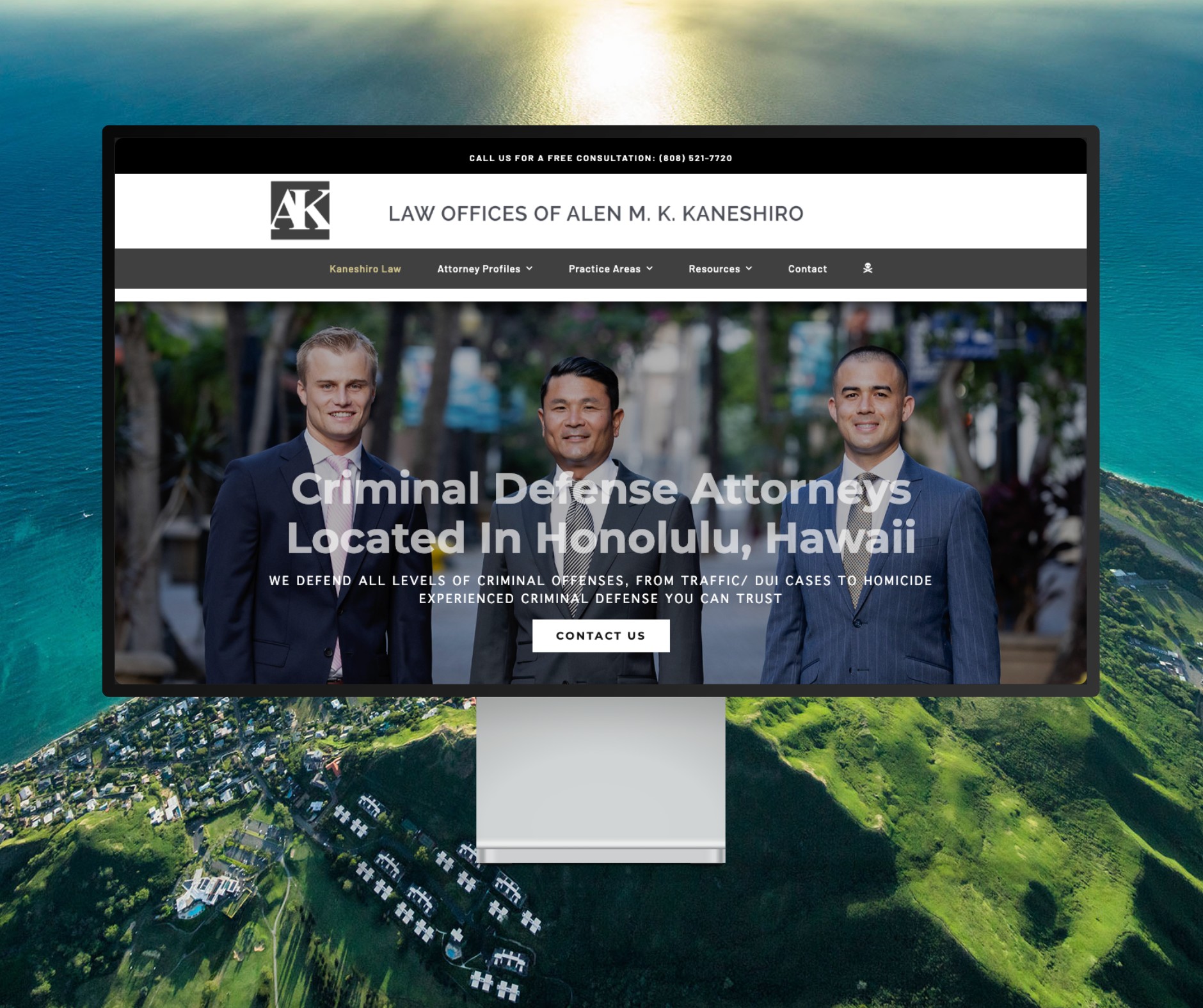
Featured Website: www.kaneshirolaw.com
Kaneshiro Law Firm, one of Hawaii’s most respected legal practices, partnered with The X Digital three years ago for a complete website redesign. Since then, we’ve maintained an ongoing relationship—handling updates, optimizations, and technical support around the clock. Our dedicated team ensures they’re never without assistance, while our enterprise-grade hosting provides 24/7 uptime monitoring and reliability. Kaneshiro Law Firm is one of many long-term clients who trust us to keep their digital presence running flawlessly.