

Sending Google Ads traffic to your homepage feels like the simplest option. Your homepage already exists, it explains what your business does, and it gives visitors plenty of places to click. However, that flexibility is often exactly the problem. A dedicated landing page built for one campaign, one audience, and one action can turn more of your paid clicks into calls, forms, bookings, or sales. If your Google Ads account is generating traffic but few meaningful conversions, your homepage may be part of the issue.
In this guide, we’ll explain why a Google Ads landing page usually performs better than a homepage, what a high-converting PPC page should include, and how to decide whether you need a completely new page or simply a better version of an existing one. These are practical Google Ads and website lessons we’ve applied across service businesses, tourism companies, e-commerce brands, and professional services. The goal isn’t to add complexity for its own sake. It’s to make sure the money you spend on every click has a fair chance to produce a result.
Why a Dedicated Landing Page Beats Your Homepage for Google Ads
Your homepage has a broad job: introduce your company to different types of visitors, support your brand, link to major services, and help people find their way around the site. A Google Ads visitor, on the other hand, usually has a much narrower intent. They may be searching for “emergency plumber near me,” “Maui vacation rental,” or “senior care services.” They aren’t looking for your entire business story. They want confirmation that you can solve one specific problem.
A dedicated landing page aligns the ad, the search intent, and the next step. That alignment matters because people decide quickly whether a page is relevant. If your ad promises same-day air conditioning repair but sends visitors to a homepage featuring every service you offer, the visitor has to search for the information they were promised. Many won’t bother.
This is known as message match: the wording and offer on the landing page should closely match what someone saw in the ad. Strong message match can improve trust, engagement, and your Google Ads conversion rate. It can also support your Quality Score, Google’s rating of how relevant and useful your ad and landing page are for a search.
Homepages create too many decisions
Good website navigation is useful for organic visitors who want to explore. It can be less effective for paid visitors who are ready to take a specific action. A homepage may include links to your About page, blog, careers, multiple services, social media profiles, and several calls to action. Each option competes with the one action you actually want the visitor to take.
A focused PPC landing page reduces that friction. It answers the most important questions in a logical order:
- What service or product is being offered?
- Why should the visitor trust your business?
- What does the offer include?
- What should the visitor do next?
That doesn’t mean every landing page must hide your main navigation or remove every link. It means the page should be designed around a clear conversion goal rather than general browsing.
Relevance affects more than conversions
Landing page relevance can influence how efficiently your Google Ads budget is used. When the ad, keyword, and page all clearly relate to one another, visitors are more likely to stay engaged. Better engagement can contribute to stronger campaign performance over time, although no landing page can compensate for poor targeting, weak offers, or an uncompetitive market.
In other words, a dedicated page isn’t a magic button. It’s one part of a well-built campaign. The right keywords still matter, and the business still needs to deliver what the ad promises.
What a High-Converting Google Ads Landing Page Should Include
A successful Google Ads landing page doesn’t need to be flashy. In fact, many effective pages are relatively simple. They make the offer clear, establish credibility, answer objections, and make the next step easy. Your page should be built around the visitor’s decision—not around everything your company wants to say.
Start with a clear headline and specific offer
The headline should confirm that the visitor is in the right place. If your ad targets “commercial roof repair,” the page headline should use that language rather than a vague statement such as “Solutions for Every Building.” Clear language reassures visitors that they don’t need to keep searching.
Follow the headline with a short explanation of the service and its most important benefit. Be specific about location, timing, pricing structure, availability, or qualifications when those details help people decide. A contractor might highlight free estimates and licensed technicians. A rental company might explain vehicle availability and pickup options. A B2B firm might identify the type of company it serves.
Make the call to action obvious
Every campaign should have a primary conversion action. Depending on your business, that might be:
- Requesting a quote
- Calling the business
- Booking an appointment
- Starting a purchase
- Submitting an inquiry
- Downloading a useful resource
Use descriptive button text such as “Request Your Free Estimate” or “Check Vehicle Availability” instead of generic wording like “Submit.” Place the call to action near the top of the page and repeat it after important sections, especially on a longer page. On mobile, consider a click-to-call button or a persistent call bar if phone leads are valuable.
Build trust before asking for commitment
Paid visitors may not know your business, so your page needs to reduce uncertainty. Include relevant reviews, testimonials, ratings, certifications, guarantees, years in business, service-area information, and clear contact details. Use real proof wherever possible. A vague claim such as “the best in town” is less persuasive than a specific customer result or a verifiable credential.
Also explain what happens after someone completes the form or calls. “We’ll contact you within one business day” is more helpful than simply displaying a form with no context. If there are costs, eligibility requirements, service limitations, or appointment details, state them plainly. Transparency improves lead quality and prevents disappointment later.
Landing Page Mistakes That Waste Google Ads Budget
Even well-targeted campaigns can struggle when the landing page introduces unnecessary friction. We’ve seen businesses spend heavily on clicks while overlooking basic issues such as slow loading, confusing forms, or a mismatch between the ad and the page. These problems are especially costly because you pay for the visitor before the page gets a chance to convert them.
Sending every keyword to one generic page
One page rarely serves every search intent equally well. Someone searching for “residential solar installation” needs different information from someone searching for “solar panel repair.” Sending both visitors to a general solar homepage forces each person to filter the page for relevance.
Dedicated landing pages don’t necessarily mean creating hundreds of thin pages. Begin with your highest-spend or highest-value ad groups. If a service, audience, or offer has a meaningful difference in intent, it may deserve its own page. A small number of genuinely useful pages is better than a large collection of nearly identical pages.
Making the form too long
Ask only for information you genuinely need at the first step. Long forms can reduce submissions, particularly on mobile devices. For many local businesses, a name, phone number, email address, and a short description are enough to begin a conversation. If qualification requires more information, consider asking additional questions after the initial contact.
At the same time, don’t remove useful qualifying questions simply to increase form volume. The right goal is not the most submissions; it’s the most worthwhile conversions. A page that generates 20 relevant inquiries can be more valuable than one that produces 50 low-quality leads.
Ignoring speed, mobile usability, and tracking
A page that looks excellent on a desktop computer may be frustrating on a phone. Check button sizes, text readability, form behavior, image loading, and click-to-call functionality on real mobile devices. Compress images and avoid unnecessary scripts that slow the page down.
Then verify that conversions are being tracked correctly. A form submission, phone call, appointment booking, or purchase should be recorded as a conversion in Google Ads or your analytics platform. Without reliable tracking, you can’t tell whether your PPC campaign optimization is improving results or merely generating more clicks.
How to Improve Your PPC Landing Page Performance
Landing page improvement should be an ongoing process, not a one-time design project. Start with the data you already have. Look at which search terms generate clicks, which devices visitors use, where people leave the page, and which conversions lead to actual revenue. The answers will help you prioritize changes instead of relying on personal preferences.
Use a simple optimization process
- Confirm the campaign intent. Review the keywords and search terms. Make sure the page addresses what people are actually looking for.
- Compare the ad with the page. The offer, service, location, and language should be consistent from the search result through the conversion.
- Check the first screen. Visitors should immediately see what you offer, who it’s for, and how to take the next step.
- Remove avoidable friction. Simplify forms, improve page speed, clarify pricing or process details, and fix broken links.
- Test one meaningful change at a time. Try a different headline, offer, call-to-action, form length, or proof element so you can learn what made the difference.
- Measure qualified outcomes. Track booked jobs, sales, and genuine opportunities—not only form fills or button clicks.
For example, a service company might discover that mobile visitors convert more often when they see a click-to-call button before the form. An e-commerce brand might learn that product-specific pages outperform a general category page because they answer shipping, sizing, and return questions earlier. Optimization depends on the business and the visitor’s decision process.
Don’t overlook the technical foundation
Your landing page still needs to be secure, accessible, indexable where appropriate, and easy to maintain. Use HTTPS, descriptive headings, readable contrast, and meaningful form labels. Make sure privacy policies and consent language are present when required. If you’re using WordPress, keep plugins controlled and the page lightweight rather than adding several page-builder features that don’t improve conversions.
Not every Google Ads landing page needs to be excluded from organic search. Some pages can earn useful SEO traffic over time. Others are highly specific campaign pages that you may choose not to emphasize in search results. The right choice depends on your broader marketing strategy, but paid traffic should never be an excuse for a technically neglected page.
When You May Not Need a Separate Landing Page
A dedicated page is often the right choice, but not always. If your homepage already focuses on one clear service, closely matches the ad, loads quickly, has a strong call to action, and converts consistently, creating another page may add little value. Likewise, a small campaign with limited traffic may not provide enough data to justify a large testing program.
You may also be able to use an existing service page if it has the right message and structure. The key question is not whether the URL says “landing page.” It’s whether the destination gives paid visitors the most relevant and persuasive path to conversion.
Before building something new, review:
- Search intent and keyword relevance
- Ad-to-page message match
- Conversion rate by device and campaign
- Page speed and mobile usability
- Lead quality and revenue generated
If the page performs well, keep improving it. If visitors click but don’t act, a dedicated campaign page may be one of the highest-impact changes available.
Conclusion: Give Your Google Ads Clicks a Better Destination
Your homepage is an important part of your website, but it isn’t automatically the best destination for paid traffic. Google Ads visitors arrive with a specific need, and a focused landing page helps them see—quickly and clearly—that you can meet it. It also gives your team a better environment for testing offers, improving conversion rates, and connecting campaign performance to real business results.
Start with your most important campaign rather than rebuilding everything at once. Match the page to the search intent, make the next step obvious, add credible proof, and test the experience on mobile. Then measure qualified leads or sales instead of judging success by clicks alone.
At The X Digital, we build and improve websites with the full customer journey in mind—from the Google search and ad click through to the form, phone call, booking, or purchase. If your campaigns are getting attention but not enough results, the landing page is a practical place to investigate first.
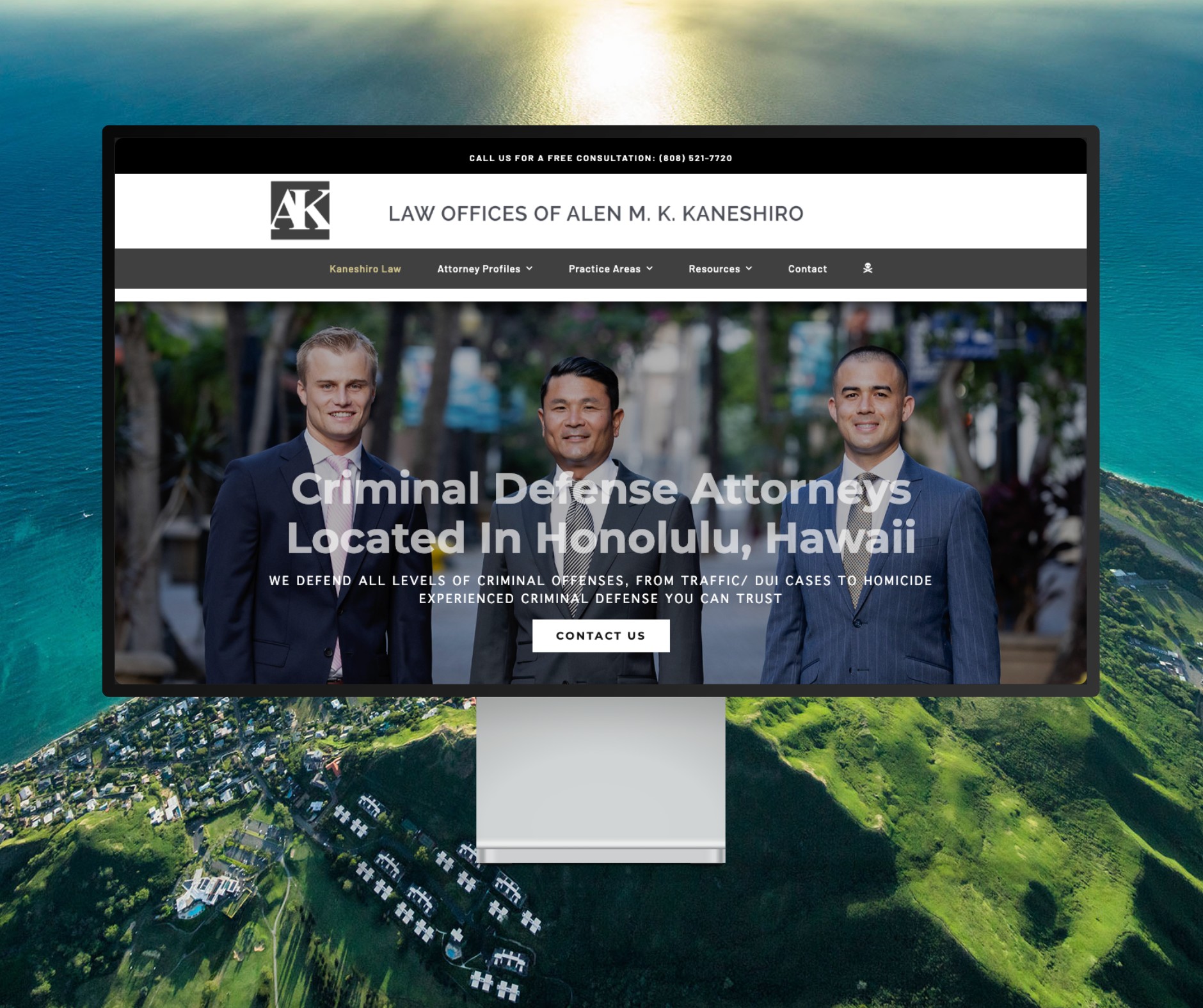
Featured Website: www.kaneshirolaw.com
Kaneshiro Law Firm, one of Hawaii’s most respected legal practices, partnered with The X Digital three years ago for a complete website redesign. Since then, we’ve maintained an ongoing relationship—handling updates, optimizations, and technical support around the clock. Our dedicated team ensures they’re never without assistance, while our enterprise-grade hosting provides 24/7 uptime monitoring and reliability. Kaneshiro Law Firm is one of many long-term clients who trust us to keep their digital presence running flawlessly.