

AI marketing bundles are everywhere right now. Vendors are packaging chatbots, content automation, analytics dashboards, and ad tools into one tidy subscription, promising small businesses a “complete AI marketing department” for a flat monthly fee. Some of these bundles are genuinely great. Others are a collection of half-finished tools you’d never have bought individually, stapled together and marked up. The difference only becomes obvious after you’ve committed to a 12-month contract — unless you know how to audit your stack *before* you sign anything.
We’ve spent 20+ years building marketing systems for small and mid-sized businesses, and we’ve built our own AI tools (like Zao Chat and Zao Flo) from the ground up. So we’re going to walk you through the exact audit process we’d use before committing to any AI marketing bundle — what to check, what to ignore, and how to spot the difference between a deal and a trap.
Why Auditing Your AI Marketing Bundle Matters Before You Commit
Here’s the uncomfortable truth: most businesses evaluating an AI marketing bundle compare it against nothing. They know roughly what they’re spending on marketing now, they see a bundle price, and if the number looks reasonable, they sign.
That’s how you end up paying for three overlapping chatbots and a blog tool that publishes content Google quietly ignores.
A proper audit does two things. First, it shows you what you’re actually using today — which tools are earning their keep and which are digital shelf-ware. Second, it defines what you actually *need*, so a bundle gets evaluated against requirements instead of vibes. That distinction matters whether you’re considering an all-in-one platform, a niche AI chatbot lead generation tool, or a content automation add-on from your existing agency.
The Real Cost of a Bad Bundle Decision
Bad bundle decisions rarely announce themselves. They show up as slow leaks:
- Redundant subscriptions — three tools doing the same job because the bundle included them and nobody turned them off.
- Unused features — you’re paying for 12 modules and actively using three.
- Lock-in penalties — annual contracts with steep cancellation fees, discovered only when you try to leave.
- Quality collapse — the bundled “AI content” tool produces generic output that quietly undermines your SEO instead of helping it.
- Hidden integration costs — the bundle doesn’t talk to your CRM or website, and connecting it costs more than the tool itself.
For a small business, $200–500 a month of waste is a real line item. For a busy owner wearing ten hats, the bigger cost is attention: managing tools you don’t need is time stolen from work that actually generates revenue.
Step 1: Map Your Current AI Marketing Stack
Before evaluating any bundle, write down everything you’re currently using or paying for. This sounds obvious; almost nobody does it thoroughly. Pull your last two months of credit card statements and bank feeds, and look for recurring charges you’ve stopped noticing.
For each tool, capture four things:
- What it does — in plain terms. “Writes blog drafts,” “answers website visitors,” “schedules social posts.”
- What it costs — monthly or annually, including per-seat or usage-based fees.
- Who uses it — you, a team member, your agency, or nobody.
- What would break without it — honest answers only. If nothing breaks, that’s your answer.
Most small business AI marketing stacks, when mapped honestly, reveal the same pattern: one or two tools doing real work, a handful of duplicates, and a couple of subscriptions nobody remembers starting.
Group Your Tools by Function, Not by Brand
Once you have your list, sort it into functional categories. This is what a marketing retainer audit looks like at its core — organizing spend by what the money actually buys:
- Lead capture and chat — website chatbots, forms, AI chatbot lead generation tools
- Content and SEO — blog automation, keyword research, AI writing assistants, SEO blog automation platforms
- Advertising — Google Ads management, bid tools, creative generators
- Analytics and reporting — dashboards, rank trackers, call tracking
- Email and CRM — nurture sequences, contact management
- Design and media — image generation, video tools
This grouping matters because AI marketing bundles are almost always organized the same way. When a salesperson says “we cover content, chat, and analytics,” you can immediately map that against your real categories and see what’s genuinely new versus what you already own twice.
Step 2: Score Every Tool Against Actual Usage
Now that your stack is mapped, it’s time to be honest about value. We use a simple three-tier scoring system with clients, and it takes about an hour:
- Keep (used weekly, clearly tied to revenue) — your AI chatbot that books appointments, your email platform, your rank tracker that guides SEO decisions.
- Watch (used occasionally, value unclear) — tools that might be helping but where you can’t point to a specific outcome.
- Cut (rarely used, duplicated, or abandoned) — the free trial that quietly became $79/month, the second chatbot from a different era.
Two questions resolve most “Watch” tools. First: when did I last log in? If the answer is more than 60 days ago, that’s telling you something. Second: can I name one specific thing it changed? If no campaign, ranking, lead, or sale traces back to it, it’s decoration.
The “Would I Buy This Today?” Test
Here’s the cleanest cut of all, and it’s the same question professional buyers use: if you were starting from zero today, knowing what you know now, would you purchase this tool at its current price?
If the answer is no, you’ve found the gap between habit and value. Keep-answers become your non-negotiables in any bundle negotiation — the features the bundle must replace or integrate with. Cut-answers become your cancellation list, effective immediately, because there’s no reason to wait for a bundle decision to stop paying for dead weight.
Step 3: Evaluate the Bundle Against Your Audited Stack
With your audit complete, you can finally evaluate an AI marketing bundle on its merits. Instead of asking “is this a good deal?”, you ask “what does this actually add to what I have?”
Run every bundle through these five checks:
- Gap coverage: Does it fill a genuine hole in your stack, or replicate what you already have? A bundle that includes AI content automation only matters if your current SEO blog automation is failing — not just because it’s included.
- Quality per module: Bundles are only as good as their weakest component. A mediocre chatbot bundled with great analytics is still a mediocre chatbot answering your customers. Ask to test each core tool individually, not a slick demo of the suite.
- True total cost: Bundle pricing often excludes setup, onboarding, usage overages, and premium AI credits. Ask for the fully loaded 12-month number in writing.
- Contract terms: Annual commitment? Auto-renewal? Cancellation notice period? Data export if you leave? Get every answer before signing, not after.
- Integration reality: Does it connect to your website, CRM, and existing tools natively — or does “integration” mean manual CSV exports?
If a bundle covers 80% of your needs brilliantly and misses one critical piece, that may still be a win — you can keep a single point tool for the gap. If it covers 100% of your needs at 60% quality, you’ve downgraded.
Red Flags That Should Slow You Down
Some warning signs deserve their own list, because they’re remarkably consistent across bad AI bundles:
- “Replaces your entire team” claims. AI amplifies strategy; it doesn’t replace judgment. Bundles marketed on headcount elimination usually underdeliver.
- No named human support. If every question routes through a chatbot, wait until you have an actual problem.
- Vague AI claims. “Powered by proprietary AI” with no specifics usually means a thin wrapper on a public model you could access cheaper yourself.
- Pressure-based pricing. “This rate expires Friday” is a signal about the vendor’s confidence, not the deal’s value.
- No case studies from businesses like yours. A bundle built for enterprise teams will bury a local service business in features it doesn’t need.
Step 4: Make the Decision — and Set a Review Date
You’ve mapped your stack, scored your tools, and stress-tested the bundle. Now decide deliberately, using one of three paths:
- Buy the bundle when it genuinely consolidates multiple tools you’re already paying for, at a lower total cost, without degrading quality on your “Keep” functions. This is the legit use case, and it’s real.
- Buy selectively when only one or two bundle components fill genuine gaps. Often you can purchase those tools standalone and skip the bundle entirely.
- Walk away when the math only works if you promise to use features you know you won’t. The best AI marketing stack is the one you actually operate.
Whatever you choose, put a review date on your calendar — 90 days after implementation. Compare actual usage and results against the audit you just did. This single habit prevents 90% of stack bloat, because it forces every tool to re-justify its seat regularly instead of surviving on inertia.
Don’t Forget the People Side
One last consideration that bundles never mention: someone has to run this stuff. Every tool in your stack, AI or otherwise, needs a human to set strategy, review output, and make corrections. A three-tool stack your team actually uses will outperform a twelve-tool stack nobody logs into. Budget for attention the same way you budget for software — and when you’d rather have experts run it for you, that’s exactly what agencies like ours exist for.
Conclusion: Audit First, Commit Second
AI marketing bundles aren’t good or bad — they’re tools, and the outcome depends entirely on whether they match what your business actually needs. The businesses that win with small business AI marketing aren’t the ones with the most tools. They’re the ones with the right tools, actively used, reviewed regularly, and tied to real outcomes like leads and revenue.
The audit process we’ve outlined — map your stack, score honestly, test the bundle against real gaps, and set a review date — takes a few hours and routinely saves businesses hundreds of dollars a month, plus a lot of frustration.
If you’d rather have an experienced team run this analysis with you, we’re happy to help. At The X Digital, we’ve built our own AI tools for lead generation and blog automation, we host what we build, and we’ve spent two decades helping owner-operators make smart, honest marketing decisions. Reach out for a conversation about your stack — we’ll tell you what’s worth keeping, what to cut, and what you genuinely don’t need to buy. No hype, no pressure. Just straight answers from people who’ve done the work.
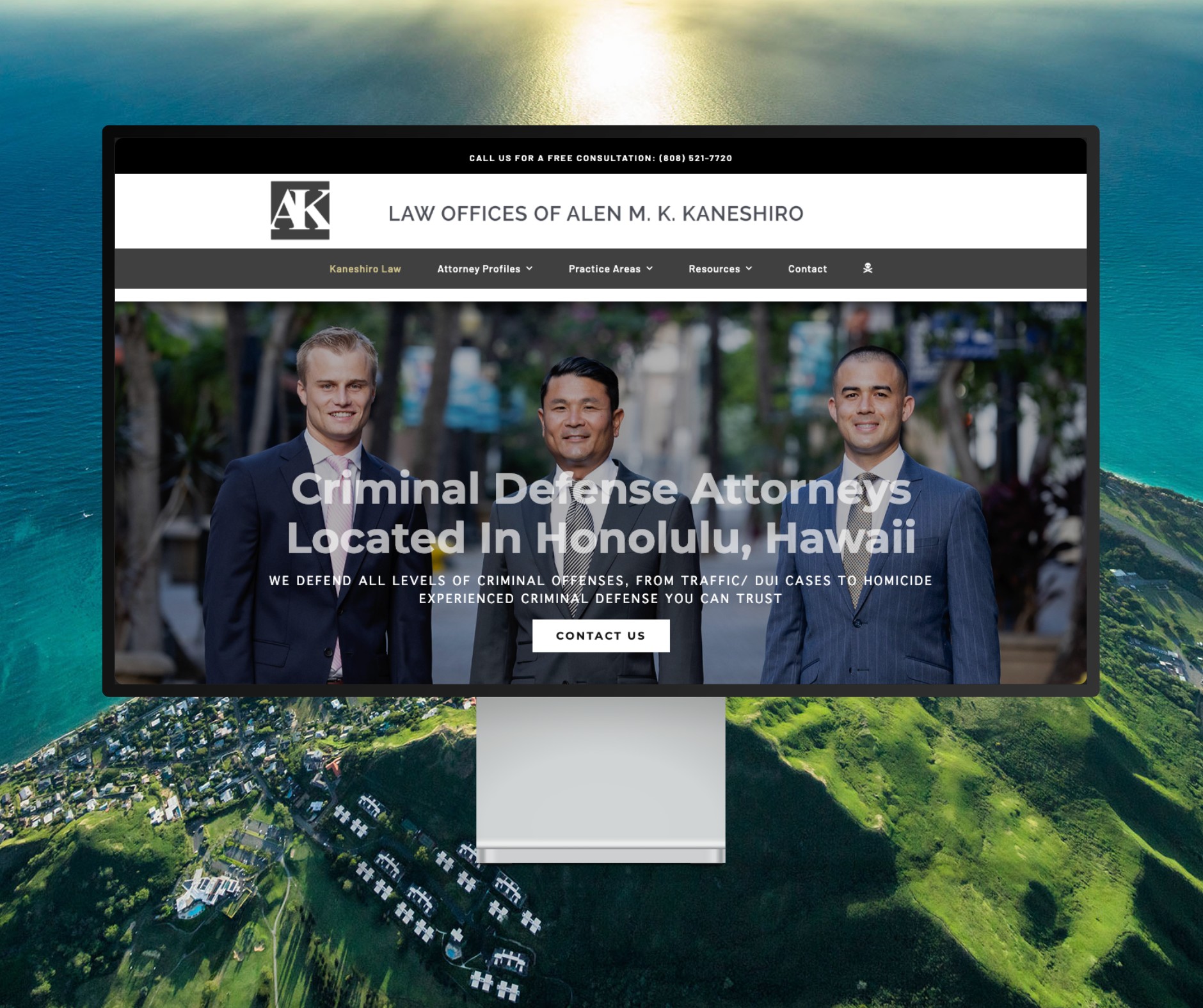
Featured Website: www.kaneshirolaw.com
Kaneshiro Law Firm, one of Hawaii’s most respected legal practices, partnered with The X Digital three years ago for a complete website redesign. Since then, we’ve maintained an ongoing relationship—handling updates, optimizations, and technical support around the clock. Our dedicated team ensures they’re never without assistance, while our enterprise-grade hosting provides 24/7 uptime monitoring and reliability. Kaneshiro Law Firm is one of many long-term clients who trust us to keep their digital presence running flawlessly.