
Ghost citations are becoming one of the most important—and most misunderstood—signals in AI search. Your website may appear as a cited source in ChatGPT, Google AI Overviews, Perplexity, or another answer engine, yet your company name may never appear in the answer a customer reads. You earned visibility, but not recognition.
That distinction matters because AI search is changing how people discover businesses. Traditional SEO often focused on rankings, impressions, and clicks. AI search adds another layer: whether an answer engine trusts your content enough to use it, whether it associates that information with your brand, and whether the customer remembers you afterward.
In this article, we’ll explain what ghost citations are, why they happen, how they affect brand recognition, and what small and mid-sized businesses can do to improve AI search visibility. The goal isn’t to chase another marketing buzzword. It’s to build a content strategy that makes your business easier for both search engines and AI systems to understand, verify, mention, and recommend.
What Are Ghost Citations in AI Search?
A ghost citation occurs when an AI-generated answer links to or draws from a company’s website without naming the company in the answer text. The source is present, but the brand is effectively invisible to the reader.
For example, imagine someone asks an AI search tool, “What should I look for when choosing a Maui vacation rental?” The answer may include a helpful explanation based partly on a rental company’s guide to cleaning standards, booking policies, or vehicle requirements. The answer might cite that guide, but never say the rental company’s name. The business supplied useful information, yet another brand—or no brand at all—gets the recognition.
A recent Semrush study found that 61.7% of analyzed AI citations did not result in a brand mention. In other words, being cited was not the same as being seen. The study also separated citations from mentions because the two signals often behave differently. You can review the findings in Semrush’s study of ghost citations and AI brand mentions.
Citation, mention, and recommendation are different
These terms are related, but they describe different outcomes:
- Citation: An AI answer links to or references a source used to support its response.
- Mention: The answer names your business, product, service, or brand.
- Recommendation: The AI system actively suggests your business as an option for the user.
- Conversion: The user visits your website, calls, submits a form, books, or buys.
A citation can help establish authority, but a mention is usually more valuable for brand recognition. A recommendation is stronger still because it places your business directly into the customer’s consideration set.
This is why simply reporting “our website was cited 100 times” can be misleading. Those citations may represent genuine visibility, but they may also mean that AI systems are borrowing your information while leaving your brand out of the conversation.
Why AI Search Is Changing Brand Recognition
Traditional search generally presents a list of pages. Users scan titles, URLs, descriptions, reviews, maps, and advertisements before deciding what to click. AI search compresses that process into a conversational answer.
That compression changes the role your website plays. Instead of being the final destination, your content may become raw material for an answer written somewhere else. The customer may receive the benefit of your expertise without ever seeing your homepage, logo, or company name.
Google’s AI search products illustrate how quickly this environment is expanding. A recent Semrush analysis reported that AI Overviews appeared for 88% of a tracked set of U.S. commercial keywords, rising to 97.08% when weighted by search volume. The specific percentages will vary by industry and query, but the broader lesson is clear: AI-generated summaries are increasingly appearing where buyers make decisions. The findings were reported by PPC Land’s coverage of the Semrush AI Overview study.
The answer may be more important than the link
In traditional SEO, a high ranking often creates a branding opportunity because the searcher sees your page title and company name. In AI search, the system may combine facts from several pages, rewrite them, and display only a limited set of sources.
That creates a new risk: your expertise can travel farther than your brand.
This is particularly common when your content answers general questions. A contractor may publish an excellent guide to choosing a roof replacement material. A healthcare provider may explain how to prepare for an in-home care assessment. A tour company may publish a detailed guide to seasonal conditions. AI systems can use that information to answer broad questions while omitting the business that created it.
At the same time, third-party sources may receive the recognition. Review websites, directories, media publications, forums, comparison pages, and social platforms often mention brands more explicitly than brand-owned websites do. A business can therefore be cited through its own content but recognized through someone else’s description of it.
What the Latest AI Citation Data Tells Us
The emerging research points to a more complicated picture than “rank higher and AI will mention you.” Different AI search tools use different source-selection patterns, and a brand’s visibility can change depending on the question, platform, industry, and wording.
One study covered by Search Engine Land found that Google AI Mode and Google AI Overviews behaved differently. AI Mode leaned on roughly five to seven source cards, while AI Overviews could include more than 20 inline citations. The study described AI Overviews as a selective and fast-changing curator, rather than a simple copy of traditional organic rankings. Those findings are summarized in Search Engine Land’s analysis of brand visibility in Google AI Mode and AI Overviews.
That difference matters for businesses because there is no single “AI ranking.” Your visibility in Google AI Overviews may not match your visibility in Google AI Mode, ChatGPT, Gemini, Perplexity, or Microsoft Copilot.
AI search tools do not agree with one another
AI search tools may draw from different indexes, retrieval systems, partnerships, databases, and ranking signals. One platform may favor a detailed service page. Another may rely more heavily on reviews or third-party comparisons. A third may surface a YouTube video, Reddit discussion, local directory, or industry publication.
Research from Yext, for example, analyzed 6.8 million AI citations across ChatGPT, Gemini, and Perplexity from July 1 through August 31, 2025. The analysis identified 20,820 unique citation domains. That scale demonstrates how broad and fragmented the AI source ecosystem has become. The study is available through Yext’s report on AI citation patterns.
For business owners, the practical takeaway is simple: don’t judge your AI search visibility from one prompt or one screenshot. A single answer is not a stable ranking report. You need to monitor a set of realistic customer questions across more than one AI search tool and look for patterns over time.
How to Turn Citations Into Brand Recognition
Ghost citations are not proof that your content is failing. In fact, a citation means an AI system found something on your site useful enough to include. The opportunity is to make that useful information more clearly connected to your company.
1. Put your brand inside the expertise
Many businesses publish generic advice that could have been written by anyone. That makes the content useful, but not memorable. Strengthen the connection between your knowledge and your brand by including firsthand details, original observations, examples, processes, and clearly attributed expertise.
Instead of writing, “How to choose a reliable plumber,” explain how your team diagnoses common issues, what warning signs customers should watch for, and which situations require immediate professional help. Instead of a generic travel article, share local conditions, seasonal limitations, safety considerations, and the practical questions your customers ask before booking.
AI systems are more likely to associate information with a business when the page consistently communicates:
- Who your company is and where you operate
- What services or products you provide
- What experience or qualifications support your advice
- Which customers you serve
- How your process differs from common alternatives
- What evidence supports your claims
2. Create pages that answer branded and comparative questions
Informational content is valuable, but it should not be your entire content strategy. Add pages that help AI systems understand your business in decision-making contexts.
Useful topics include:
- “Why choose [company name] for [service]?”
- “[Company] vs. doing it yourself”
- “What is included in our [service]?”
- “How our process works”
- “Who our service is and isn’t for”
- “Questions to ask before hiring a [business category]”
These pages should not read like forced advertising. They should be genuinely useful and specific. The objective is to give an AI system enough verified context to connect the answer with your company when the query has commercial intent.
3. Build recognition beyond your own website
Your website is important, but it is only one part of your digital identity. AI systems often use third-party sources to validate whether a business is established, relevant, and trusted.
That means your content strategy should include accurate and consistent information across business profiles, reputable directories, industry organizations, local publications, customer reviews, social profiles, and other places where your company is discussed. You do not need to be everywhere. You do need to be represented accurately in the places that matter in your industry.
For a local service business, that may include Google Business Profile, local news, trade associations, and customer reviews. For an e-commerce brand, it may include product coverage, retailer listings, creator reviews, and comparison content. For a professional service provider, it may include conference pages, podcasts, interviews, and credible industry publications.
How to Measure AI Search Visibility Without Chasing Vanity Metrics
AI visibility is still developing, so measurement requires discipline. The best approach is to track several signals instead of relying on a single score from an AI visibility platform.
Start by building a prompt set based on real customer behavior. Include questions about services, products, locations, problems, comparisons, pricing factors, and alternatives. Then test those prompts across the AI search tools your customers are likely to use.
For each response, record:
- Whether your brand was mentioned
- Whether your website or another source was cited
- Whether competitors appeared
- How the AI described your business
- Whether the answer included inaccurate or outdated information
- Whether your brand was recommended, merely listed, or ignored
Over time, this creates a more useful picture than a generic visibility percentage. You may discover that your business receives many citations but few mentions. Or you may be mentioned frequently but described incorrectly. Another possibility is that you appear for informational questions but disappear when customers ask for recommendations.
Those patterns point to different solutions. Ghost citations may call for stronger brand attribution and clearer entity information. Incorrect descriptions may require updates to your website and third-party profiles. Weak recommendations may indicate a lack of reviews, comparisons, case studies, or independent references.
Most importantly, connect AI visibility to business outcomes. Track branded searches, direct traffic, qualified leads, phone calls, bookings, and assisted conversions. AI search is not valuable because a tool displays your name. It is valuable when better recognition helps the right customers choose you.
Conclusion: Make Your Expertise Impossible to Separate From Your Brand
The rise of ghost citations shows why AI search visibility is more nuanced than simply being included in an answer. A citation can confirm that your content is useful, but a brand mention helps customers remember who created that expertise. The strongest outcome is a recommendation that connects your business to a real customer need.
For now, the practical strategy is not to publish more generic content. It is to publish clearer, more experience-based content and reinforce your brand across trustworthy third-party sources. Explain what you know, show how you know it, and make your business identity consistent wherever customers—and AI systems—look for information.
At The X Digital, we approach AEO and AI search visibility as an extension of sound digital marketing: strong websites, useful content, accurate business information, technical foundations, and long-term trust. If your content is being cited but your brand is being overlooked, that is a measurable problem—and one you can start fixing with the right content strategy.
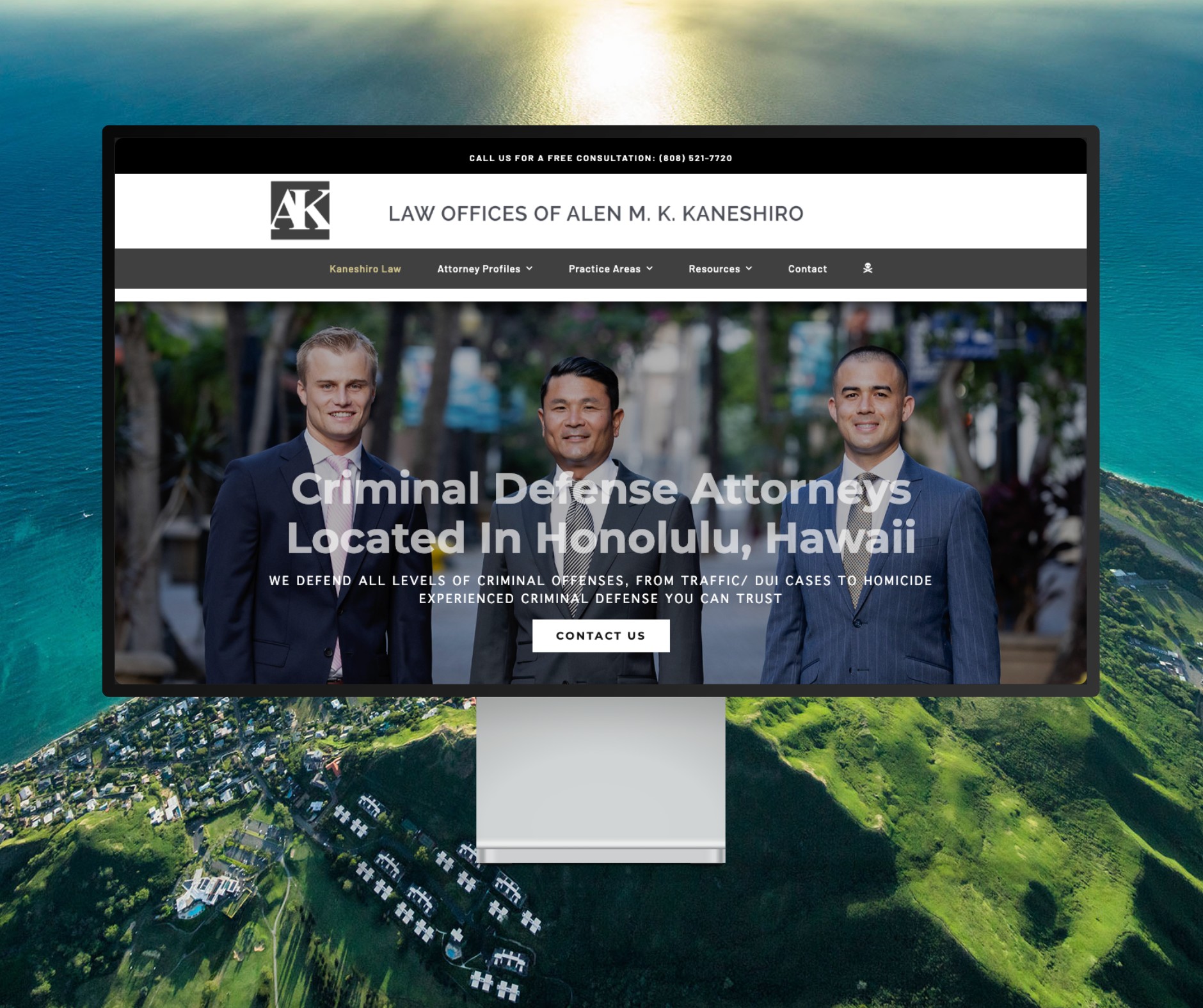
Featured Website: www.kaneshirolaw.com
Kaneshiro Law Firm, one of Hawaii’s most respected legal practices, partnered with The X Digital three years ago for a complete website redesign. Since then, we’ve maintained an ongoing relationship—handling updates, optimizations, and technical support around the clock. Our dedicated team ensures they’re never without assistance, while our enterprise-grade hosting provides 24/7 uptime monitoring and reliability. Kaneshiro Law Firm is one of many long-term clients who trust us to keep their digital presence running flawlessly.