
Navigating the Rise of Ghost Citations in AI Search Visibility has become an important challenge for businesses that depend on online discovery. Your company may appear in an AI-generated answer, yet receive no obvious website visit, referral, or measurable conversion. In other cases, an AI tool may describe your services accurately but cite a directory, review site, marketplace, or unrelated article instead of your own website. We call these outcomes ghost citations: signs that your brand is influencing an answer without receiving clear, attributable credit.
This matters because AI search is changing how people research businesses. Google AI Overviews, Google AI Mode, ChatGPT Search, Perplexity, and other tools increasingly summarize options instead of simply displaying ten blue links. In this guide, we’ll explain what ghost citations are, why they happen, how they affect brand recognition, and what small and mid-sized businesses can do to improve AI search visibility without chasing hype or publishing content blindly.
Navigating the Rise of Ghost Citations in AI Search Visibility
A traditional search result usually gives you a fairly direct measurement: impressions, clicks, rankings, and conversions. AI search is less straightforward. A person may ask, “Who are the best roofing contractors near me?” or “What’s the best vehicle rental company for a family trip?” An AI engine may mention your business, summarize information about you, and cite another website as supporting evidence.
That is a ghost citation. The brand is present in the answer, but the relationship between the brand, the source, and the eventual customer is difficult to see.
The term is not an official Google or OpenAI product category. It’s a useful working description for a growing measurement problem. AI visibility now includes several different outcomes:
- Brand mention: The AI system names your company.
- Brand recommendation: The system actively suggests your business for a specific need.
- Direct citation: The response links to your website or a page you control.
- Indirect citation: The response links to a third-party page that discusses your business.
- Conversion: The user calls, submits a form, books, visits, or buys.
These are not interchangeable. A company can be frequently mentioned but rarely linked. It can be cited but not recommended. It can even be recommended while receiving little measurable referral traffic because the user remembers the name and searches for it later.
That’s why AI search visibility should be treated as a broader business visibility problem, not just a new ranking position to track.
Why the source may not be your website
AI systems assemble answers from multiple signals. Depending on the platform and query, those signals may include indexed webpages, news coverage, reviews, business directories, product databases, community discussions, and reference sources.
A third-party page may be selected because it compares several providers, contains clearer factual language, has stronger authority, or answers the exact question more directly than a company’s homepage. In some cases, the AI system may know a fact about your business from one page and use another page to support the overall answer.
That doesn’t mean your website is unimportant. It means your website is only one part of the information environment that shapes how AI systems understand your brand.
Why Ghost Citations Are Becoming More Common
AI search is designed to synthesize information. Instead of returning a list of pages and asking the user to do all the comparison work, it may combine facts from several sources into one response. That creates a gap between being part of the answer and owning the answer’s source material.
Google’s own guidance explains that AI Overviews and AI Mode use links to help people explore information, while also stating that the same foundational SEO practices still apply. A page must be indexed and eligible to appear in regular Google Search before it can be used as a supporting link in these AI features. You can review the Google Search Central guidance on AI features and websites for the technical requirements and recommendations.
However, eligibility does not guarantee selection. AI systems may rewrite a query into several related searches, compare different sources, and choose only a few links for the final answer. The result can be useful to the searcher while remaining difficult for the business owner to audit.
The difference between visibility and attribution
Traditional SEO tends to reward the page that ranks. AI search may reward a combination of entities, facts, opinions, and sources. Your brand might be recognized because:
- A respected publication describes your company accurately.
- Customers discuss your services on a review platform.
- Your business appears consistently across local directories.
- Your website clearly explains your products, services, locations, and specialties.
- Other websites use language that matches how people ask questions about your industry.
In other words, brand recognition can develop before direct website attribution does. This is especially relevant for local service businesses, tourism companies, healthcare providers, and professional services firms. A customer may see your name in an AI answer, then search the name separately or ask for your phone number in a follow-up question.
OpenAI’s documentation encourages users to review linked sources because search results reflect what is available on the web. Its official explanation of web search in ChatGPT illustrates an important point: citations are part of the answer experience, but they still depend on the quality, availability, and relevance of the underlying web content.
What Ghost Citations Mean for Your Content Strategy
The wrong response is to publish dozens of generic AI-written blog posts and hope one gets cited. That approach may increase the amount of content on your website without improving how clearly search systems understand your business.
A better content strategy begins with the questions your customers actually ask. For example, a plumbing company should not focus only on broad topics such as “What is plumbing?” More useful content would answer questions like:
- How much does emergency pipe repair usually cost?
- Should I repair or replace a water heater?
- What should I do before a plumber arrives?
- Which plumbing problems require immediate attention?
- Do you serve my neighborhood, building type, or island?
These questions create opportunities for both traditional search rankings and AEO, or Answer Engine Optimization. AEO is the practice of structuring useful information so answer engines can understand, extract, and present it clearly.
Make important facts easy to verify
Your key business facts should not be hidden in vague marketing language. Make them easy to find and keep them consistent across your website and important third-party profiles.
Review the following details:
- Business name, address, phone number, and service area.
- Exact services and the problems each service solves.
- Pricing ranges, minimum charges, or clear explanations of how estimates work.
- Hours, emergency availability, booking instructions, and response times.
- Credentials, licenses, certifications, warranties, and relevant experience.
- Industries, customer types, products, or locations you specialize in.
This is not about forcing keywords into every paragraph. It is about reducing ambiguity. If your homepage says you provide “world-class solutions,” but never clearly explains what you do, where you do it, or who you help, an AI system has less reliable material to use.
Build pages that deserve to be cited
The pages most likely to support AI answers are often practical pages: service pages, comparison guides, FAQs, location pages, product documentation, pricing explanations, and original research. They should answer the question early, use plain language, and provide enough context for a reader to make a decision.
Include first-hand experience wherever possible. Explain what your team sees in real projects, what customers commonly get wrong, how you approach difficult situations, and what someone should consider before hiring anyone. This is where an experienced business has an advantage over mass-produced content.
How to Improve AI Search Visibility Without Chasing Every Platform
No agency can guarantee that a particular AI system will cite a specific page for a specific prompt. The outputs change by platform, query wording, location, freshness, personalization, and even the time of day. That uncertainty is a reason to measure carefully, not a reason to ignore the channel.
Start with a small, repeatable test set. Create 20 to 50 questions that reflect real buying journeys. Include informational, local, comparison, branded, and problem-solving questions. Run them periodically across the platforms that matter to your customers.
Track more than whether your company appears. Record:
- Whether the brand was mentioned.
- Whether it was recommended or merely listed.
- Which competitors appeared.
- Which sources were cited.
- Whether your own website was cited.
- Whether the information was accurate.
- Whether the answer reflected your current services and locations.
This process can reveal ghost citations quickly. You may discover that AI systems understand your brand but rely on outdated directories. You may find that a review site describes your services better than your own website. Or you may see that competitors are being recommended because their pages answer comparison questions more directly.
Prioritize the fundamentals first
Before investing in specialized AI visibility software, make sure your technical foundation is sound:
- Your important pages are indexable.
- Your business information is consistent.
- Your website works well on mobile devices.
- Your pages load quickly and are easy to navigate.
- Your service and location pages are specific rather than duplicated.
- Your reviews and business profiles are actively maintained.
- Your website clearly shows who is responsible for the information.
Google’s recent AI Search updates have emphasized clearer inline links, source context, and ways to discover original content. Its announcement about updates to AI Mode and AI Overviews reinforces the direction of travel: search answers may become more conversational, but links and source discovery still matter.
For most small businesses, strong SEO, useful content, accurate local information, and a credible online reputation remain the best investment. AEO should extend that work, not replace it.
Turning Ghost Citations Into Real Business Visibility
A ghost citation is not automatically a failure. If an AI system names your business accurately, that may contribute to brand recognition even when the link is missing. The problem is assuming that a mention alone is enough to generate revenue.
To turn indirect visibility into measurable demand, make the next step obvious wherever people encounter your brand. Your website should quickly confirm that the business is legitimate, relevant, available in the customer’s area, and easy to contact.
That means improving the experience after the click, but also preparing for people who search your name separately. Use a clear business description, strong page titles, recognizable branding, helpful service pages, trustworthy reviews, and simple calls to action.
It is also worth reviewing the sources that repeatedly appear in AI answers. If a local directory, trade association, publication, or review platform is shaping how your business is described, make sure your listing is complete and accurate. You do not need to manipulate those sources. You need to provide consistent facts and earn legitimate mentions through good work, useful expertise, community involvement, and customer service.
Recent research summarized in a McKinsey State of the Consumer 2026 report found that brand-owned websites accounted for only 1% to 2% of citations in one analysis of brand-related large language model queries. The exact percentage will vary by industry and platform, but the strategic lesson is useful: your own website matters, yet AI visibility is increasingly influenced by the broader web.
Conclusion: Build Recognition, Not Just Citations
The rise of ghost citations is a reminder that AI search visibility is more complicated than earning a blue-link ranking. A brand can be mentioned without being linked, linked without being recommended, or recommended without producing an easily identifiable referral.
The practical answer is not to chase every new acronym. Build a clear, technically healthy website. Publish content that answers real customer questions. Keep your business information consistent. Strengthen reviews and legitimate third-party references. Then test how AI systems describe your business and correct the gaps you find.
At The X Digital, we approach AEO as an extension of durable SEO and useful content strategy. The goal is not simply to appear in an AI response. It is to be understood accurately, recognized for the right reasons, and trusted enough that the person reading the answer takes the next step.
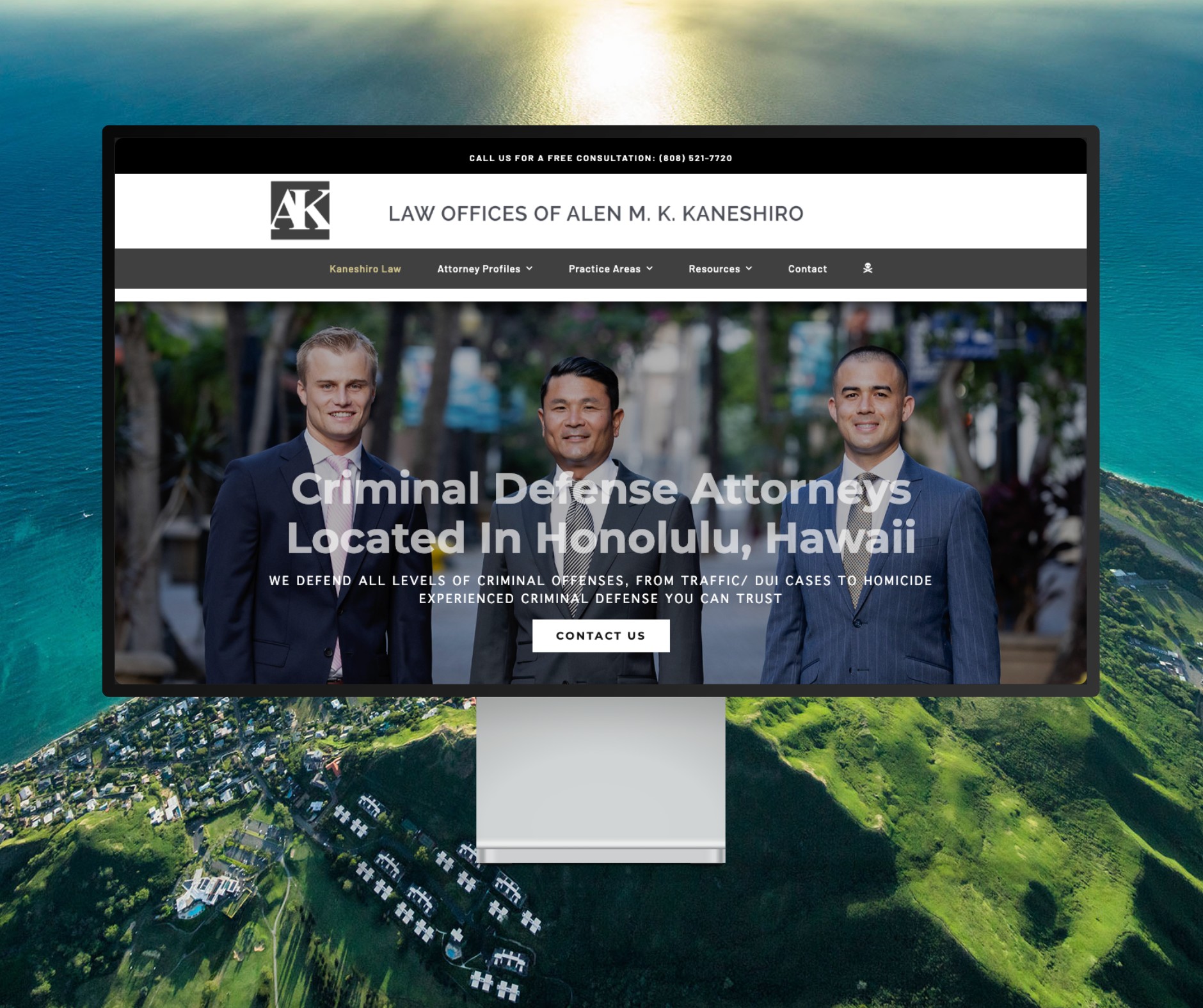
Featured Website: www.kaneshirolaw.com
Kaneshiro Law Firm, one of Hawaii’s most respected legal practices, partnered with The X Digital three years ago for a complete website redesign. Since then, we’ve maintained an ongoing relationship—handling updates, optimizations, and technical support around the clock. Our dedicated team ensures they’re never without assistance, while our enterprise-grade hosting provides 24/7 uptime monitoring and reliability. Kaneshiro Law Firm is one of many long-term clients who trust us to keep their digital presence running flawlessly.