
Adapting to Zero-Click Searches has become essential for any business that relies on Google for leads, sales, bookings, or brand discovery. A searcher may find your phone number, review rating, answer, map listing, or even a summary of your service without ever visiting your website. That can feel like a loss, but it also creates a new opportunity: your business can earn visibility and trust before the click ever happens.
The change is accelerating as Google expands AI Overviews and other answer-focused features. A 2025 Pew Research Center analysis of Google search behavior found that about 18% of searches in March 2025 displayed an AI-generated summary. When an AI summary appeared, users clicked a traditional search result in just 8% of visits, compared with 15% when no summary appeared.
In this guide, we’ll explain what zero-click searches mean for your business, how AI Overviews are changing SEO, and which practical strategies can improve your online visibility even when fewer people click through to your website.
Adapting to Zero-Click Searches Starts With a New Definition of Visibility
A zero-click search happens when someone gets what they need directly from a search results page without visiting an external website. The result might come from a featured snippet, local map listing, knowledge panel, product result, “People Also Ask” box, calculator, or AI Overview.
For example, someone searching “plumber near me” may call a business directly from its Google Business Profile. A traveler searching for “Maui whale watching prices” may compare information in search results before choosing a provider. A homeowner searching “how often should I clean my gutters” may read a featured answer and remember the company that supplied it.
In each case, the search generated value even if it did not generate a website session. That means website traffic is still important, but it is no longer a complete measure of search performance.
Research from SparkToro and Datos illustrates why this matters. Their 2024 clickstream study found that, out of every 1,000 Google searches in the United States, approximately 360 clicks went to the open web. In other words, most searches did not produce an external website click. The study also showed that people continue searching within Google, visit Google-owned properties such as YouTube and Maps, or end their session altogether.
This does not mean SEO is dead. It means the search results page has become part of your marketing presence. Your business now needs to be visible in several places at once:
- Traditional organic listings
- Google Business Profile and local map results
- Featured snippets and related questions
- Reviews, images, videos, and product information
- AI Overviews and other answer engines
- Your own website, where visitors can take meaningful action
The goal is not simply to rank first and hope for a click. The goal is to become the business Google can confidently show, summarize, recommend, and connect with a customer at the right moment.
Understand How AI Overviews Change SEO Opportunities
AI Overviews are among the most visible changes in Google search. Instead of presenting only a list of links, Google may generate a concise answer and cite multiple sources. These summaries are especially common for longer, conversational searches.
Pew’s 2025 research found that only 8% of visits to pages with an AI-generated summary resulted in a click on a traditional search result, while just 1% resulted in a click on a link within the summary itself. The same study found that searches containing 10 or more words produced an AI summary 53% of the time, compared with 8% for searches of one or two words.
That pattern is important for content planning. Customers are increasingly searching with complete questions such as:
- “How much does it cost to replace a water heater in Honolulu?”
- “What should I ask before hiring a roofing contractor?”
- “Is Shopify or WooCommerce better for a small retail business?”
- “How long does it take to recover a hacked WordPress website?”
These are not just keyword phrases. They are problems, comparisons, and decisions. Your content should address the full question clearly enough that it can be understood by both a human reader and a search system.
Write for citation, not just ranking
Google’s official guidance says the same fundamentals that support traditional search still matter in AI features. Pages should be crawlable, indexable, technically accessible, and built around helpful, reliable content. Google also recommends ensuring that Googlebot is not blocked, pages return a successful status code, and important content is available as text.
Google’s guidance for succeeding in AI search experiences does not suggest a secret “AI ranking trick.” Instead, it reinforces the value of strong page quality, clear information, and sound technical SEO.
For a local business, that means explaining services in plain language, naming the areas you serve, answering common customer questions, and demonstrating real experience. For an e-commerce brand, it means providing accurate product specifications, shipping information, comparisons, and original guidance rather than thin descriptions copied from a manufacturer.
Make important answers easy to extract
Use descriptive headings, short paragraphs, numbered processes, tables where appropriate, and direct answers near the beginning of a section. Do not bury the answer under a long introduction.
For example, if the question is “How often should a business update its website?” begin with a direct answer, then explain the factors that affect the schedule. This structure helps readers scan the page and gives search systems clear passages to interpret.
Build Search Visibility Beyond the Website Click
Zero-click searches make it more important to treat every search feature as a potential customer touchpoint. Your website remains the foundation, but it should support a broader visibility system.
Strengthen your local search presence
For service businesses, restaurants, healthcare providers, rental companies, and other location-based organizations, Google Business Profile is often as important as the website itself.
Keep your business name, address, phone number, hours, service categories, service area, photos, and booking links accurate. Add services individually when the platform allows it. Respond to reviews professionally, including less-than-perfect reviews. Upload recent images that show your team, location, work, products, or customer experience.
These details can influence whether someone calls, requests directions, sends a message, or chooses your business without visiting your site. Track those actions where possible. A drop in organic sessions does not necessarily mean your local marketing is failing if calls and direction requests are increasing.
Earn and manage reviews
Reviews are a form of search visibility because they appear directly where customers make decisions. They also provide language that reflects how real customers describe your services.
Ask satisfied customers for honest feedback after a completed job or purchase. Do not offer incentives in exchange for positive reviews, and do not write reviews for customers. Instead, create a simple process that makes it easy for genuine customers to share their experience.
Pay attention to repeated phrases in reviews. If customers frequently mention “same-day service,” “clear communication,” or “help choosing the right rental,” those phrases can guide your website copy and content strategy. They may also align with the language used in future searches.
Use multiple content formats
Google search results increasingly include video, images, maps, products, news, and other specialized results. A business that publishes only text may miss opportunities to appear elsewhere.
Consider creating:
- Short videos answering common customer questions
- Original photos of completed projects or products
- Before-and-after galleries
- Comparison guides and buying checklists
- FAQs based on real sales and support conversations
- Case studies that show the problem, process, and result
The best format depends on the searcher’s intent. Someone choosing a contractor may want proof of workmanship. Someone comparing software may want a detailed guide. Someone planning a vacation may want videos, maps, pricing, availability, and reviews.
Use AEO and SEO Strategies That Create Demand for the Next Step
Answer Engine Optimization, or AEO, is the practice of making your content more likely to be understood, selected, and cited by AI assistants and answer engines. It overlaps with SEO but places greater emphasis on clear answers, first-hand expertise, context, and entity recognition.
Good AEO does not mean writing robotic content for a machine. It means making your expertise easier to identify. A page should clearly communicate who you are, what you do, where you operate, whom you serve, and why your advice is credible.
Answer the question, then offer something deeper
Do not hide basic answers simply to force a click. Give readers a useful answer in the search result or opening section. Then provide a reason to continue:
- A calculator or cost estimate
- A downloadable checklist
- An interactive quiz or recommendation tool
- Original research or local data
- A detailed case study
- A quote request, consultation, or booking option
This approach respects the searcher’s time while giving them a reason to choose your business when the decision becomes more serious.
Show evidence of real experience
Generic advice is easy for AI systems to summarize and easy for competitors to copy. Specific experience is more valuable.
Explain what you observed, what options you considered, what you changed, and what happened afterward. A web agency might describe how it repaired a malware infection without losing a client’s search visibility. A cleaning company might explain which surfaces require different treatments. A rental business might publish a practical guide based on common customer mistakes.
Use author information, business details, credentials, project examples, and clear editorial standards where appropriate. Accuracy matters especially for health, financial, legal, and safety-related content. In those areas, cite qualified professionals and keep information current.
Measure Visibility, Actions, and Revenue Together
Traditional SEO reporting often focuses on rankings, impressions, clicks, and organic sessions. Keep monitoring those metrics, but add measurements that reflect how zero-click discovery actually produces business results.
For local companies, track phone calls, direction requests, profile interactions, messages, appointment bookings, and branded searches. For e-commerce businesses, track product visibility, add-to-cart activity, assisted conversions, and branded demand. For professional services, monitor consultation requests, email inquiries, and the number of qualified leads from organic channels.
Use Google Search Console to identify queries that generate impressions without many clicks. Those queries may reveal opportunities to improve titles and descriptions, but they may also show where your brand is gaining awareness through search features. Compare that data with your CRM, call tracking, analytics, and sales records.
Also monitor what happens after people discover you. Search visibility has little value if the landing page is slow, confusing, or difficult to use. A strong result should lead to a clear next step: call, book, request pricing, buy, subscribe, or learn more.
A practical monthly review can include:
- Which queries produced impressions, clicks, and conversions?
- Which pages appeared to answer questions but generated few visits?
- Did calls, forms, bookings, or store visits change?
- Are your Google Business Profile details and reviews current?
- Which customer questions should become new content?
- Where are competitors appearing that your business is not?
Do not react to one week of volatile rankings. Look for trends over several months and connect search data to revenue wherever possible. Search behavior is changing, but the business objective remains stable: get in front of the right people and help them take the next step.
Conclusion: Visibility Still Matters, but the Click Is No Longer the Whole Story
Zero-click searches are not a reason to abandon SEO. They are a reason to update how you think about it. Your business can win attention through an organic listing, a local profile, a review, a video, a featured answer, or an AI Overview citation before a customer ever reaches your website.
The strongest strategy combines technical SEO, helpful content, local optimization, reputation management, structured answers, and conversion-focused web design. It also measures calls, bookings, leads, and sales instead of relying on traffic alone.
At The X Digital, we approach search from the perspective of the business owner, not just the search dashboard. We look at what is being found, what customers do next, and whether the visibility produces real commercial value. That is the practical way to adapt to Google search trends, AI Overviews, and the continuing rise of zero-click searches.
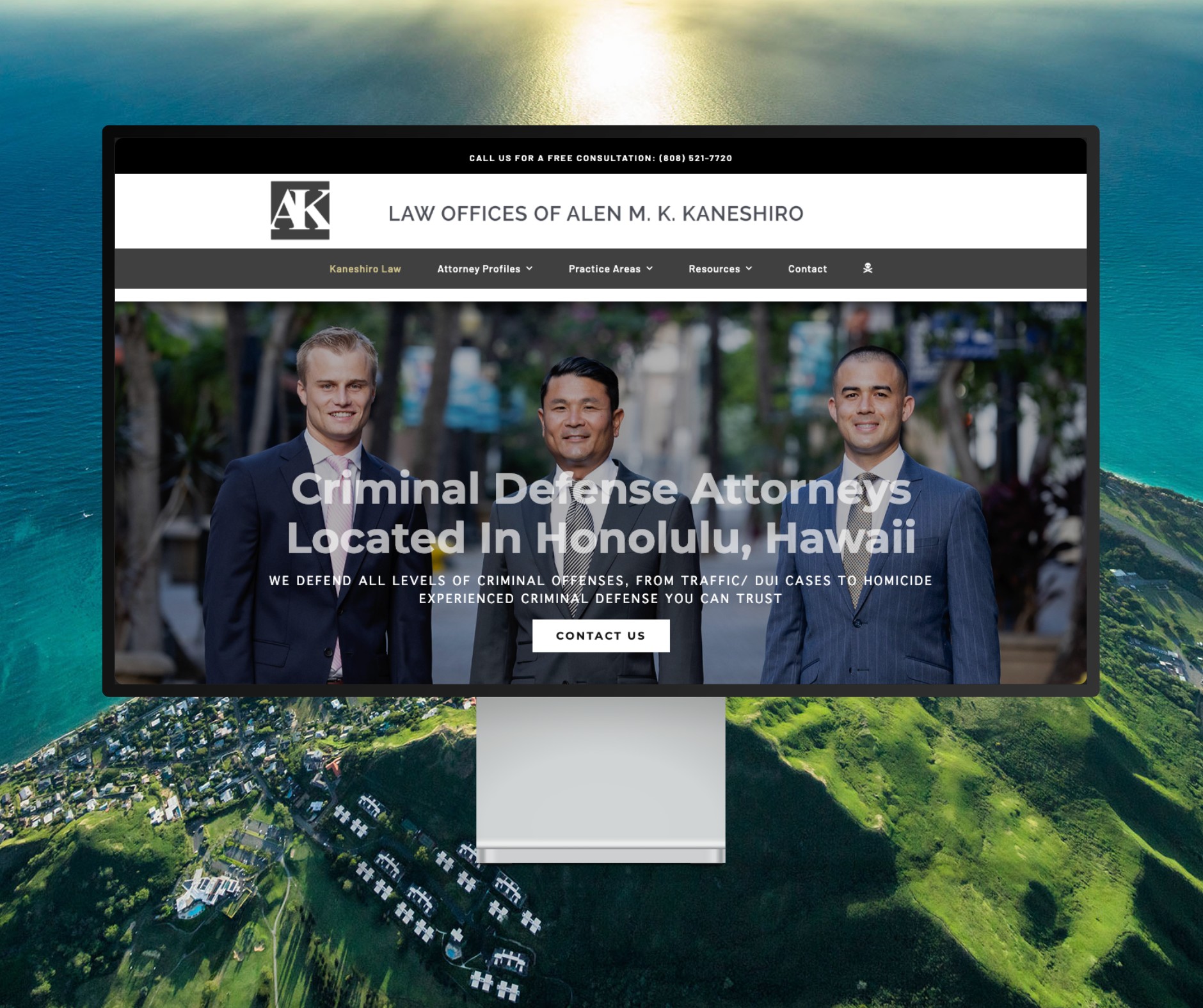
Featured Website: www.kaneshirolaw.com
Kaneshiro Law Firm, one of Hawaii’s most respected legal practices, partnered with The X Digital three years ago for a complete website redesign. Since then, we’ve maintained an ongoing relationship—handling updates, optimizations, and technical support around the clock. Our dedicated team ensures they’re never without assistance, while our enterprise-grade hosting provides 24/7 uptime monitoring and reliability. Kaneshiro Law Firm is one of many long-term clients who trust us to keep their digital presence running flawlessly.