

You’ve heard the line a hundred times by now: “AI won’t replace you, but someone using AI will.” It sounds like a LinkedIn platitude — but in our work with small businesses, we’re watching it play out in real time. The AI age for small business isn’t coming; it started quietly a couple of years ago, and the gap between owners who use these tools and owners who don’t is already showing up in rankings, lead flow, and response times. The good news? You don’t need a big budget or a technical background to be on the right side of that gap. In this article, we’ll explain why that famous quote is literally true (not just clever), what “AI replacing businesses” actually looks like on the ground, and how to adopt AI in your business in a way that’s practical, low-risk, and genuinely useful — based on what we’ve seen building AI tools and implementing them for real clients.
What the AI Age Means for Small Business Owners
Here’s the direct answer: the AI age for small business means your competitors can now do certain things faster and cheaper than they could two years ago — answering leads instantly, publishing content consistently, and showing up in AI-generated answers. If they’re doing those things and you’re not, they win by default, not because they’re better at their trade.
Notice what’s not on that list: AI doesn’t replace the plumbing, the physiotherapy, the tour, or the product. Your craft is safe. What AI changes is the speed and volume of everything around the craft — the marketing, the follow-up, the admin.
In 20+ years of building and marketing websites, we’ve seen this movie before. Businesses that ignored websites in the 2000s, or Google reviews in the 2010s, didn’t disappear overnight. They just slowly lost ground to competitors who adopted the new thing while it was still an advantage rather than a requirement. AI is following the same curve — only faster.
Why the Quote Is Literally True
The quote holds up because AI is a leverage tool, not a replacement worker. A contractor using an AI chatbot to answer inquiries at 9 p.m. isn’t replaced by AI — but they will take the job from the contractor whose contact form sits unanswered until morning. The customer doesn’t know or care that AI was involved. They just know who responded first.
How AI Is Already Replacing Businesses (Quietly)
AI replacing businesses rarely looks dramatic. Nobody gets a letter saying “you’ve been automated.” Instead, it shows up as slow leaks:
- Leads that never arrive — because a competitor’s AI chat answered the visitor’s question at midnight and booked the call.
- Rankings that quietly slip — because a competitor publishes helpful content every week while your blog hasn’t been touched since last year.
- Invisible in AI answers — when someone asks ChatGPT or Google’s AI Overview “who’s the best [your service] near me,” businesses with clear, well-structured content get recommended. Everyone else simply isn’t mentioned.
- Hours lost to admin — quoting, scheduling, and follow-up emails that a competitor has largely automated, freeing them to take more jobs.
That last point about AI answers deserves emphasis. A growing share of buying decisions now start with a question to an AI assistant instead of a traditional Google search. Getting cited in those answers — a practice called Answer Engine Optimization, or AEO — is one of the biggest opportunities we see for small businesses right now, precisely because most of your competitors haven’t figured it out yet.
How to Adopt AI in Your Business (Without Wasting Money)
The honest answer on how to adopt AI in your business: start with one bottleneck, not ten tools. Most AI failures we see come from owners subscribing to five platforms, using none of them well, and concluding “AI doesn’t work for us.”
Here’s the order we recommend, based on what actually moves revenue for owner-operated businesses:
- Lead response first. If leads sit unanswered for hours, an AI chatbot on your website is the fastest win. It answers common questions, captures contact details, and works while you’re on a job site or asleep.
- Content consistency second. Consistent, helpful publishing is how you earn both Google rankings and AI citations. AI-assisted content (with human oversight — that part matters) makes weekly publishing realistic for a business with zero spare hours.
- Admin automation third. Drafting quotes, summarizing emails, writing review responses. Small time savings that add up to hours per week.
What you can safely ignore for now: building custom AI models, expensive “AI strategy” consulting, and any tool you can’t explain the purpose of in one sentence.
The One Rule That Prevents AI Disasters
Never publish or send anything AI-generated without a human review. AI is a brilliant first-draft machine and a terrible unsupervised employee. It can invent facts, misquote prices, and promise things you don’t offer. Every winning setup we’ve built keeps a human in the loop.
What This Looks Like in the Real World
We’re not just observers here — we build and operate our own AI tools, including Zao Chat (an AI lead-generation chatbot) and Zao Flo (AI blog automation), and we’ve implemented them across the local service, tourism, and e-commerce businesses we work with. So our view comes from deployments, not headlines.
Two patterns come up again and again. First, service businesses that add AI chat consistently capture inquiries they were previously losing — the after-hours visitor, the person comparing three companies at once, the tourist planning a trip from another time zone. Second, businesses that go from publishing “occasionally” to publishing weekly start appearing for questions they never ranked for before, including in AI-generated answers. Neither result requires the owner to become a tech person. It requires setting the system up once, correctly, and letting it run.
And the flip side is just as consistent: the businesses losing ground rarely realize why. Their work is still excellent. Their phone just rings less.
The Bottom Line: Start Small, Start Now
AI won’t replace your business — but a competitor using it well absolutely can take your customers, one unanswered inquiry and one unpublished article at a time. The advantage right now belongs to small businesses that adopt early, because most of your local competitors still haven’t. That window won’t stay open forever; it never does.
You don’t need to overhaul everything this month. Pick one bottleneck — usually lead response or content — fix it with AI plus human oversight, and build from there.
Not sure where AI would actually make a difference for your business? Reach out to our team — we’ve built these tools ourselves and implemented them for businesses like yours, and we’ll tell you honestly what’s worth doing first and what you can skip. And if consistent publishing is your gap, that’s exactly what we built Zao Flo for.
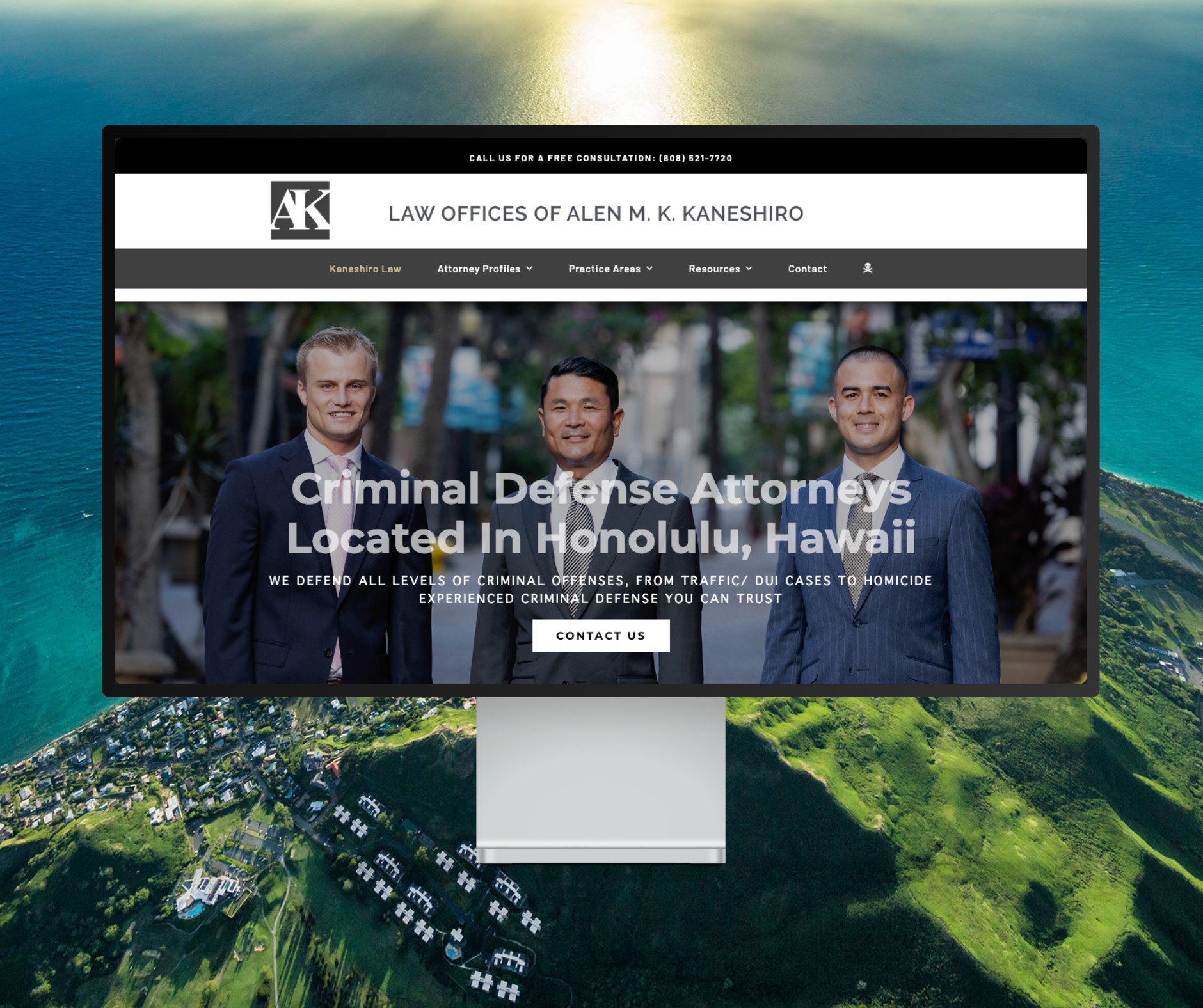
Featured Website: www.kaneshirolaw.com
Kaneshiro Law Firm, one of Hawaii’s most respected legal practices, partnered with The X Digital three years ago for a complete website redesign. Since then, we’ve maintained an ongoing relationship—handling updates, optimizations, and technical support around the clock. Our dedicated team ensures they’re never without assistance, while our enterprise-grade hosting provides 24/7 uptime monitoring and reliability. Kaneshiro Law Firm is one of many long-term clients who trust us to keep their digital presence running flawlessly.