

AI chatbots are answering your customers’ questions before they call you. They’re explaining services, comparing options, checking policies, recommending products, and increasingly helping people decide which businesses deserve their attention. For a small business, that creates both an opportunity and a risk: you can serve more people without adding staff, but customers may also form an opinion about your company before they ever visit your website or pick up the phone.
This shift goes beyond adding a chat bubble to your homepage. It includes AI chatbots customer service tools, ChatGPT replacing website traffic for certain searches, Google AI Overviews, and answer engines that summarize information from multiple websites. In this article, we’ll explain what’s changing, how AI assistants affect small business, where the real lead-generation impact is happening, and what you should do now to stay visible and useful.
AI Chatbots Are Answering Customer Questions Before They Call
People have always looked for answers before contacting a business. The difference is that they no longer need to browse five websites, open several tabs, or wait for a reply. An AI assistant can provide a conversational answer in seconds.
A potential customer might ask:
- “What type of roof repair do I need after a storm?”
- “Which Maui rental company has child seats and airport pickup?”
- “How much does assisted living typically cost in my area?”
- “Can this contractor install a heat pump in an older home?”
- “What should I bring to my first physical therapy appointment?”
The assistant may answer directly, recommend next steps, and sometimes name specific businesses. That means your first interaction with a prospect may happen through ChatGPT, Google AI Overviews, Claude, Perplexity, or another answer engine—not through your website’s contact form.
This is already moving from experiment to practical business infrastructure. OpenAI’s 2025 State of Enterprise AI report says customer service and content generation represented approximately 20% of API activity among its business customers. The report also highlights examples such as Lowe’s, whose AI assistant answers nearly one million questions per month about products, projects, and orders.
For smaller businesses, the lesson isn’t that you need to build the next Lowe’s. It’s that customers are getting comfortable asking machines for advice. Your business needs to be represented accurately in the information those machines use.
What This Means for Website Traffic and Leads
ChatGPT isn’t eliminating every website visit
There has been plenty of discussion about ChatGPT replacing website traffic. That concern is reasonable, especially for informational blog content. If an AI assistant summarizes an answer in a few paragraphs, fewer people may click through to read a basic article.
However, not all searches have the same value. A person asking, “How often should I change my air filter?” may be satisfied with an answer and never visit a website. Someone asking, “Who can replace my air conditioner this week?” still needs a provider, a quote, a service area, and a way to schedule.
AI tends to reduce some low-intent clicks while making high-intent recommendations more important. In other words, the goal is not simply to get every possible visit. The goal is to be present when a customer is ready to take action.
The click may happen later in the buying journey
Google’s own documentation explains that AI Overviews include links to supporting web resources and that a click on an external page within an AI Overview counts as a click in Search Console. Google also describes AI Mode as a more interactive experience where users can ask follow-up questions and explore related topics.
That creates a new visibility layer between your business and the customer. A prospect may first discover your expertise in an AI-generated answer, then visit your website when they want proof, pricing, availability, directions, or a consultation.
For this reason, track more than total organic traffic. Watch:
- Branded searches and direct visits
- Calls and form submissions from organic visitors
- Conversions from service and location pages
- Search queries that lead to high-value actions
- Whether your business information is accurate across major platforms
A traffic decline is not automatically a marketing failure. If fewer people read a general FAQ but more qualified prospects call after seeing your business recommended by an answer engine, the business outcome may be improving. The measurement challenge is separating empty visits from genuine buying intent.
AI Chatbots Customer Service Can Handle More Than FAQs
The first generation of business chatbots was often frustrating. Customers clicked through rigid menus, typed the “wrong” phrase, and eventually got transferred to a human anyway. Modern AI agents can understand more natural questions and use approved business information to provide a relevant response.
That doesn’t mean every chatbot is reliable. It means the technology is now capable of handling a broader range of useful tasks when it is connected to accurate information and carefully controlled workflows.
Useful jobs for a small-business chatbot
For many of our clients, the best starting point is not an ambitious all-purpose AI employee. It’s a focused assistant that does a few important jobs well:
- Answer common questions about services, pricing ranges, policies, and availability
- Qualify leads by asking about location, timeline, budget, and project type
- Recommend the right service or product category
- Collect contact details outside normal business hours
- Schedule an appointment or request a callback
- Route urgent or sensitive questions to a human
- Summarize the conversation for the sales or service team
This is especially valuable for businesses that miss calls while employees are driving, working in the field, helping customers, or closing for the day. The chatbot doesn’t need to replace your team. It needs to prevent good opportunities from disappearing.
Measure resolution, not just automation
One important distinction is the difference between containment and resolution. Containment means the customer did not reach a human. Resolution means the customer actually got a useful answer or completed the intended task.
Those are not the same thing. A chatbot can keep a customer away from your staff while failing to answer the question. That may reduce apparent workload but damage trust and increase abandoned leads.
OpenAI’s customer-service case studies illustrate the difference. In its report, Intercom says its Fin Voice system resolves 53% of calls end-to-end on average, while calls that still require human assistance are resolved 40% faster after the AI completes the initial steps. Those results come from a large technology platform, not a typical local business, so they should not be treated as a guaranteed benchmark. Still, they show the direction of the market: AI is increasingly being judged by completed outcomes rather than impressive demos.
Answer Engine Optimization Is Becoming a Small-Business Priority
Search engine optimization helps your website appear in traditional search results. Answer engine optimization, or AEO, focuses on making your business and content easy for AI systems to understand, trust, summarize, and cite.
Answer engine optimization in 2026 is not about stuffing articles with awkward phrases or trying to “hack” ChatGPT. It is about making your real-world expertise clear and verifiable.
What answer engines need from your business
AI assistants are more likely to use information they can interpret confidently. Your website should make the following details easy to find:
- Exactly what you do and who you serve
- The locations and service areas you cover
- Clear descriptions of your services and products
- Answers to specific customer questions
- Evidence of experience, credentials, reviews, or completed work
- Current business hours, contact information, and policies
- Consistent information across your website and trusted third-party profiles
Structure matters, too. Use descriptive headings, short paragraphs, clear service pages, useful FAQs, internal links, and appropriate structured data. Most importantly, write for the questions customers actually ask—not just the keywords a marketing tool suggests.
Depth beats generic AI-written content
Publishing dozens of shallow articles generated by AI will not automatically make your business more visible. In fact, generic content gives an answer engine little reason to prefer your company over thousands of similar pages.
Your advantage is first-hand knowledge. Explain what customers commonly get wrong. Describe how you diagnose a problem. Show the difference between a quick fix and a durable solution. Share real examples without exposing private customer information. Add original photos, videos, pricing context, and local details where appropriate.
That is the kind of content that supports both traditional SEO and AEO. It helps a search engine understand your page, gives an AI assistant something specific to reference, and gives a human reader a reason to trust you.
The AI Lead Generation Impact Is Bigger Than the Chat Window
The most valuable AI chatbot may not be the one that answers the most questions. It may be the one that responds first, identifies a serious prospect, and moves that person toward the next step.
Speed matters because customers often contact several businesses at once. If one company responds immediately with a helpful answer while another replies the next morning, the first company has a meaningful advantage—even if its price is not the lowest.
OpenAI’s case study on Podium describes AI agents used by local businesses such as HVAC companies, auto dealers, and medspas. According to the case study, Podium reports a 45% increase in lead conversion on average and a 30% average increase in revenue among its customers. These are vendor-reported results, not a universal promise, but they point to a practical use of AI: recovering demand that would otherwise be lost to slow follow-up.
For a small business, the sensible approach is to improve one part of the customer journey at a time:
- Start with your top questions. Review calls, emails, chat logs, reviews, and sales conversations.
- Identify revenue-related questions. Prioritize questions about fit, price, timing, service area, and availability.
- Create approved answers. Make sure the information is accurate, current, and written in your normal voice.
- Add a clear next step. The chatbot should offer a call, form, booking link, estimate request, or human handoff.
- Review conversations every week. Look for unanswered questions, incorrect assumptions, and leads that were not followed up.
Do not use AI to hide a broken sales process. If nobody follows up with the leads it collects, the chatbot will simply help you lose opportunities faster. Automation works best when it is connected to clear ownership and a reliable response process.
What Small Businesses Should Do Next
You do not need to overhaul your entire marketing strategy because AI assistants exist. You do need to make sure your business is understandable, trustworthy, and easy to contact.
Start by auditing the questions customers ask before they hire you. Then update your website so those questions have direct, useful answers. Check your Google Business Profile and other important listings for outdated information. Improve your service pages before producing more blog posts. Finally, consider a focused AI chatbot if your business receives repetitive questions, misses calls, or struggles to respond quickly.
The best implementation will include limits. Tell the chatbot what it can answer, what it must not guess, and when it should hand the conversation to a person. Sensitive medical, legal, financial, safety, and complaint-related issues deserve special care and often require human involvement.
Conclusion
AI assistants are changing how customers research businesses, but they are not removing the need for real companies, real expertise, or real service. They are changing when and how those things are discovered.
Your next customer may ask an AI chatbot about your business before visiting your website. They may receive an answer from Google before seeing your homepage. They may use your chatbot to decide whether to call, book, or move on. That makes accurate information, useful content, fast follow-up, and thoughtful automation more important than ever.
At The X Digital, we approach AI from both sides: we optimize websites so answer engines can understand them, and we build practical tools that help businesses capture and convert real demand. The goal is not to chase every new feature. It is to make your business easier to find, easier to trust, and easier to contact when a customer is ready.
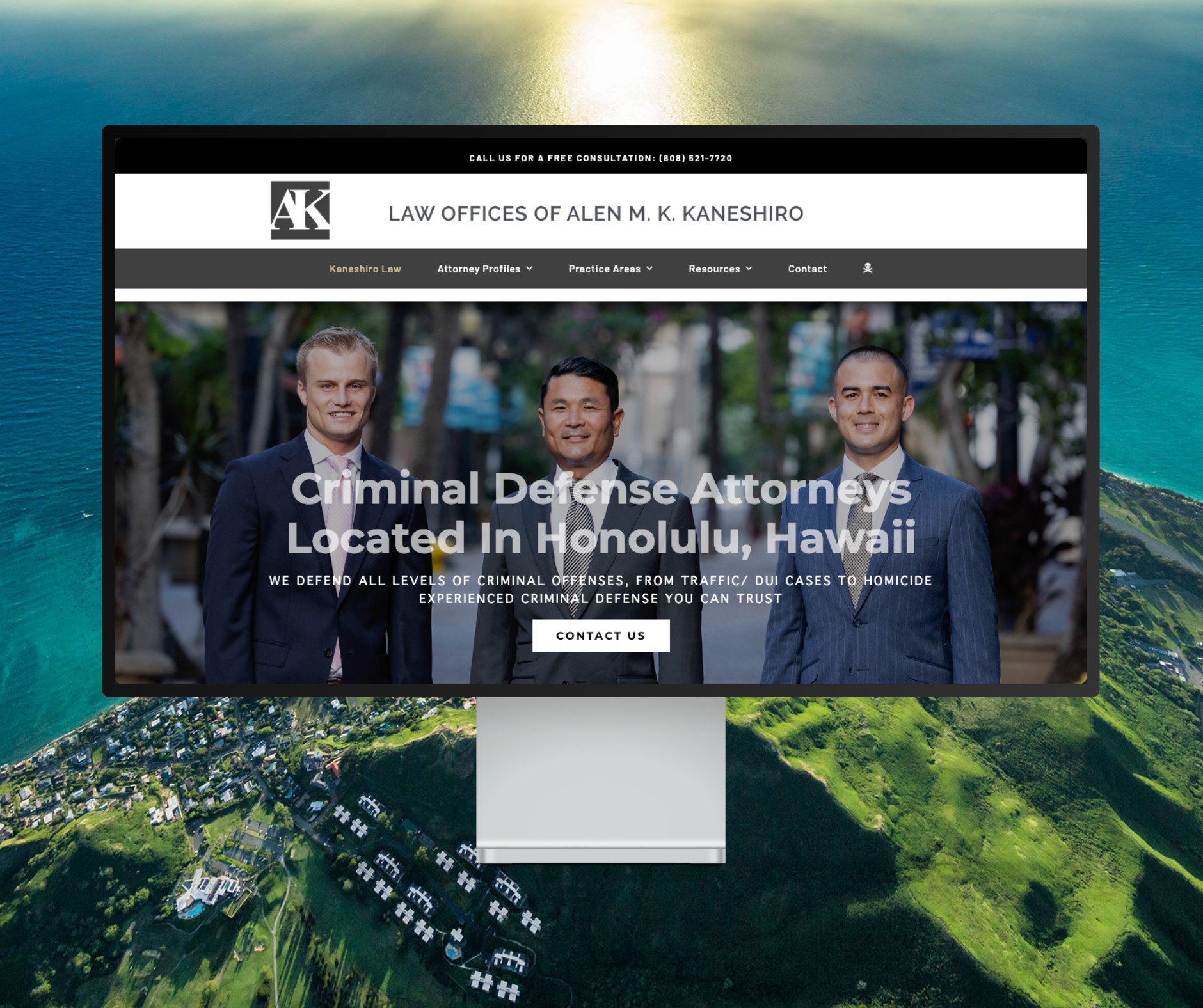
Featured Website: www.kaneshirolaw.com
Kaneshiro Law Firm, one of Hawaii’s most respected legal practices, partnered with The X Digital three years ago for a complete website redesign. Since then, we’ve maintained an ongoing relationship—handling updates, optimizations, and technical support around the clock. Our dedicated team ensures they’re never without assistance, while our enterprise-grade hosting provides 24/7 uptime monitoring and reliability. Kaneshiro Law Firm is one of many long-term clients who trust us to keep their digital presence running flawlessly.