

Your AI chatbot captures contact information. It collects names, email addresses, and phone numbers. Your dashboard shows dozens of new leads every week. But when your sales team follows up, half of them never respond. The other half say they were “just browsing” or ask questions that reveal they’re nowhere near ready to buy. You deployed automation to qualify leads, not just collect them — yet you’re still manually sorting through tire-kickers, competitors, and people who thought your chatbot was customer support.
This isn’t a technology failure. The AI works. The problem is that most businesses configure their chatbot like a digital contact form instead of a qualification engine. They optimize for volume, not intent. They ask for information before they’ve given value. And they hand off leads to sales without any context about readiness, budget, timeline, or fit. The result: your chatbot becomes a lead generator that actually lowers your sales team’s efficiency.
In this article, we’ll walk through why AI chatbots miss qualified leads, what separates high-converting implementations from underperformers, and exactly how to train your chatbot to surface buyer intent and route only sales-ready prospects to your team.
Why Most AI Chatbots Fail at Lead Qualification
Chatbot adoption is accelerating. According to Gartner research, 70% of enterprises have adopted or plan to adopt conversational AI by 2025. Yet adoption doesn’t equal success. The same research reveals that only 35% of organizations deploying chatbots see measurable ROI on lead generation and customer acquisition. The gap between deployment and results comes down to three core failures: poor conversation design, weak qualification logic, and missing integration with your sales stack.
Linear Scripts That Ignore User Intent
Most chatbots follow a rigid question sequence regardless of what the user actually needs. They ask “What’s your name?” then “What’s your email?” then “What industry are you in?” — even when the visitor arrived looking for pricing, a demo, or an answer to a specific technical question. This approach treats every visitor the same, ignoring the signals that separate high-intent buyers from casual browsers.
The problem compounds when users don’t fit neatly into your script. If someone asks a question your chatbot wasn’t programmed to handle, it either loops back to the same generic prompt or hands off to a human too early. The conversation dies, and the lead is lost — not because they weren’t interested, but because your bot couldn’t adapt to their actual journey.
No Real Qualification Criteria Built Into the Conversation
Your chatbot captures contact information but misses intent. It collects emails from curious browsers, competitors, and tire-kickers alongside genuinely interested buyers. Your sales team spends hours on leads that were never qualified. According to analysis of 828,761 AI-powered DM conversations across 391 businesses, 53.3% of all conversations never get past two messages. These are outbound messages with no reply, one-word responses, or leads who disengage immediately.
Lead scoring isn’t built into the conversation, so high-intent prospects get no priority. The chatbot treats someone who asked “How much does this cost?” the same as someone who typed “Tell me more.” Without qualification logic embedded in the flow, your CRM fills with contacts who will never convert, and your sales team’s close rate plummets.
Missing Value Messaging and Urgency
Users don’t understand why they should continue the conversation or leave their information. The chatbot doesn’t articulate what they’ll get, when they’ll get it, or why now is the right time to act. Without clarity on value and urgency, motivation to complete drops dramatically. Your completion rates hover around 40%, and most of those completions come from people who weren’t qualified in the first place.
Integration Gaps That Kill Handoff Quality
Your chatbot collects leads, but they don’t sync to your CRM in real time. Context from the conversation doesn’t travel with the lead. Sales reps receive incomplete data or duplicate records. The handoff is clumsy, and leads go cold while systems catch up. Even when integration exists, it’s often limited to basic contact fields — no conversation history, no intent signals, no qualification score. Your rep starts from scratch on every call, asking questions the chatbot already answered.
What High-Performing AI Chatbot Lead Qualification Actually Looks Like
The top 10% of businesses using conversational AI for lead qualification achieve a 31.78% qualification rate and 13.60% booked calls rate. The bottom 25%? Just 0.67% qualification and 0.39% booked calls. Same AI, same channels — wildly different results. The difference isn’t the technology. It’s how the chatbot is trained, what it asks, when it escalates, and how tightly it integrates with the sales process.
Dynamic Conversation Flows That Follow Intent
High-converting chatbots replace linear scripting with dynamic branching. They use open-ended questions early to uncover what the user actually cares about, then follow contextual paths based on their responses. For example: instead of “What’s your industry?” the bot asks “What brought you here today?” If the visitor mentions competitor research, the conversation follows a competitive analysis path. If they mention a specific pain point, the bot dives into that problem space.
This approach mirrors how a skilled sales rep qualifies on a discovery call — listening first, then adapting the conversation to the prospect’s actual situation. The AI doesn’t force users through a predetermined funnel. It meets them where they are and guides them toward qualification naturally.
Embedded Qualification Logic That Scores as It Converses
Modern conversational AI applies a qualification framework during dialogue — but never by asking “What’s your budget?” directly. It infers budget range from company size, role, and conversational context, then layers behavioral signals on top. The chatbot quietly calculates a lead score behind the scenes. A prospect who matches all three criteria (budget, authority, need, timeline) gets flagged as high-intent. One who matches one gets marked as exploratory.
According to research on AI lead qualification, the best implementations route leads based on intent level:
- High intent (pricing requests, demo asks, urgency language): Immediate handoff or calendar booking
- Medium intent (feature questions, comparison shopping): MQL queue for rep follow-up
- Low intent (casual browsing, vague questions): Nurture sequence
- Support (existing customer phrasing): Customer success team
This nuance determines how aggressively sales follows up and ensures your team spends time on leads who are actually ready to buy.
Speed That Capitalizes on Intent Windows
When a lead submits a form, sends a DM, or clicks a chat widget, conversational AI responds within seconds. This matters more than most teams realize. Research has shown that conversion rates are 8x greater in the first five minutes of contact — yet only 0.1% of inbound leads are actually engaged that quickly. AI chatbots close this gap by engaging instantly, asking qualifying questions while intent is still hot, and routing high-priority leads to sales in real time.
The data on message volume reinforces this. Conversations that reach 11–20 messages have a 29.30% qualification rate. Those that reach 21–40 messages jump to 52.10%. But conversations with only 1–4 messages? Just 0.43%. The chatbot’s job is to keep the conversation going long enough to surface real intent — and that requires speed, relevance, and value at every turn.
How to Train Your AI Chatbot to Qualify Leads (Not Just Collect Them)
Fixing chatbot conversion isn’t about switching platforms or adding more AI horsepower. It’s about redesigning how your chatbot thinks about qualification and training it to recognize the signals that predict sales readiness. Here’s the step-by-step framework we use when implementing AI lead generation tools like Zao Chat for our clients.
Step 1: Define What “Qualified” Actually Means for Your Business
Before you touch your chatbot’s conversation flow, document your ideal customer profile and qualification criteria. What signals indicate genuine buying intent? What timeline are you targeting? What problems matter most? What budget range makes a prospect viable?
For a B2B SaaS company, qualified might mean: decision-maker at a company with 10–500 employees, currently using a competitor or manual process, planning to make a decision within 90 days, and budget authority over $10K annually. For a local service business, it might be: homeowner in your service area, project starting within 60 days, and able to meet a minimum project size.
Your chatbot can’t qualify leads if you haven’t defined what qualification looks like. This clarity becomes the foundation for every question the bot asks and every routing decision it makes.
Step 2: Redesign Your Conversation Flow Around Discovery, Not Data Collection
Lead with value, not forms. The first message should position the conversation as beneficial to the user: “I can help you find the right solution for [specific problem] in about 3 minutes” or “I’ll walk you through exactly how this works and whether it’s a fit for your situation.” This reframes the chatbot from interrogator to guide.
Ask open-ended questions early to uncover intent. Instead of “What’s your company size?” ask “What’s the biggest challenge you’re facing with [relevant problem area] right now?” The answer reveals not just data, but context — what they care about, how urgent it is, and whether your solution maps to their actual pain.
Then branch dynamically based on their response. If they describe a problem you solve, dive deeper into that use case. If they’re comparison shopping, pivot to differentiation. If they’re early-stage, offer educational content and a nurture path. The conversation should feel like a consultation, not a form.
Step 3: Embed Qualification Questions Naturally Into the Flow
Don’t ask “What’s your budget?” Ask “When are you planning to solve this?” or “What does success look like for you in the next quarter?” These questions surface timeline and priority without feeling transactional. The chatbot should quietly score responses behind the scenes, flagging high-intent signals like urgency language, pricing questions, or requests for demos.
Build a simple scoring model: +2 points for timeline under 60 days, +2 for decision-maker language, +1 for specific pain point mentioned, +3 for pricing or demo request. A lead who hits 6+ points gets routed to sales immediately. 3–5 points goes to marketing for nurture. Below 3 gets a resource and a follow-up sequence.
Step 4: Integrate With Your CRM and Sales Stack in Real Time
Chatbot data is only valuable if it reaches your sales team instantly and completely. Ensure real-time CRM sync so new leads appear in the inbox within seconds. Pass conversation context alongside contact data so the rep knows exactly what was discussed. Implement lead routing logic so high-intent leads go to your best closers, not a generic queue.
Define exactly when and how the chatbot hands off to a sales rep. Some businesses do this after three qualifying questions. Others wait until the user asks a complex question the bot can’t handle. Be explicit in the handoff: “I think you’d benefit from speaking with our specialist. Let me connect you with Sarah right now. She’s reviewed your situation and is ready to talk.”
Step 5: Monitor Performance and Refine Continuously
The best-performing chatbots are tuned every week, not left static for months. Track these key metrics:
- Completion rate: What percentage of conversations reach the intended end goal? Target 50%+ depending on industry.
- Qualified lead rate: Of all leads captured, what percentage meet your qualification criteria? Top performers hit 30%+.
- Booked calls rate: How many qualified leads actually schedule a conversation? Aim for 40%+ of qualified leads.
- Sales feedback score: What percentage of chatbot-sourced leads does your sales team rate as “good fit”? This is your truth metric.
Pull conversation transcripts weekly. Look for patterns in where users drop off, what questions confuse them, and which leads your sales team marked as low-quality. Use this feedback to refine your qualification questions, adjust your scoring model, and improve your handoff messaging.
The Qualification Checklist Your Chatbot Should Follow
Based on analysis of high-performing lead qualification systems, here’s the checklist your AI chatbot should work through during every conversation. Not every question needs to be asked explicitly — some can be inferred from context or behavior — but every criterion should be evaluated before a lead gets marked as qualified.
- Problem fit: Does the prospect have a problem your product or service actually solves?
- Awareness level: Do they understand they have a problem, or are they still in education mode?
- Timeline: When do they need a solution? Are they planning to act in the next 30, 60, or 90 days?
- Authority: Are they the decision-maker, or do they need approval from someone else?
- Budget range: Can they afford your solution, or are they shopping outside their price range?
- Competitive context: Are they currently using a competitor, a manual process, or nothing at all?
- Urgency signals: Did they use language like “ASAP,” “urgent,” “need to decide soon”?
- Engagement depth: Did they ask multiple questions or request detailed information?
- Objection clarity: If they expressed hesitation, was it about fit, timing, or price?
- Next step commitment: Did they agree to a call, demo, or specific follow-up action?
Your chatbot should route leads differently based on how many of these boxes they check. All ten? Immediate sales handoff. Five to seven? Marketing qualified, nurture with priority. Fewer than five? Educational content and long-term follow-up.
What to Do After You’ve Trained Your Chatbot
Training your AI chatbot for lead qualification isn’t a one-time project. It’s an ongoing optimization process. After you’ve implemented the framework above, your next 30 days should focus on measurement, feedback loops, and iteration.
Set up a weekly review with your sales and marketing teams. Ask: Which chatbot-sourced leads converted? Which ones were a waste of time? What questions did the chatbot miss? What objections came up on sales calls that should have been surfaced earlier? Use this feedback to refine your qualification criteria and conversation flow.
A/B test different question sequences, value messaging, and escalation moments. Try leading with a specific use case versus a general question. Test whether offering a resource (like a calculator or guide) before asking for contact information improves qualification rates. Small changes in wording or sequence can produce double-digit lifts in conversion.
Finally, remember that AI chatbot lead qualification is part of a larger system. Your chatbot’s job is to surface intent and route leads intelligently — but your sales team still needs to close them. Make sure your reps understand how the chatbot qualifies, what signals to look for in the conversation history, and how to pick up the thread without starting from scratch. The handoff is where most implementations break down. Treat it as a process, not a technical integration.
Conclusion: Qualification Is a Strategy, Not a Feature
Your AI chatbot can be a lead qualification engine or a digital contact form. The difference is entirely in how you train it. High-performing implementations don’t just capture names and emails — they surface intent, score readiness, and route only sales-ready prospects to your team. They ask the right questions in the right order, adapt to user context, and integrate tightly with your CRM and sales process.
If your chatbot is generating volume but not quality, the fix isn’t more AI. It’s better qualification logic, clearer value messaging, and tighter
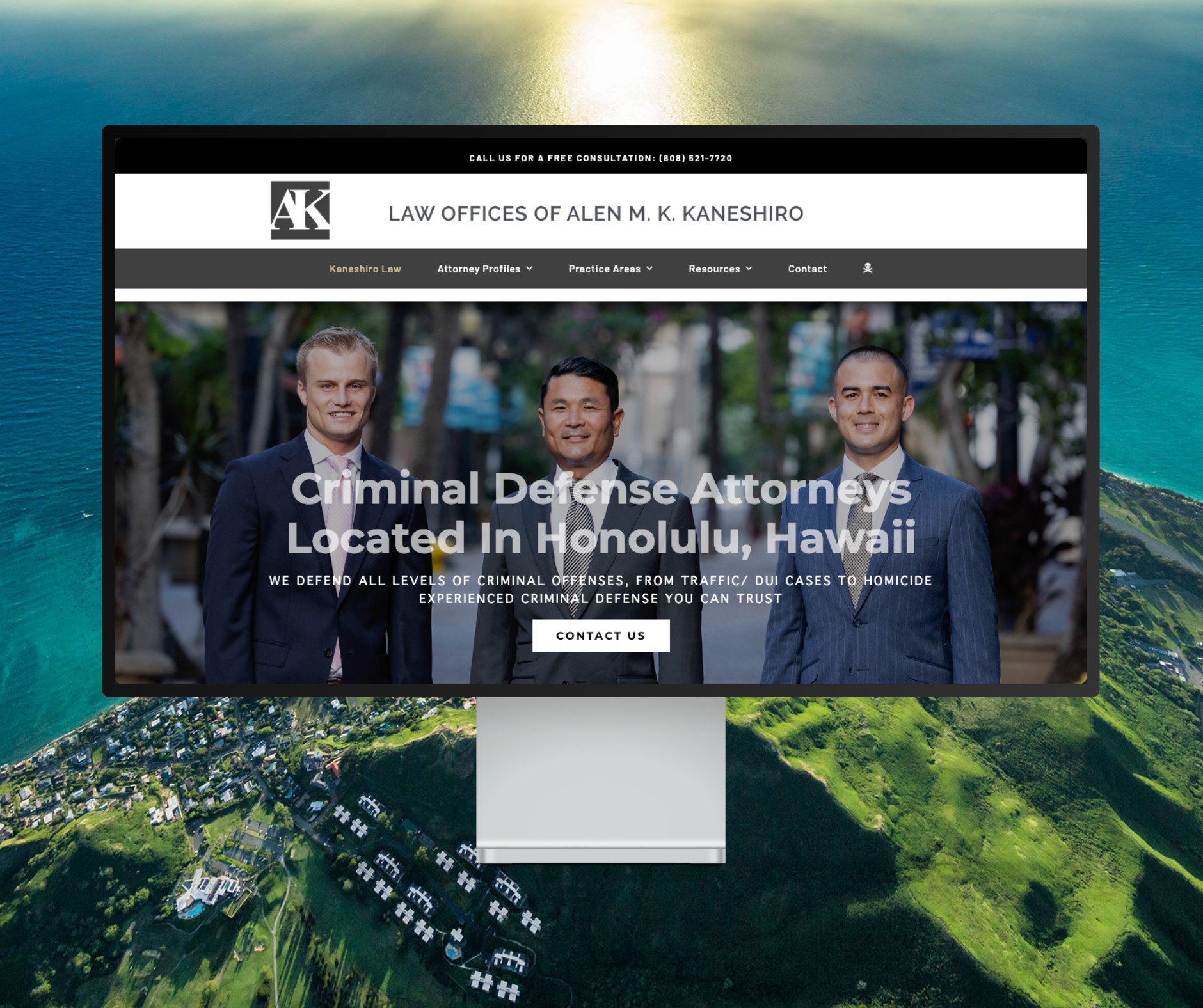
Featured Website: www.kaneshirolaw.com
Kaneshiro Law Firm, one of Hawaii’s most respected legal practices, partnered with The X Digital three years ago for a complete website redesign. Since then, we’ve maintained an ongoing relationship—handling updates, optimizations, and technical support around the clock. Our dedicated team ensures they’re never without assistance, while our enterprise-grade hosting provides 24/7 uptime monitoring and reliability. Kaneshiro Law Firm is one of many long-term clients who trust us to keep their digital presence running flawlessly.