

Before you ever see a new inquiry, an AI chatbot may already have decided whether that person is worth your time. It can ask about budget, location, timeline, project type, urgency, and decision-making authority—then route the conversation, assign a score, schedule an appointment, or quietly place the contact into a follow-up sequence.
That is the promise of AI chatbot lead qualification: fewer dead-end conversations for your team and faster responses for serious prospects. But there’s a less comfortable side. If the chatbot is poorly trained, overly aggressive, or built around the wrong rules, it can reject good leads before a human ever has a chance to help.
In this article, we’ll explain what AI chatbots look for, how automated lead scoring works, why some inquiries are filtered out, and how to build a system that saves time without hiding valuable opportunities. At The X Digital, we build AI lead-generation tools ourselves, so our advice starts with what works in real businesses—not just what sounds impressive in a software demo.
How AI Chatbot Lead Qualification Works Before You See the Lead
A traditional website form usually collects basic information: name, email address, phone number, and perhaps a short message. Someone on your team then has to interpret the inquiry, decide whether it is a fit, and determine what should happen next.
An AI sales chatbot handles more of that process during the conversation. Instead of waiting for a salesperson to review every submission, it can ask a series of natural-language questions and use the answers to classify the visitor.
That classification may include:
- Qualified: The person appears to match your service area, budget, needs, and timeline.
- Partially qualified: The person may be a fit but needs more information or follow-up.
- Unqualified: The request falls outside your services, location, pricing, or capacity.
- High priority: The visitor shows buying intent and should be contacted quickly.
- Nurture: The visitor is interested but not ready to make a decision.
The chatbot is not necessarily making a final judgment about the person. In most cases, it is applying rules and patterns that your business—or the software provider—has configured. Those rules might include “only serve customers within 50 miles,” “minimum project budget is $5,000,” or “route emergency requests to a phone number immediately.”
Modern systems can also analyze the conversation itself. A visitor who asks detailed questions, explains a specific problem, shares a target date, and requests a quote may receive a higher score than someone who simply says, “How much do you charge?”
Research published in the Journal of Interactive Marketing on determining the quality of B2C sales leads from online chats identified factors such as mode of contact, immediacy, need, interest, time spent chatting, and specificity as meaningful signals in sales outcomes. In plain English, what a visitor says—and how they say it—can be as important as the information in a form.
What AI Chatbots Look For When Scoring a Lead
Fit: Is this person the kind of customer you serve?
The first job of business lead filtering is usually determining whether the inquiry fits your basic customer profile. For a local service company, that might mean checking the visitor’s city, ZIP code, property type, and requested service.
For a professional services firm, the chatbot may ask about company size, industry, role, and business challenge. A rental company might qualify based on dates, age requirements, vehicle type, and pickup location. A home contractor may need to know whether the visitor owns the property, what kind of work is needed, and whether permits or architectural plans are involved.
This is useful because many businesses spend too much time manually sorting requests that could have been filtered in seconds. However, location and service filters must be kept current. If you recently expanded your service area or added a new offering, an outdated chatbot can reject legitimate prospects.
Intent: Is the visitor researching or ready to act?
Intent is harder to measure, but it is often the most valuable part of automated lead scoring. The chatbot may look for signs that a visitor has a real problem, a defined project, and a reason to move forward.
High-intent signals can include:
- Asking about availability or scheduling
- Requesting a quote, consultation, demo, or inspection
- Sharing a specific deadline
- Explaining a problem in detail
- Asking about payment options or next steps
- Providing a business email or phone number
Low-intent signals do not always mean the person is a bad lead. Someone asking a basic pricing question may still become a customer later. The better approach is to place that person into a nurture path rather than rejecting them outright.
Value: Is the opportunity commercially worthwhile?
Some chatbots ask about budget directly. Others estimate potential value from the service requested, project size, number of locations, or likely contract length. This allows a small business to prioritize the inquiries most likely to produce meaningful revenue.
That can be especially helpful when a team has limited capacity. A business may decide that urgent, high-value opportunities go directly to a salesperson, while smaller or less urgent requests receive an email response and booking link.
Still, budget should be treated as a signal—not an absolute verdict. Prospects often do not know what a service should cost, and many will avoid answering a budget question. A rigid system can turn uncertainty into an incorrect rejection.
Why Some Good Leads Get Rejected
The phrase “AI rejected my lead” makes the technology sound more confident than it really is. In practice, most lead qualification software is working from incomplete information. The visitor may leave before answering every question, misunderstand what the chatbot is asking, or describe a need using words the system does not recognize.
There are several common failure points.
Bad rules produce bad decisions
If your qualification rules are too narrow, the chatbot will faithfully eliminate opportunities that your business might actually want. For example, a contractor that only accepts “full kitchen remodel” may lose someone who types “I need to update my cabinets and countertops.” A consultant that requires a minimum company size may miss a smaller company with an urgent and profitable project.
The issue is not that the chatbot is unintelligent. The issue is that the business has confused a preferred customer profile with a strict rejection policy.
Conversational ambiguity is real
People rarely answer questions in clean database fields. They change topics, use slang, leave out important details, and ask questions of their own. A visitor may say, “We’re hoping to get this done sometime before summer,” which could mean they are ready to buy—or simply gathering ideas.
A good AI customer qualification workflow should recognize uncertainty and ask a follow-up question. It should not pretend to know more than it does. When the answer remains unclear, the safest action is usually “needs human review.”
Speed can be mistaken for buying intent
Someone who responds quickly is not automatically a valuable lead. Someone who takes days to reply is not automatically disinterested. A chatbot that overweights response time, message length, or certain keywords may produce a neat score that does not reflect actual sales potential.
This is why your team should compare chatbot scores with real outcomes. Which leads became customers? Which “unqualified” contacts later purchased? Which questions consistently caused good prospects to drop off? Automated lead scoring should improve through feedback, not remain frozen after launch.
How to Build Safer AI Customer Qualification
The goal is not to make the chatbot reject as many people as possible. The goal is to help the right person reach the right next step quickly.
Separate routing from rejection
There are many options between “send immediately to sales” and “discard.” Use them.
- Immediate handoff: The visitor requests a consultation, has an urgent need, and appears to fit your service.
- Book a call: The visitor is a reasonable fit but does not require a live response.
- Email follow-up: The visitor needs pricing, education, or a basic resource.
- Human review: The request is unusual, incomplete, or potentially valuable.
- Polite redirect: The request is clearly outside your service area or capabilities.
This structure protects you from the biggest risk in AI lead qualification: treating “not enough information” as “not a good lead.”
Ask fewer, better questions
Long chatbot interrogations frustrate visitors. Start with questions that affect the next action. For a local service business, that might be service needed, location, timing, and the best way to respond. For a B2B company, it could be business challenge, company type, desired outcome, and timeline.
Once the visitor has demonstrated intent, ask for contact information. Asking for a phone number before establishing relevance can feel intrusive and reduce completion rates.
Make the handoff useful
A lead notification that says “New chat from John” is not enough. Your team should receive a summary containing the visitor’s problem, answers, estimated urgency, service requested, qualification score, and recommended next action.
That context is one of the biggest advantages of an AI sales chatbot. The salesperson can begin with, “I understand you need help with a leaking commercial roof and want the inspection completed this week,” rather than forcing the prospect to repeat everything.
Microsoft’s documentation for its Sales Qualification Agent provides a useful example of this approach: leads are handed to sales based on administrator-defined handoff criteria, with the goal of giving the team a clearer view of which prospects were passed forward and why.
What Business Owners Should Measure After Launch
Installing a chatbot is not the finish line. It is the start of a measurement process.
Track the entire path from conversation to revenue, including:
- Chat start rate
- Conversation completion rate
- Contact information submission rate
- Appointment or consultation booking rate
- Percentage of leads routed to a human
- Percentage marked as qualified
- Sales response time
- Close rate by qualification category
- Revenue generated by chatbot-assisted leads
Pay special attention to false negatives: leads the chatbot rejected or downgraded that later turned out to be valuable. False positives matter too, but they are usually easier to see because they consume your team’s time. False negatives remain invisible unless you deliberately investigate them.
Current adoption trends suggest this work will become more common. A Gartner survey published in December 2024 found that 85% of customer service leaders planned to explore or pilot customer-facing conversational generative AI during 2025. Meanwhile, Salesforce’s 2025 technology research listed lead qualification among the leading agentic AI use cases, while also reporting that only 37% of technology leaders trusted AI agents to act autonomously.
That combination is important: adoption is growing, but trust still depends on oversight. For most small and mid-sized businesses, the best system is not a completely autonomous sales representative. It is a practical assistant that handles repetitive questions, gathers useful information, and knows when to involve a person.
Conclusion: Let AI Filter Conversations, Not Opportunities
AI chatbots are already influencing which leads reach sales teams. They ask questions, interpret intent, assign scores, route conversations, and sometimes decide that an inquiry is not worth pursuing. Used carefully, this can reduce wasted time and help your team respond faster to people who are ready to buy.
But automated lead scoring is only as good as the rules, data, and feedback behind it. A chatbot should not be judged by how many contacts it rejects. It should be judged by whether it improves response times, lead quality, customer experience, and revenue without hiding good opportunities.
Start with a small set of useful questions, create a human-review path, and measure what happens after the handoff. That is how AI lead qualification becomes a sales advantage instead of another source of missed business.
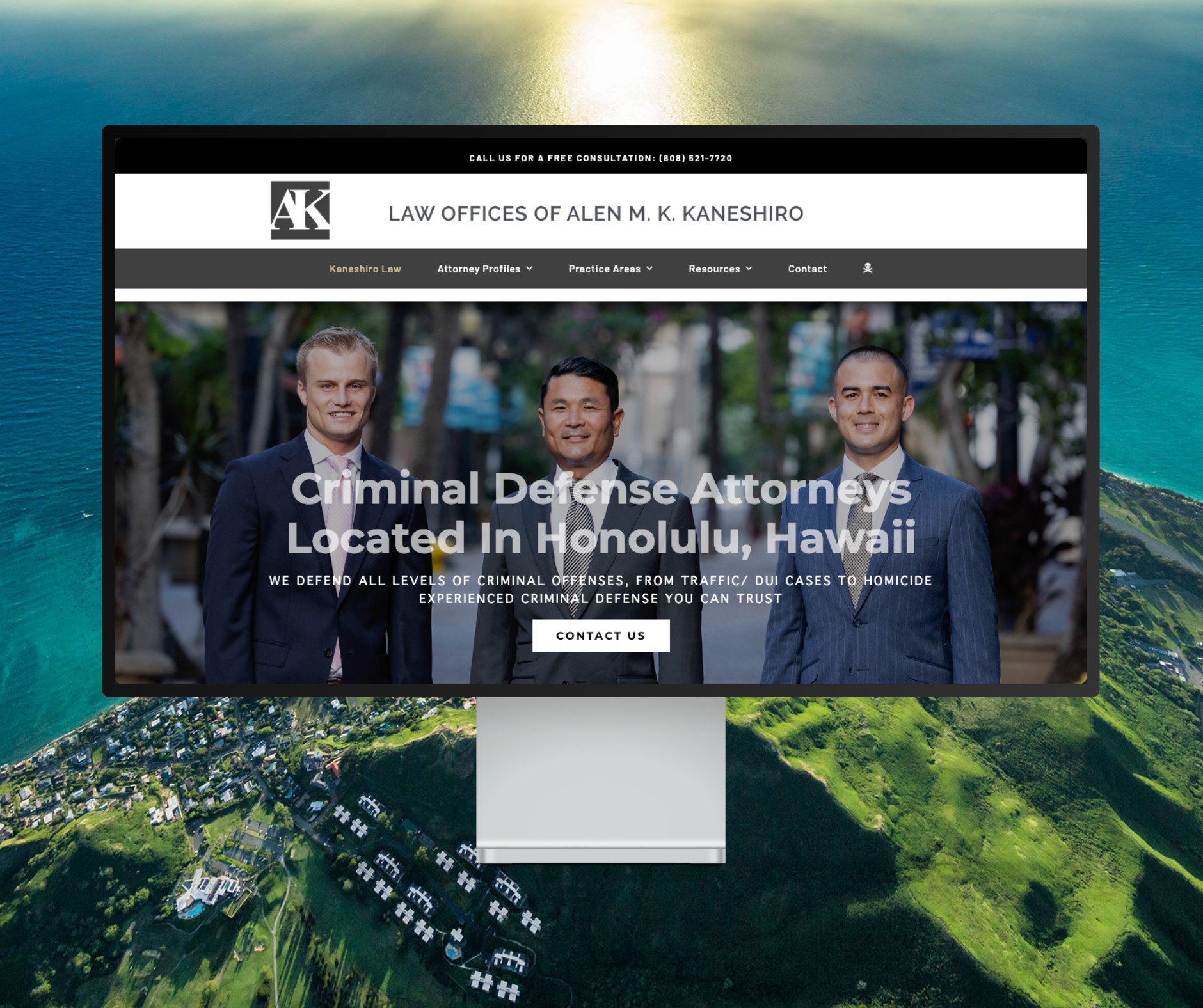
Featured Website: www.kaneshirolaw.com
Kaneshiro Law Firm, one of Hawaii’s most respected legal practices, partnered with The X Digital three years ago for a complete website redesign. Since then, we’ve maintained an ongoing relationship—handling updates, optimizations, and technical support around the clock. Our dedicated team ensures they’re never without assistance, while our enterprise-grade hosting provides 24/7 uptime monitoring and reliability. Kaneshiro Law Firm is one of many long-term clients who trust us to keep their digital presence running flawlessly.