

Your website ranks on page one. Your Google Ads are running. You’re publishing content, collecting reviews, and doing everything the marketing playbooks told you to do. But something fundamental just shifted: your best prospects aren’t finding you anymore—not because you’re doing anything wrong, but because they stopped looking where you’re visible.
Between 2024 and 2026, the way high-intent buyers discover businesses changed faster than most marketing strategies could adapt. AI-driven search now outsells organic search for some agencies, and the data shows why: 94% of B2B buyers now use generative AI in their purchase process, up from 89% just a year earlier. Nearly half of U.S. adults have used ChatGPT. Google’s AI Mode passed one billion monthly users, with query volume more than doubling every quarter.
The invisible problem? These buyers aren’t clicking through to websites the way they used to. In the first four months of 2026, 68% of Google searches ended without a click to any website. Your rankings still matter—but only if people are still looking at the results page.
The Lead Quality Paradox: Fewer Visitors, Better Conversions
Here’s where it gets interesting. While traditional organic traffic is declining across nearly every channel we track, the visitors who do arrive from AI search tools convert at rates most marketers have never seen from cold traffic.
Seer Interactive analyzed one client’s traffic over seven months and found that ChatGPT referrals converted at 15.9%—nearly ten times the 1.76% conversion rate from Google organic traffic. Perplexity referrals converted at 10.5%. These aren’t bottom-of-funnel retargeting numbers. These are first-touch visits from people who just discovered the business.
The pattern holds across our own client data. AI-sourced leads arrive further along in their research, ask more specific questions, and close faster. They’ve already consumed the educational content, compared alternatives, and filtered out poor fits—all inside the AI interface. By the time they click through, they’re not browsing. They’re evaluating whether to buy.
Why AI Search Produces Higher-Intent Leads
Traditional search requires users to evaluate ten blue links, scan multiple pages, synthesize information, and form their own conclusions. AI search does that synthesis work up front. When someone asks ChatGPT or Perplexity “which contractor should I hire for foundation repair in Austin,” the AI has already filtered by location, specialty, and quality signals before suggesting three businesses.
The user doesn’t see your competitors unless the AI chose to cite them. There’s no position two or three. You’re either in the answer or you’re invisible.
The Traffic Volume Trade-Off
The challenge is volume. In that same Seer Interactive study, the client received nearly 14 million Google organic sessions versus roughly 11,000 AI-driven sessions over the same period. Even at 15.9% conversion, fewer total visits means fewer total conversions—for now.
But the trajectory is clear. AI search usage is growing exponentially while organic click-through rates are collapsing. Queries that trigger AI Overviews see organic CTR drop from 1.76% to 0.61%—a 61% decline. Paid CTR on the same queries fell from 19.7% to 6.34%. And this isn’t just happening on Google. People have learned a new behavior across all search interfaces: read the summary, skip the click.
Your Google Rankings Don’t Transfer to AI Search
Most businesses assume their existing SEO work will carry over to AI search. It doesn’t. Not automatically, and not proportionally.
Ahrefs tested 15,000 long-tail queries across ChatGPT, Gemini, Copilot, and Perplexity and found that only 12% of AI-cited URLs rank in Google’s top ten for the same prompt. Let that sink in: nearly 90% of the pages AI engines recommend don’t appear on page one of Google.
Google AI Overviews are the exception—76% of cited sources do rank in the top ten, because Google is pulling from its own index. But everywhere else, AI engines are building answers from a largely different source pool. Gemini cites top-ten Google results only 8.6% of the time. ChatGPT’s in-text citations overlap just 8.0%, and its reference links only 6.1%.
What AI Engines Value Instead of Rankings
AI search doesn’t reward domain authority or backlink profiles the way Google does. It rewards clarity, structure, and citability. The engines are looking for content that directly answers questions in a format they can extract, attribute, and trust.
- Answer-shaped content: Pages structured around specific questions with clear, quotable answers in the first 100 words
- Cited expertise: Author credentials, case studies, and original data that establish authority within the content itself
- Semantic completeness: Content that covers a topic thoroughly enough that the AI doesn’t need to pull from three other sources
- Structured data: Schema markup that helps AI engines understand what your page is about and how it relates to user queries
This is why we’ve shifted a significant portion of our client work toward Answer Engine Optimization (AEO). It’s not a replacement for SEO—it’s a parallel strategy for a parallel discovery channel.
The Citation Volatility Problem
Even when you do earn an AI citation, it doesn’t stick the way a Google ranking does. seoClarity tracked ChatGPT citations across five markets from February 2026 and watched citation volumes drop 86–94% between February and April. The U.S. zero-citation rate jumped from 28% to 48% in March before rebounding toward pre-March levels in May.
Our own monitoring data confirms this. Across more than 5,000 citation polls over 77 days on real buyer prompts in our niche, 74% of prompts that earned a citation were cited by only one of the three engines we tracked. DuckDuckGo cited us 66% of the time, Gemini 39%, and ChatGPT just 18%. And when ChatGPT did cite us, that citation only persisted in roughly 44% of subsequent polls—versus roughly 70% persistence on Gemini.
Why Citations Are So Unstable
AI models are updated constantly. Training data shifts. Ranking algorithms inside these systems are opaque and change without announcement. Unlike Google, where you can track position changes daily and correlate them to algorithm updates, AI citations appear and disappear with no clear pattern.
This isn’t a content quality issue. It’s a platform maturity issue. The systems are still learning how to balance recency, authority, diversity, and relevance. What worked in February might not work in March—not because your content got worse, but because the model’s priorities shifted.
The strategic implication: you can’t optimize once and forget. AI search visibility requires ongoing monitoring, rapid content updates, and a portfolio approach across multiple engines.
Most Businesses Aren’t Measuring Any of This
Here’s the most alarming statistic we’ve seen: only 16% of brands systematically track their AI search performance. Most businesses don’t know whether they’re being cited, by which engines, for which queries, or how often those citations convert.
Google Search Console added AI Overview impression data in 2026, which is a step forward—but the data is thin. You get impressions across AI Overviews, AI Mode, and Discover. You don’t get clicks or queries. And there’s no equivalent dashboard for ChatGPT, Claude, Perplexity, or any other answer engine.
This creates a dangerous blind spot. If your best prospects are shifting to AI search and you’re not tracking it, you’re flying blind. You won’t know you have a visibility problem until revenue starts declining—and by then, your competitors who did invest in AEO have a six-month head start.
What to Track Right Now
Even without perfect tools, you can start measuring AI search impact today:
- Referral traffic from AI engines: Check Google Analytics for traffic from chatgpt.com, perplexity.ai, claude.ai, and gemini.google.com
- Conversion rates by source: Compare AI referral conversion rates to organic search—you’ll likely see dramatic differences
- Manual citation checks: Test your core buyer queries across ChatGPT, Perplexity, and Gemini weekly and log whether you’re cited
- AI Overview impressions: Review the new AI Overview section in Google Search Console, even with its limitations
- Direct traffic spikes: Some AI citations show up as direct traffic because referrer data is stripped—look for patterns
How to Start Capturing AI Search Leads
The good news: you don’t need to abandon your existing SEO strategy or rebuild your entire website. AEO is additive. You’re creating content that works for both traditional search and AI discovery.
Start with your highest-value queries—the ones that historically brought in your best customers. Rewrite or supplement that content with AI citability in mind. That means clear answers in the first paragraph, structured headings that match question patterns, and original insights or data that give AI engines a reason to cite you instead of a competitor.
Add schema markup if you haven’t already. FAQPage, HowTo, and Article schema help AI engines parse your content and understand its structure. We’ve seen citation rates improve 30–40% on pages where we added proper structured data.
Publish consistently. AI engines favor recent content, and they reward sites that demonstrate ongoing expertise. One deep, well-researched article per month will outperform ten thin posts.
The Portfolio Approach
Don’t optimize for just one engine. ChatGPT, Perplexity, Gemini, and Google AI Overviews all use different ranking signals and training data. Content that performs well on one might not surface on another. Build a presence across multiple platforms, monitor which ones send you the highest-quality leads, and double down on those channels.
This is exactly why we built our own AI monitoring tools. We needed to track citations across engines, measure persistence, and identify which content formats were working—because no off-the-shelf tool was doing it well enough.
What This Means for Your Business in 2026 and Beyond
AI search isn’t replacing Google. It’s fragmenting discovery across a dozen new surfaces, each with its own algorithms and user behaviors. Your best customers are still searching—they’re just doing it in places you’re not optimized for yet.
The businesses that win over the next 24 months will be the ones who treat AI search as a first-class channel, not an experiment. That means dedicated content strategies, systematic tracking, and a willingness to invest in visibility before the ROI is perfectly clear.
Because here’s the reality: your competitors are figuring this out. The agencies that saw AI search outperform organic in 2026 didn’t get there by accident. They tested, measured, adjusted, and built systems. The businesses getting cited by ChatGPT and Perplexity didn’t luck into it—they structured their content to be citable.
If you’re still optimizing exclusively for Google in 2026, you’re optimizing for a shrinking share of total search volume. The leads are still out there. They’re just asking AI instead of clicking blue links. And if your business isn’t in the answer, someone else’s is.
We help businesses get found by AI search tools through Answer Engine Optimization—content strategies designed for how people actually discover businesses today. If you’re seeing traffic decline, conversion rates plateau, or competitors appearing in AI answers while you’re invisible, let’s talk. The window to build AI search visibility before it becomes table stakes is closing fast.
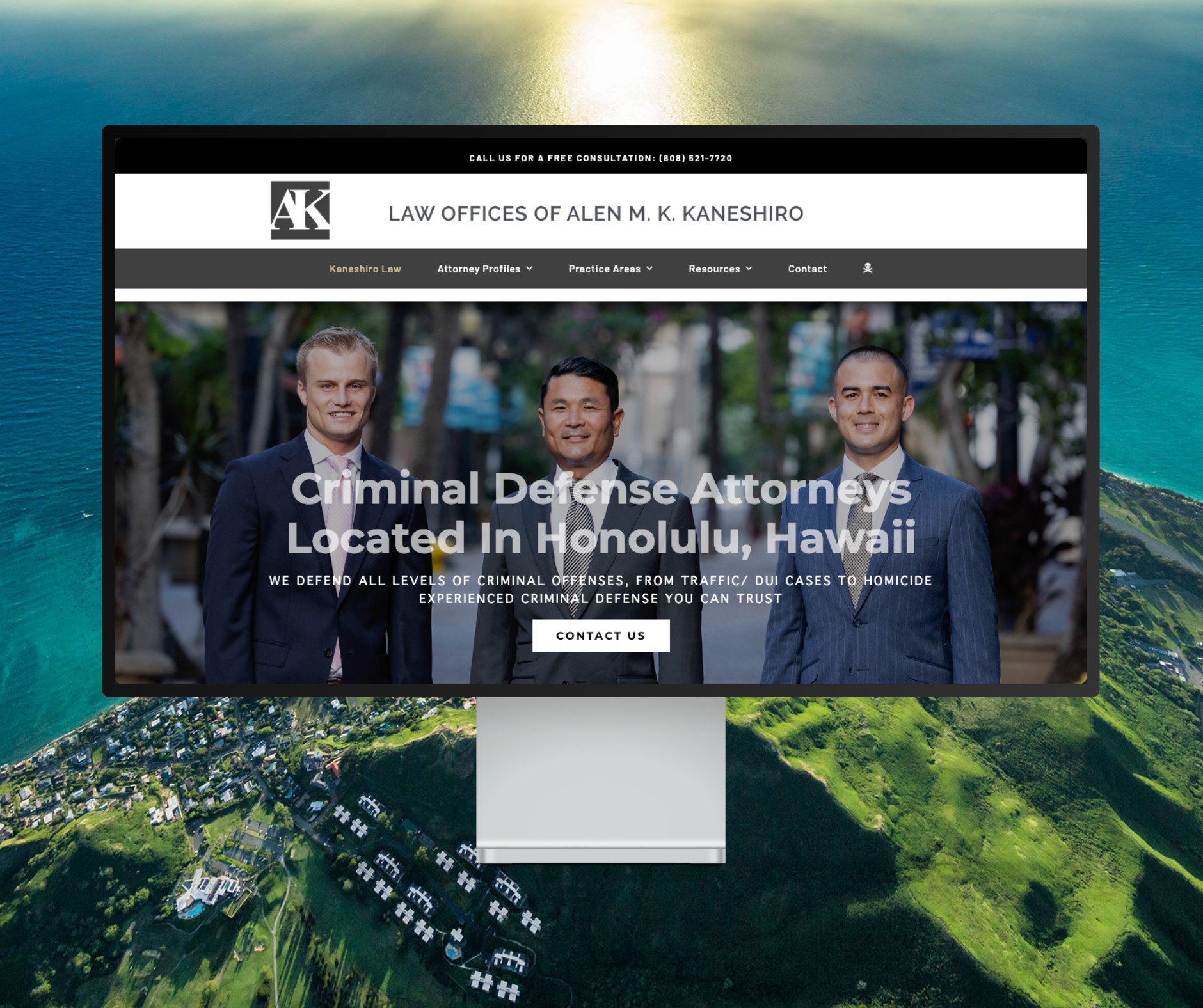
Featured Website: www.kaneshirolaw.com
Kaneshiro Law Firm, one of Hawaii’s most respected legal practices, partnered with The X Digital three years ago for a complete website redesign. Since then, we’ve maintained an ongoing relationship—handling updates, optimizations, and technical support around the clock. Our dedicated team ensures they’re never without assistance, while our enterprise-grade hosting provides 24/7 uptime monitoring and reliability. Kaneshiro Law Firm is one of many long-term clients who trust us to keep their digital presence running flawlessly.