

If you’re asking, “Why AI search tools are ignoring your website?” the answer usually isn’t that your business is too small, your site needs an llms.txt file, or you need to publish 100 AI-written articles this month. More often, AI search tools can’t reliably crawl, understand, trust, or connect your content to the questions your customers are asking.
That matters because people increasingly use ChatGPT, Google AI Overviews, Google AI Mode, Perplexity, and other answer engines to compare services, find local businesses, and decide what to buy. Your website may still rank in traditional search while remaining almost invisible in AI-generated answers. In other cases, the problem is more basic: a firewall blocks crawlers, important information exists only inside images, or your pages don’t clearly explain who you help and what makes you credible.
This guide explains the most common reasons for poor AI search visibility and what to fix first. The recommendations are practical for small and mid-sized businesses, especially if your website is built on WordPress and generates real leads.
Why AI Search Tools Are Ignoring Your Website: The Real Reasons
AI search tools do not simply scan the internet and mention every relevant company. They retrieve information from sources they can access, interpret, and assess as useful enough to include. That means your website must clear several hurdles before it has a realistic chance of being cited.
Google’s own guidance is refreshingly straightforward: the same foundational SEO practices that help a page appear in regular search also help it become eligible for AI features. Google says there are no special technical requirements or secret AI markup requirements for inclusion in AI Overviews or AI Mode. A page must generally be indexed and eligible to appear with a search snippet.
In other words, many answer engine optimization mistakes are actually ordinary technical SEO, content, and trust problems wearing a new label.
1. Search crawlers cannot access the page
If a search engine or AI crawler receives a blocked response, it cannot use the page normally. Common causes include a restrictive robots.txt file, a noindex directive, password protection, broken redirects, server errors, or a security system that mistakes legitimate crawlers for malicious bots.
For ChatGPT specifically, OpenAI says publishers who want their content to be discovered and cited should avoid blocking OAI-SearchBot. OpenAI also notes that a website host, CDN, firewall, or bot-protection service may need to allow traffic from its published search crawler. You can review the OpenAI publisher and developer guidance for the current crawler instructions.
2. Your website is difficult to interpret
A beautiful website can still be unclear to machines. If your most important information is hidden inside a graphic, embedded in a script, or spread across vague marketing language, an AI system may struggle to determine what you actually offer.
For example, “Transforming spaces. Elevating lifestyles.” tells a customer very little. “Licensed Maui kitchen remodeling contractor serving Kihei, Wailea, and Upcountry Maui” is much easier for both people and search systems to understand.
Important business facts should appear as visible, crawlable text:
- What you sell or provide
- Who your service is for
- Where you operate
- What problems you solve
- Your qualifications, experience, and service area
- Prices, policies, availability, or other decision-making details
Technical Problems That Make Your Website Invisible to AI
Before rewriting your homepage or launching an AI content campaign, verify that the site is technically available. This is often the fastest path to finding out why AI can’t find my website.
Check robots.txt, noindex, and crawl access
Open yourdomain.com/robots.txt in a browser. Look for rules that accidentally block the entire website or important folders. A WordPress staging configuration, security plugin, or hosting migration can sometimes leave behind a setting that prevents crawling.
Then inspect key pages in Google Search Console. Google recommends using URL Inspection to check whether a page can be accessed and indexed. Look for:
- “Blocked by robots.txt” warnings
- A “noindex” directive
- Canonical tags pointing to the wrong URL
- Redirect chains or redirect loops
- Server errors such as 403 or 5xx responses
- Pages that are discovered but not indexed
Remember that robots.txt controls crawling, not guaranteed removal from search. Google’s developer guide to controlling search access explains the difference between crawling, indexing, and using a noindex rule.
Review firewalls, CDNs, and bot protection
Cloud-based security tools are useful, but aggressive settings can block legitimate search crawlers. JavaScript challenges, CAPTCHAs, geo restrictions, rate limits, and user-agent filtering may prevent an AI search tool from reading your pages even when Googlebot can access them.
Ask your hosting or development team to test the actual HTTP response for important URLs. A page that loads normally in Chrome may still return a 403 response to an automated crawler. This is one reason we treat hosting, security, and SEO as connected responsibilities rather than separate projects.
Also check mobile performance, broken internal links, slow server response times, and pages that depend heavily on client-side JavaScript. Search engines can process many modern websites, but simple, accessible HTML remains the safer foundation.
Your Content May Not Answer Real Customer Questions
AI search tools are designed to answer questions, not merely display businesses that repeat keywords. If your website only contains a short homepage, a generic services page, and a contact form, it may provide too little useful information for an answer engine to cite.
This does not mean you need to create endless blog posts. It means your existing pages should answer the questions that influence a buying decision.
Replace vague copy with specific expertise
A strong service page should make clear what happens, who it is for, what it costs or depends on, and what the customer should do next. Consider adding sections such as:
- Who this service is best suited for
- Common symptoms or problems you solve
- Your process from consultation to completion
- Typical timelines and pricing factors
- What customers should prepare before contacting you
- Frequently asked questions and honest limitations
- Examples, case studies, photographs, reviews, or results
For a local service business, “How much does a roof replacement cost in Honolulu?” may be a more valuable content opportunity than a generic article called “The Importance of Quality Roofing.” For an assisted living provider, “What should families ask during a senior care tour?” is likely more useful than a page filled with broad claims about compassionate care.
Show first-hand experience
Google’s guidance on helpful, reliable, people-first content emphasizes original information, expertise, trust, and value beyond simply rewriting other pages.
That standard matters even more in AI search. If ten websites say the same generic thing, an answer engine has little reason to choose yours. Add details only your business can provide: lessons from completed projects, regional considerations, real examples, photos from your work, mistakes customers commonly make, and clear explanations from experienced professionals.
AI-assisted writing can help organize ideas, but it should not replace your knowledge. Content that sounds polished but contains no original experience is easy to ignore—and often easy for readers to distrust.
Trust Signals and Structure Matter More Than Most Owners Realize
AI systems need to connect a page to a real entity: a company, person, location, product, or service. If your business information changes from one page to another, the connection becomes weaker.
Make your business identity consistent
Use the same business name, phone number, address, service areas, and core description across your website and important third-party profiles. Keep your Google Business Profile current, especially if you change hours, locations, services, or contact details.
On your website, create a clear About page that explains who is behind the business. Include relevant experience, licenses, certifications, memberships, service areas, and the people customers will actually work with. For professional, health, financial, and home-service businesses, author and reviewer information can make a substantial difference.
Use structured data correctly—but don’t treat it as magic
Structured data is machine-readable information that helps search engines classify the content on a page. Depending on the business, useful types may include Organization, LocalBusiness, Person, Product, Service, Article, FAQ, and Breadcrumb markup.
However, schema does not make an untrustworthy or inaccessible website visible. Google specifically says structured data should match the visible content on the page. Adding fake reviews, unsupported claims, or markup for information users cannot see can create problems rather than solve them. Google’s structured data documentation explains how markup supports understanding and eligibility for search features.
Think of structured data as a label on a box. It helps identify what is inside, but it does not improve the quality of what is inside.
What to Do Next: A Practical AI Search Visibility Checklist
You do not need to rebuild your entire website overnight. Start with the issues most likely to prevent discovery, then improve the pages that generate revenue.
- Check indexability. Confirm that important pages are not blocked by robots.txt, noindex tags, login requirements, or server errors.
- Review crawler access. Test your firewall, CDN, hosting rules, and bot-protection settings, including access for OAI-SearchBot if ChatGPT visibility matters to you.
- Improve your core pages. Rewrite the homepage, service pages, product pages, and location pages so they clearly explain what you do, who you serve, and where you work.
- Add original evidence. Publish case studies, project examples, customer questions, demonstrations, staff expertise, and practical advice drawn from real work.
- Strengthen internal links. Link related services, locations, FAQs, blog posts, and contact pages so crawlers can discover the relationships between them.
- Clean up business information. Make your name, address, phone number, hours, service areas, and descriptions consistent.
- Use accurate structured data. Add only markup that reflects visible page content, then validate it with Google’s testing tools.
- Measure more than rankings. Monitor indexed pages, referral traffic, branded searches, inquiries, conversions, and mentions in AI answers where you can test them consistently.
Do not spend your first dollars on an “AI ranking guarantee.” No legitimate agency can promise that ChatGPT, Google AI Overviews, or another answer engine will cite a specific business for a specific query. A better goal is to make your website accessible, understandable, useful, and credible enough to be selected when it is relevant.
Conclusion: Make Your Website Easy to Find, Understand, and Trust
The reason AI search tools are ignoring your website is usually not a lack of a clever trick. It is a combination of blocked access, unclear messaging, thin content, inconsistent business information, weak internal linking, or insufficient evidence that your company knows what it is talking about.
The good news is that fixing these issues improves more than AI search visibility. The same work can help you rank in traditional search, convert more visitors, support local SEO, and make it easier for potential customers to choose you.
At The X Digital, we approach AEO implementation for small business as an extension of sound SEO and good website strategy—not as a shortcut around them. We look at the technical foundation, content, hosting, security, local signals, and conversion path together. If your site is generating traffic but not enough visibility or qualified leads, start with an honest audit of what search systems and real customers can access, understand, and trust.
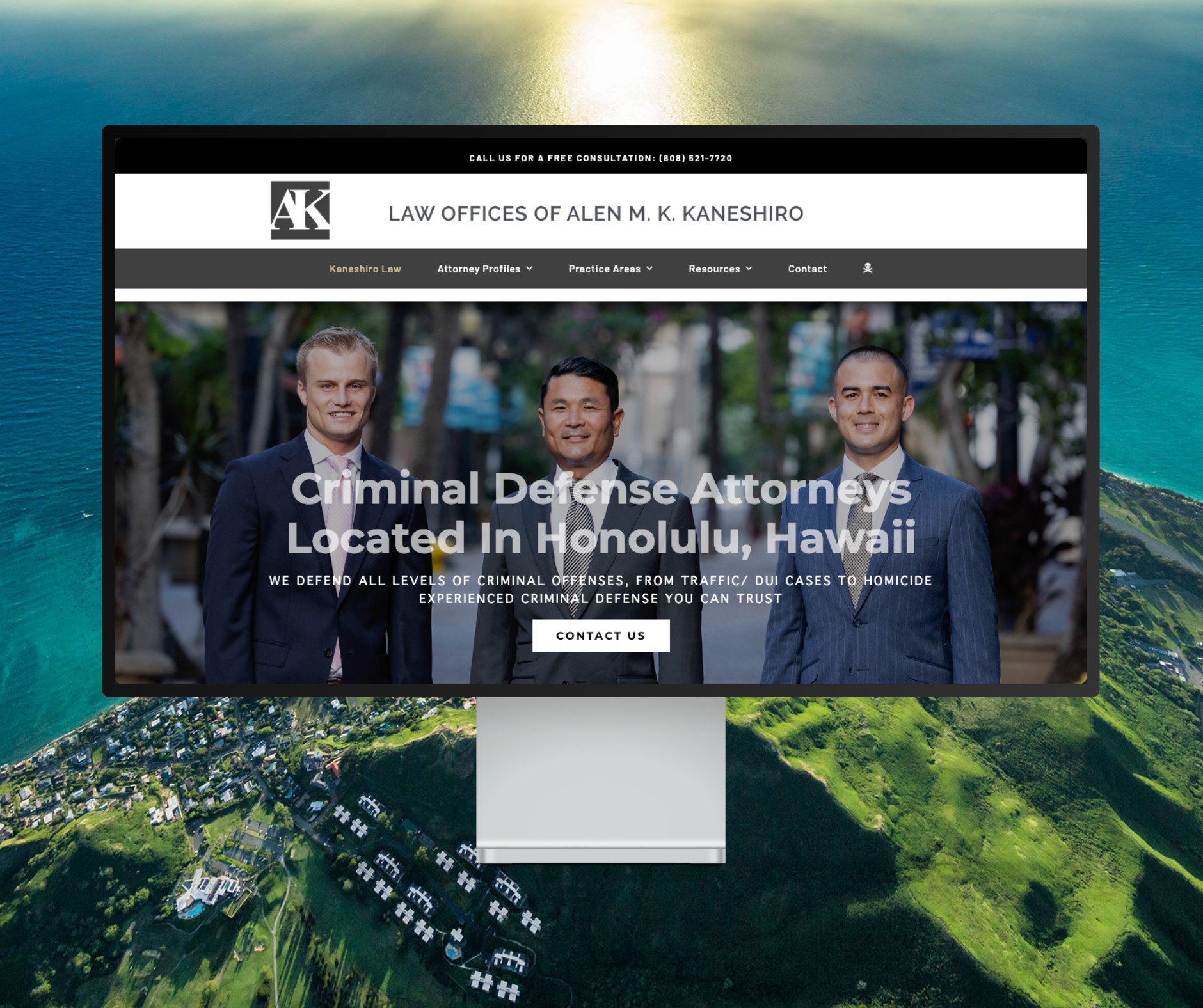
Featured Website: www.kaneshirolaw.com
Kaneshiro Law Firm, one of Hawaii’s most respected legal practices, partnered with The X Digital three years ago for a complete website redesign. Since then, we’ve maintained an ongoing relationship—handling updates, optimizations, and technical support around the clock. Our dedicated team ensures they’re never without assistance, while our enterprise-grade hosting provides 24/7 uptime monitoring and reliability. Kaneshiro Law Firm is one of many long-term clients who trust us to keep their digital presence running flawlessly.