

California is one of the most competitive places in the country to run a business. From San Diego contractors and Orange County professional services firms to Bay Area startups, Central Valley retailers, and California tourism companies, customers have more choices than ever. Before they call, visit, or buy, many will look you up online—and a missing, outdated, or confusing website can quietly send them to a competitor.
That is why Why California Small Businesses Need a Website to Stay Competitive is more than an SEO topic. It is a practical business question. Your website can help customers find you, understand what you offer, trust your company, contact you, and choose you over another business. In this article, we’ll explain the website importance for small business, what a competitive California website should include, and where to focus first if your budget and time are limited.
Why California Small Businesses Need a Website to Stay Competitive
California’s small-business market is enormous. The U.S. Small Business Administration’s 2024 California Small Business Profile counted approximately 4.2 million small businesses in the state. Those companies employed about 7 million people, representing 47.1 percent of California employees.
In other words, you are not competing in a small or isolated market. You are competing with thousands of businesses that may offer similar services, serve the same neighborhoods, or target the same search terms. A professional online presence helps you compete beyond location, word of mouth, and foot traffic.
A website does not guarantee success. However, not having one creates several avoidable disadvantages:
- Potential customers may struggle to confirm what you do, where you operate, or how to contact you.
- Google has fewer reliable pages to use when understanding and ranking your business.
- You have less control over the information people see about your company.
- Advertising, social media, and referrals have nowhere strong to send interested prospects.
- Competitors with clearer websites may appear more established, responsive, or trustworthy.
This is especially important for service businesses. Someone searching for a plumber in Sacramento, a senior-care provider in Pasadena, or a wedding photographer in Santa Barbara is not merely browsing. They are often comparing options with the intention to take action. Your website needs to help them make that decision quickly.
A website is more than an online brochure
The best small-business websites function as practical sales and customer-service tools. They answer common questions before a prospect calls, explain your process, display proof of your work, and make the next step obvious.
For some companies, that next step is a phone call. For others, it may be a quote request, appointment booking, online purchase, directions request, or email signup. The goal is not to add technology for its own sake. The goal is to make it easier for the right customer to choose your business.
Your California Local Business Online Presence Starts With Your Website
Your website is the part of your online presence that you own. Social media profiles, marketplace listings, and directory pages are useful, but they exist on platforms whose algorithms, policies, and features can change. A website gives you a central place to publish accurate information and build a recognizable brand.
That does not mean your website should work alone. A strong California local business online presence usually connects several pieces:
- Your website: The central source of information, content, forms, products, and service pages.
- Google Business Profile: Your presence in Google Search and Maps, including reviews, photos, hours, and contact actions.
- Social media: A channel for visibility, engagement, announcements, and community relationships.
- Reviews and directories: Third-party signals that can support trust and local discovery.
- Email and text follow-up: Direct communication with people who have already shown interest.
Google explains that Business Profile performance data can show how customers discover a business on Search and Maps, including views, searches, website clicks, calls, and other interactions. You can review those metrics through Google Business Profile performance insights.
Those listings are valuable, but they are not a substitute for a useful website. Your Google profile may show your phone number and business hours, yet a prospect may still want to see your services, pricing approach, service area, team, credentials, project photos, policies, or frequently asked questions.
Why relying only on social media is risky
Social media can create attention, but it is not always designed to capture high-intent searches. A person scrolling through Instagram is in a different mindset from someone searching “emergency electrician near me” or “best estate planning attorney in Fresno.” Your website gives searchers a destination built around those specific needs.
It also gives you a place to publish durable content. A helpful service page or local guide can continue attracting visitors months or years after it is published. By contrast, a social post can disappear from view within hours or days.
A Website Builds Trust Before the First Conversation
Customers often make an initial judgment about a business before speaking with anyone. That judgment may not be perfectly fair, but it is real. If your website looks neglected, loads slowly, contains broken links, or fails to explain your services, prospects may assume the business is difficult to work with.
A modern website does not need to be flashy. It needs to be clear, credible, and easy to use. For most California small businesses, trust comes from details such as:
- Professional photos of your team, location, products, or completed work
- A clear explanation of what you offer and who you serve
- Testimonials, reviews, case studies, licenses, certifications, or affiliations
- A visible phone number and a simple contact or quote form
- Accurate service areas, business hours, and appointment information
- Secure browsing and a design that works well on mobile phones
- Helpful answers to the questions customers ask most often
For local companies, photographs can be particularly persuasive. Google’s small-business guidance has reported that businesses with photos on Google Search and Maps can see stronger customer actions, including more direction requests and website clicks. Whether a customer is choosing a restaurant, salon, contractor, hotel, or retail store, visuals help them understand what to expect.
Proof matters more than exaggerated marketing
Small businesses do not need to pretend to be national corporations. In fact, your local knowledge and personal service may be your strongest competitive advantages. Explain how you work, what makes your process different, and what customers can realistically expect.
For example, a landscaping company might show before-and-after projects and explain its maintenance plans. A home-care provider might describe its intake process and caregiver screening. A boutique retailer might explain its materials, sourcing, or return policy. Specific information is more convincing than vague claims about being “the best.”
At The X Digital, we have seen websites create problems when they focus too heavily on appearance and not enough on customer questions. A beautiful design cannot compensate for missing service details, weak calls to action, or confusing navigation. The site should look professional, but it also needs to do a job.
Your Website Helps You Get Found in Search and AI Answers
Search visibility is one of the most practical reasons small businesses need websites. Search engines need accessible, organized information to understand your business, services, location, and expertise. A well-built website gives you more opportunities to appear for relevant searches than a single business listing can provide.
For instance, a roofing company might create useful pages for roof repair, roof replacement, storm damage inspections, and the cities it serves. A tourism business might explain activities, seasonal conditions, transportation, booking policies, and what visitors should bring. Each page can address a distinct customer need without forcing every visitor onto one generic homepage.
Google’s Local Services Ads guidance also emphasizes the importance of local visibility, reviews, responsiveness, and an updated Business Profile for businesses serving defined geographic areas. Its guide to growing a local business with Local Services Ads describes how location-based searches can connect businesses with nearby prospects.
Paid advertising can generate immediate traffic, but your website still matters. When someone clicks an ad, the landing page influences whether that person calls, submits a form, or leaves. Paying for visitors without improving the destination is an expensive way to expose weaknesses.
Prepare for AI-assisted discovery
Customers increasingly ask search engines and AI assistants for recommendations, comparisons, and explanations. This makes clear, factual website content more important—not less. Answer engines need reliable information about your business before they can summarize or recommend it.
That means your website should clearly state:
- What your business does
- Where you serve customers
- Which problems you solve
- What makes your approach different
- How customers can contact or buy from you
- What evidence supports your claims
This is the foundation of answer engine optimization, or AEO. It is not about stuffing pages with keywords. It is about making your expertise easy for both people and technology to understand. Strong content can support traditional SEO, local search, paid campaigns, referrals, and AI-driven discovery at the same time.
What a Competitive California Small Business Website Should Include
You do not need to launch a massive website to improve your competitive position. Start with the pages and features that help customers decide.
The essential pages
- Home: State what you do, where you work, and what the visitor should do next.
- Services or products: Explain each major offering in plain language.
- About: Introduce the people, experience, and values behind the business.
- Reviews or case studies: Provide evidence that you deliver what you promise.
- Contact: Make calls, messages, quote requests, and appointments easy.
- Location or service-area pages: Help local customers understand whether you serve them.
Depending on your business, you may also need online booking, e-commerce, a resource center, frequently asked questions, financing information, accessibility features, or customer portals.
Performance and maintenance are part of the investment
A website is not finished when it goes live. Software updates, backups, security monitoring, speed improvements, and content changes all matter. A slow or compromised website can damage both customer trust and search performance.
Choose technology that fits your business rather than chasing every trend. WordPress can be a strong option when it is properly configured, maintained, secured, and hosted. Shopify or WooCommerce may make sense for product businesses. The right choice depends on your goals, internal resources, and how important the site is to revenue.
At minimum, track meaningful outcomes: calls, quote requests, booked appointments, purchases, contact-form submissions, and qualified leads. Traffic is useful, but traffic that never becomes business is not the main objective.
How to Prioritize Your Website Budget
If your current site is missing, outdated, or underperforming, you do not have to solve everything at once. Start with the issues most likely to affect revenue.
- Make your phone number, contact form, and primary call to action obvious.
- Rewrite the homepage so visitors immediately understand your offer.
- Fix mobile usability, broken links, slow-loading pages, and confusing menus.
- Claim and update your Google Business Profile.
- Add accurate service, product, location, and frequently asked-question content.
- Publish real photos, reviews, credentials, and examples of your work.
- Install analytics and conversion tracking so you can measure results.
- Create a maintenance plan for security, backups, updates, and ongoing improvements.
You may be able to handle some of these tasks yourself. A small business does not always need a custom website or a large agency engagement. However, professional help can be worthwhile when the website is a major lead source, when technical problems are involved, or when your team does not have time to maintain it properly.
Conclusion: Turn Your Website Into a Competitive Advantage
California small businesses do not need to outspend every competitor. They need to be easier to find, easier to trust, and easier to contact. A strong website supports all three.
The competitive advantage website California businesses need is not a decorative homepage. It is a reliable digital foundation that connects search, maps, advertising, referrals, social media, email, and AI-assisted discovery to measurable business outcomes.
If you already have a website, review it from a customer’s perspective. Can a first-time visitor understand what you do in a few seconds? Can they see proof, confirm your service area, and contact you without hunting? If the answer is no, improving the site may be one of the highest-value marketing projects you undertake this year.
At The X Digital, we build and support websites for small and mid-sized businesses that need their online presence to generate real business—not just look good in a portfolio. Start with the fundamentals, improve consistently, and make your website work as hard as you do.
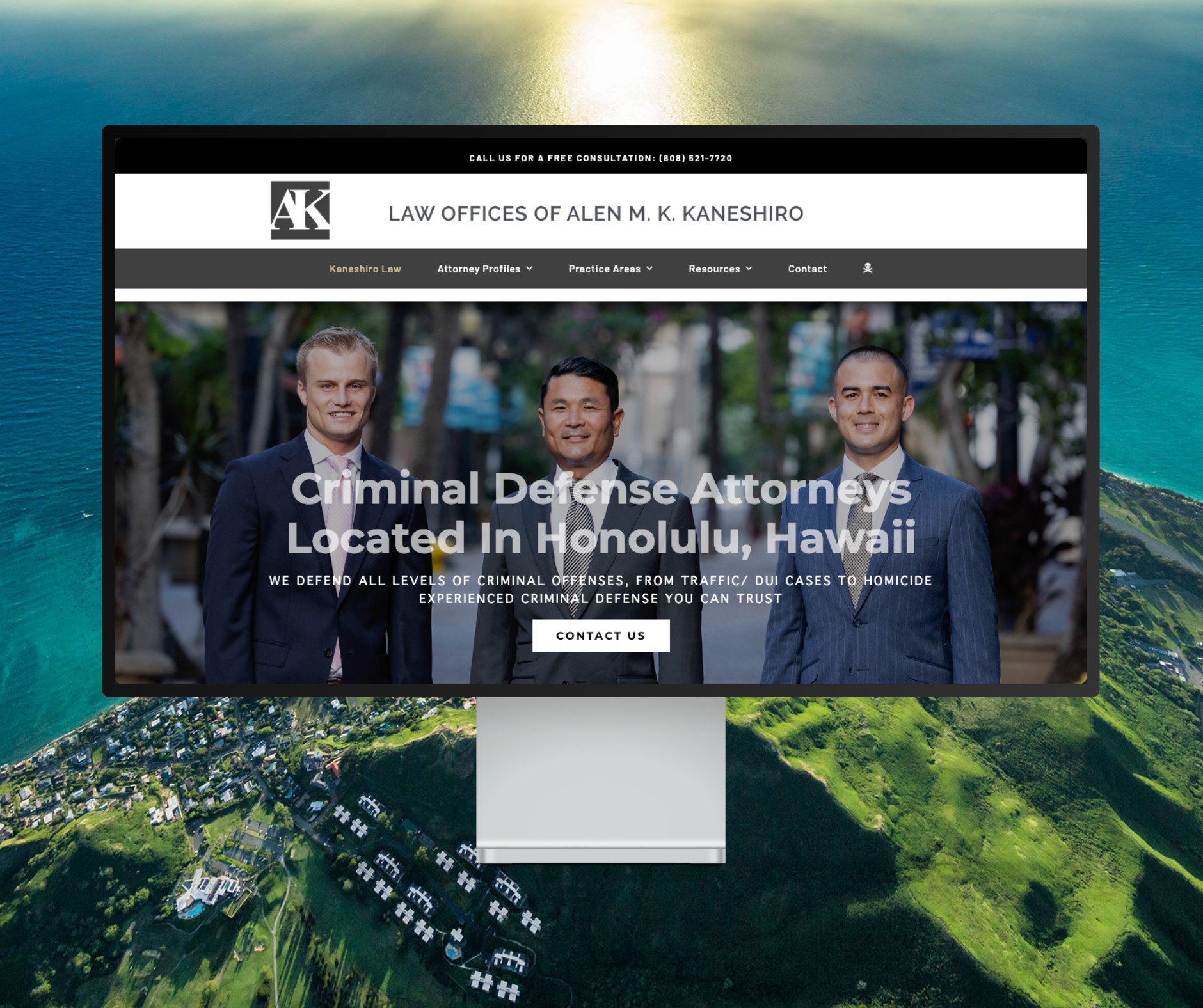
Featured Website: www.kaneshirolaw.com
Kaneshiro Law Firm, one of Hawaii’s most respected legal practices, partnered with The X Digital three years ago for a complete website redesign. Since then, we’ve maintained an ongoing relationship—handling updates, optimizations, and technical support around the clock. Our dedicated team ensures they’re never without assistance, while our enterprise-grade hosting provides 24/7 uptime monitoring and reliability. Kaneshiro Law Firm is one of many long-term clients who trust us to keep their digital presence running flawlessly.