

You’re spending 80 hours a month on tasks a computer could handle in seconds. Manual data entry, repetitive reporting, copy-pasting between systems, chasing down information scattered across spreadsheets — these aren’t the strategic parts of your business. They’re the invisible time-thieves that keep you working nights and weekends while your competitors automate and scale. Custom software isn’t just about efficiency anymore; it’s about reclaiming your time and redirecting it toward the work that actually grows revenue. In this article, we’ll show you exactly how the math works, what custom software actually costs, and why the real expense isn’t the build — it’s continuing to do everything manually.
The Hidden Cost of Manual Work Nobody Calculates
When business owners hear “custom software,” they think about the upfront price tag. What they don’t calculate is what those 80-hour work weeks are actually costing them — not just in salary, but in missed opportunities, burnout, and strategic work that never happens because you’re buried in operational tasks.
Let’s break down the real numbers. If you’re spending 20 hours a week on tasks that could be automated — client intake forms, proposal generation, invoice follow-ups, report compilation — that’s roughly 1,000 hours per year. At a conservative $100/hour value of your time (what you could bill or the strategic work you’re not doing), that’s $100,000 in annual opportunity cost. And that’s just for one person.
What Manual Processes Actually Cost Your Business
Beyond your personal time, manual work creates compound costs most owners never track. Error rates increase when humans handle repetitive data entry — we’ve seen businesses lose thousands because a decimal point moved or a client name was misspelled in a critical system. Response times slow down when everything requires human intervention, meaning leads go cold and customers wait longer for answers.
There’s also the scalability ceiling. You can’t hire your way out of inefficient processes — you just create more inefficiency at higher cost. Every new employee needs to learn your patchwork of spreadsheets, manual workarounds, and “that’s just how we do it here” systems. Training time multiplies, and so does the risk of inconsistent execution.
What Custom Software Actually Costs (Real Numbers)
Custom software projects range widely, but for small to mid-sized businesses, most solutions that eliminate significant manual work fall between $15,000 and $75,000. That might sound like a lot until you compare it to the $100,000 annual opportunity cost we just calculated — or the cost of hiring another full-time employee at $50,000+ per year to handle the workload.
A typical custom workflow automation — something that handles client onboarding, data sync between your CRM and project management tool, and automated reporting — usually runs $25,000 to $40,000. That includes discovery, design, development, testing, and initial training. For a business doing $500,000+ in annual revenue, that’s a 4-6 week payback period if it saves just 15 hours per week of manual work.
Why Custom Costs Less Than SaaS Subscriptions Long-Term
Many businesses try to solve workflow problems by stacking SaaS tools — one for CRM, another for invoicing, a third for project management, plus Zapier to connect them all. Within two years, you’re paying $800-$1,500/month in subscriptions ($9,600-$18,000 annually), and you still have gaps that require manual work because off-the-shelf tools never fit perfectly.
Custom software built specifically for your workflow has a one-time development cost and minimal ongoing maintenance (typically 10-15% of build cost annually for hosting, updates, and support). After year two, you’re ahead financially. After year five, you’ve saved tens of thousands while competitors keep paying monthly fees for tools that don’t quite work the way they need.
The Break-Even Point: When Custom Software Pays for Itself
The math is straightforward once you quantify your current manual effort. Take the hours you spend per week on automatable tasks, multiply by 50 weeks (accounting for vacation), then multiply by your hourly value. Compare that annual cost to the one-time custom software investment.
For example: 15 hours per week × 50 weeks = 750 hours annually. At $100/hour value, that’s $75,000 per year in opportunity cost. A $35,000 custom solution pays for itself in under six months. Every month after that is pure time savings you can redirect toward business development, client relationships, or strategic planning — the work that actually compounds your revenue.
We’ve built automation tools for clients where the break-even point was measured in weeks, not months. One service business was spending 25 hours weekly on manual proposal generation and client follow-up. A custom system reduced that to 3 hours. At their billing rate, the software paid for itself in the first month and has saved them over $120,000 in the two years since.
What to Automate First: The 80/20 of Custom Software
Not every task needs custom software, and trying to automate everything at once is expensive and overwhelming. Start with the processes that meet these three criteria: high frequency (you do them weekly or daily), high time cost (they take more than 30 minutes each time), and low cognitive value (they don’t require strategic thinking or relationship building).
The highest-ROI automation candidates we see consistently across industries:
- Client intake and onboarding: Forms, data collection, account setup, welcome sequences — everything before the actual service work begins
- Data synchronization: Moving information between systems so your CRM, accounting software, and project tools all stay current without manual updates
- Report generation: Pulling data from multiple sources, formatting it, and delivering it to clients or internal stakeholders on schedule
- Follow-up sequences: Automated reminders, status updates, and check-ins that happen consistently without you remembering to send them
- Proposal and document generation: Taking standard templates and populating them with client-specific information automatically
Focus on automating one complete workflow end-to-end rather than trying to shave minutes off ten different processes. The compound time savings and reduction in context-switching deliver better ROI than scattered optimizations.
Stop Trading Time for Tasks a Computer Should Handle
The real question isn’t whether custom software costs money — it’s whether continuing to do everything manually costs more. When you’re working 80-hour weeks because operational tasks consume half your time, you’re not building a scalable business. You’re building a job with extra steps and no ceiling on hours worked.
Custom software isn’t about technology for technology’s sake. It’s about buying back your time and redirecting it toward the work only you can do — the strategic decisions, client relationships, and business development that actually move revenue. The businesses that grow sustainably aren’t the ones working the hardest; they’re the ones that systematized early and freed their leadership to focus on growth instead of operations.
If you’re spending more than 15 hours a week on repetitive tasks that follow the same pattern every time, you’re past the point where custom automation pays for itself. Want to see exactly what that would look like for your business? Our team has built workflow automation and custom tools for hundreds of businesses over 20+ years. We’ll walk through your current processes, identify the highest-impact automation opportunities, and show you the real numbers — time saved, cost comparison, and break-even timeline. Reach out and let’s map out what reclaiming those 80-hour weeks actually looks like.
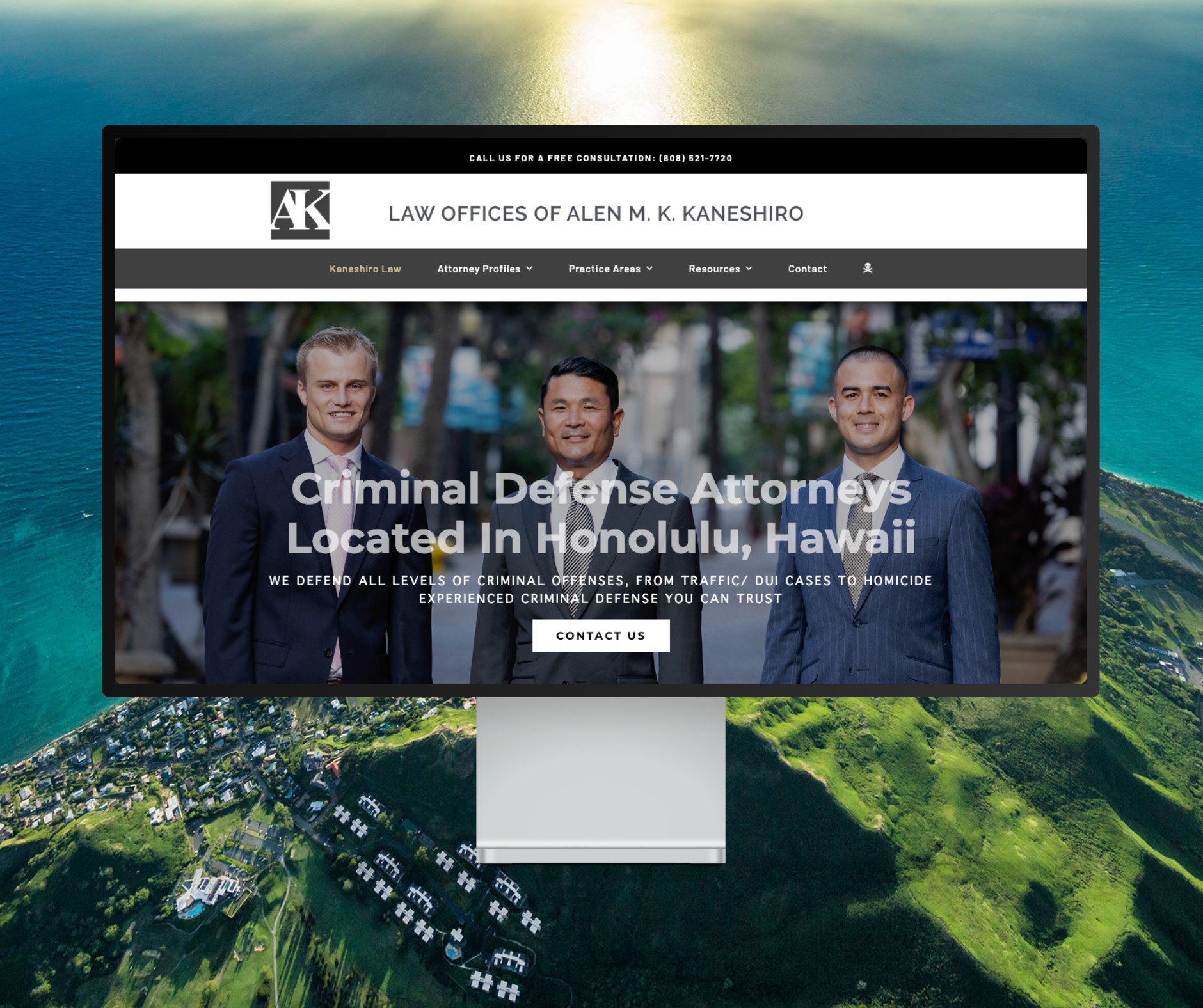
Featured Website: www.kaneshirolaw.com
Kaneshiro Law Firm, one of Hawaii’s most respected legal practices, partnered with The X Digital three years ago for a complete website redesign. Since then, we’ve maintained an ongoing relationship—handling updates, optimizations, and technical support around the clock. Our dedicated team ensures they’re never without assistance, while our enterprise-grade hosting provides 24/7 uptime monitoring and reliability. Kaneshiro Law Firm is one of many long-term clients who trust us to keep their digital presence running flawlessly.