

If your Google Ads impressions suddenly drop, your campaigns may not be “broken” in the usual sense. You may be seeing the effects of the Google Ads Limited Serving Policy Expansion—a shift toward evaluating advertiser trust, brand clarity, account maturity, and user experience before allowing ads to serve broadly. In 2026, this matters especially for newer accounts, generic lead-generation ads, reseller campaigns, affiliate-style landing pages, and ads that reference another company without clearly explaining the relationship.
The confusing part is that limited serving usually isn’t the same as a suspension. Your ads may still show as eligible, your campaigns may remain active, and Google may not disapprove each individual ad. Yet impressions, clicks, and spend can fall sharply because the account is no longer entering as many auctions. In this guide, we’ll explain what limited serving means, what happens when your account loses visibility, how to diagnose the cause, and what you can do to rebuild eligibility without making the problem worse.
What the Google Ads Limited Serving Policy Expansion Means in 2026
Google introduced Limited Ad Serving to reduce the risk of poor user experiences and misleading advertising. The policy originally focused heavily on situations where an advertiser referenced a brand but did not make the relationship clear. Google’s own 2023 Ads Safety Report described the policy as a way to limit ads when, for example, “the relationship between the advertiser and a brand they are referencing” is unclear.
In 2026, the policy is receiving broader attention because the same trust-based logic is affecting more advertisers and more Google surfaces. Search Engine Land’s coverage of Limited Ad Serving reported that Google refined the policy and expanded it beyond its earlier focus, including Gmail, the Play Store, and Discover.
For Search advertisers, the practical issue is straightforward: Google wants users to understand who is advertising, what business they are dealing with, and whether the advertiser is authorized to represent a product or brand. An ad that says “Best Software Deals” or “Official Support” without clearly identifying the company behind it may be considered less trustworthy—even if the landing page is technically functional.
Google says qualified advertisers can serve without these impression limits. Qualification is based on several signals, including:
- Account maturity and history
- Advertiser verification status
- Past policy compliance
- User activity and reports
- Ad format usage
- Industry and business category
- How clearly your brand is represented in ads and landing pages
That means Google Ads limited serving in 2026 is not always triggered by one obvious violation. It can be the result of several weaker trust signals adding up.
Limited serving is not the same as a suspension
A suspension generally stops an account or business from advertising. Limited serving is more subtle. Your ads may remain approved, but Google restricts how often they can appear in situations where the system believes a poor experience or identity confusion is more likely.
Google’s policy documentation says individual ads may not be disapproved when an account is affected. Instead, advertisers receive an in-account notification when a meaningful proportion of impressions falls within the policy’s scope. This is why a campaign can look healthy at the ad level while overall account visibility declines.
What Happens When Your Google Ads Account Loses Visibility
The first sign is often a sudden decline in impressions. You may also see fewer clicks, lower spend, reduced impression share, and weaker lead volume. In some cases, performance does not drop evenly. Branded searches, competitor-related searches, or generic queries may be affected more heavily than tightly branded campaigns.
This can make the problem difficult to spot. One campaign may continue producing normal results while another appears to stop serving. A local service business, for example, might still receive impressions for searches containing its exact business name but lose visibility for broader searches such as “emergency plumber near me” or “roof repair company.”
When Google Ads impressions are dropping, do not immediately assume that your bids, budget, or landing page are the only problem. Those factors matter, but a policy-based serving restriction can look similar in the reporting interface.
Common performance symptoms
- Impressions fall across multiple campaigns at roughly the same time.
- Daily spend drops even though the budget has not changed.
- Ads show as eligible, but they appear inconsistently in Ad Preview and Diagnosis.
- Branded or competitor-related keywords lose more visibility than other terms.
- Impression share declines without a corresponding budget or bid change.
- Lead volume falls even though conversion tracking and website traffic appear normal.
- The account displays a notification about limited impressions or Limited Ad Serving.
Google’s documentation distinguishes between an ad that is fully eligible and one marked “Eligible (limited).” The latter means the ad can run, but not in every situation. You can check the Google Ads ad status and Policy details instructions to review the exact status inside your account.
It’s also important to separate a serving restriction from ordinary auction changes. Competitors may increase bids, search demand may change, or Smart Bidding may reduce delivery because it does not see enough likely conversions. Check those possibilities—but if several campaigns lose reach simultaneously, an account-level visibility issue deserves attention.
Why Google May Limit Your Account’s Visibility
The most important theme is identity clarity. Google wants the person searching to know exactly who is behind the ad. This is particularly relevant when an advertiser uses another company’s brand name, sells a third-party product, provides authorized support, or targets competitor searches.
For example, a reseller might create an ad that looks like the manufacturer’s official advertisement. A lead-generation company might use generic language such as “Get Matched With Top Providers” without prominently naming the business collecting the lead. An affiliate may target a well-known brand while giving users no clear explanation of the relationship.
None of these examples automatically means the business is dishonest. However, Google evaluates the likely user experience—not only the advertiser’s intention.
Generic ads and unclear brand relationships
Google’s current best practices recommend clearly displaying your own brand in both the ad and the landing page. If you reference another brand, explain the relationship. If you are a reseller, franchisee, authorized service provider, or comparison website, say so plainly rather than relying on fine print.
Google also recommends using specific language instead of generic ad copy. “Licensed Maui Roofing Contractor — Island Roof Co.” creates a clearer identity than “Trusted Roofing Experts.” The second message may sound attractive, but it does not help Google—or the user—understand who is making the offer.
For Search campaigns, Google suggests pinning your domain to the first headline position where that feature is available. This is not a guaranteed fix, but it can reinforce the connection between the ad, the website, and the business name.
Other signals that can contribute
Google says it considers user reports, account attributes, account maturity, industry, verification, and policy history. That means a new account may receive more scrutiny than an established account with years of clean activity. It also means an account operating in a higher-risk industry may need stronger verification and clearer disclosures.
Repeated ad edits, new domains, multiple business names, inconsistent contact information, or landing pages that look thin and interchangeable can all make the account harder to evaluate. These issues may not produce a traditional policy disapproval, but they can weaken the trust signals Google uses to determine whether an advertiser is qualified.
How to Fix Google Ads Limited Serving
There is no guaranteed instant fix, and anyone promising to remove a serving restriction overnight is overselling the situation. Google says it automatically reviews accounts and updates serving limits as its systems gather more information. It also warns that there is no fixed timeline for the review.
Still, you can take practical steps to improve the account and present a stronger appeal.
1. Confirm that limited serving is actually the issue
Start inside Google Ads. Review account notifications, Policy Manager, the Policy details column, campaign status, billing, advertiser verification, and conversion tracking. Use Ad Preview and Diagnosis for important searches, but remember that one preview does not prove an account-wide restriction.
Compare the date impressions declined with the account’s Change History. Look for new ads, landing page changes, domain changes, business-name changes, policy notices, or verification requests.
2. Make your identity unmistakable
Use the same business name consistently across your ads, website, contact information, privacy policy, and verification documents. Make sure the landing page clearly states:
- Who operates the website
- What products or services the business provides
- How customers can contact the business
- Whether the business is affiliated with another brand
- Whether the business is an authorized reseller or service provider
Remove vague claims that could make the ad appear official when it is not. If you target a competitor’s brand, avoid implying that you are the competitor. Your own company should be prominent in the headline, description, logo, domain, and landing page.
3. Replace generic copy with specific, useful copy
Rewrite ads so they describe the actual offer and identify the business. Include location, service type, qualifications, pricing context, or a meaningful differentiator where appropriate. Do not simply insert a brand name into every headline; the goal is clarity, not keyword stuffing.
4. Complete advertiser verification
If Google requests advertiser verification, complete it carefully and make sure the submitted documents match the account and website. Verification does not guarantee unlimited delivery, but Google lists verification status as one of the factors used to assess qualification.
5. Improve the landing page before appealing
An appeal is stronger when the underlying experience is already clear. Check that the page loads correctly, works on mobile, displays the business name, explains the offer, and does not redirect users through confusing or unrelated domains. Make sure claims in the ad match what users find after the click.
6. Appeal once the evidence is organized
Use Google’s Limited Ad Serving Appeals Form if the account notification provides that option. Explain what changed, identify the business, clarify any brand relationships, and point out verification or landing page improvements. Avoid submitting repeated appeals with no meaningful changes; that rarely helps and can make the process harder to manage.
What Not to Do When Impressions Drop
When visibility falls, business owners understandably want to make changes quickly. However, several common reactions can create more uncertainty.
- Do not create a new account immediately. Starting over may not solve the underlying identity or policy issue.
- Do not delete every campaign. You may destroy useful history without addressing the cause.
- Do not keep changing ads every few hours. Constant edits can trigger additional reviews and make performance harder to evaluate.
- Do not hide the business identity. Removing branding to make copy look more generic is usually the opposite of what Google wants.
- Do not assume higher bids will fix it. Bidding cannot reliably overcome an account-level serving restriction.
The better approach is controlled diagnosis: document the decline, confirm the notification, review policy details, improve identity signals, and then allow time for reassessment.
Conclusion: Treat Google Ads Visibility as a Trust Signal
The Google Ads policy enforcement environment in 2026 is becoming less forgiving of ads that are technically eligible but unclear to users. The expansion of Limited Ad Serving means visibility is increasingly tied to more than bids, budgets, and keyword quality. Google is also evaluating whether the advertiser appears identifiable, legitimate, verified, and aligned with the business or brand mentioned in the ad.
If your Google Ads account has limited visibility, start with the basics: confirm the notification, review Policy details, make your branding obvious, explain third-party relationships, complete verification, and improve the landing page. Then submit a focused appeal if appropriate and give Google time to reassess the account.
At The X Digital, we’ve worked on Google Ads policy problems, suspended accounts, websites, tracking, and landing pages—not just campaign settings in isolation. If your impressions dropped and you can’t determine whether the cause is policy, auction competition, tracking, or account structure, a careful diagnosis is usually more valuable than another round of random edits.
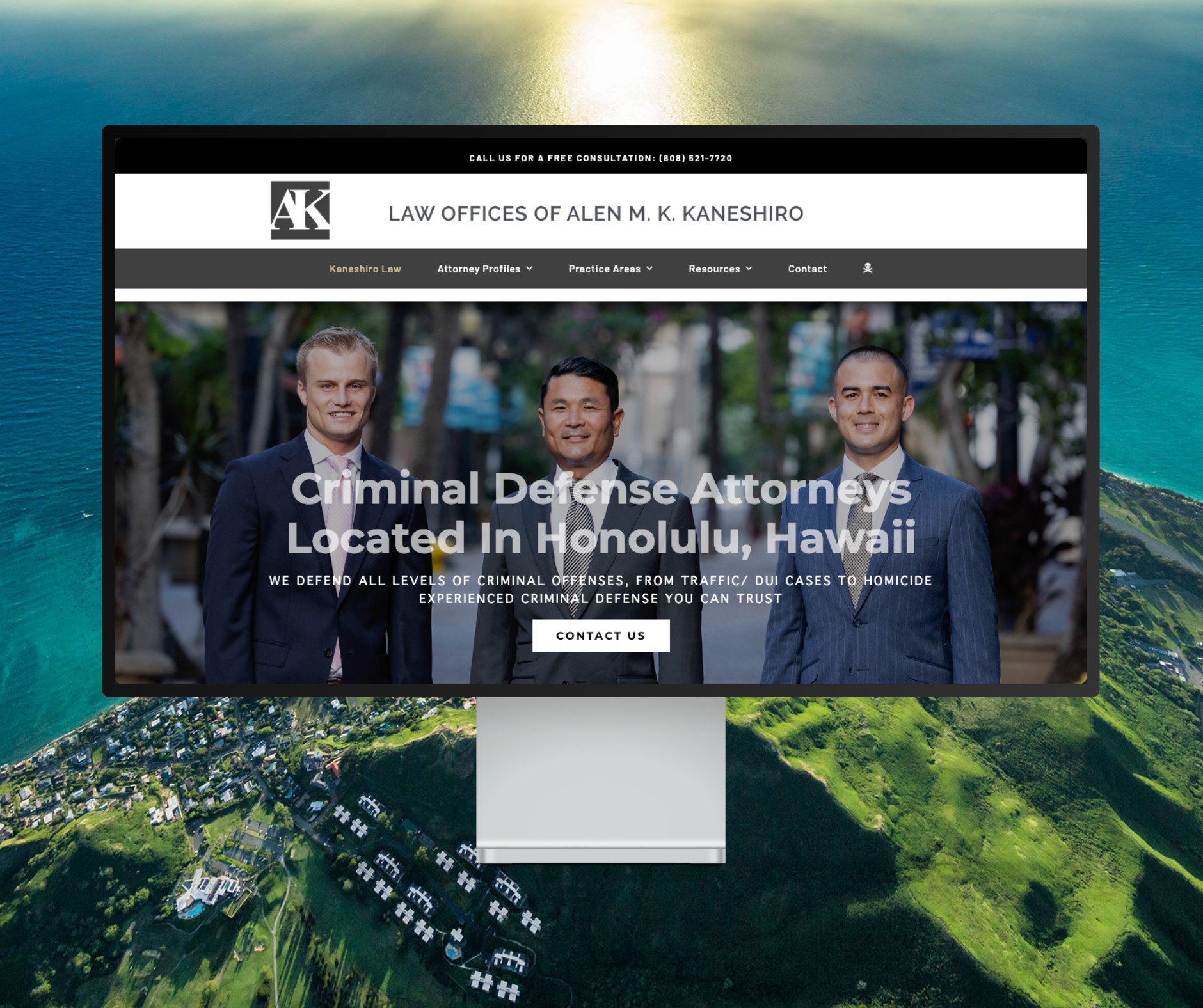
Featured Website: www.kaneshirolaw.com
Kaneshiro Law Firm, one of Hawaii’s most respected legal practices, partnered with The X Digital three years ago for a complete website redesign. Since then, we’ve maintained an ongoing relationship—handling updates, optimizations, and technical support around the clock. Our dedicated team ensures they’re never without assistance, while our enterprise-grade hosting provides 24/7 uptime monitoring and reliability. Kaneshiro Law Firm is one of many long-term clients who trust us to keep their digital presence running flawlessly.