

Google Ads policy changes in 2026 are creating confusion for business owners. Some advertisers are seeing ads disapproved, impressions limited, or accounts reviewed more aggressively, while others are hearing that Google has “banned” entire industries. The reality is more specific: most products and services are not suddenly prohibited, but Google is tightening how it handles misleading claims, advertiser identity, sensitive categories, AI-generated advertising, and higher-risk searches.
That distinction matters. A disapproved ad is not the same as a suspended account, and a restricted ad is not necessarily banned. In this guide, we’ll explain what’s actually changing under Google Ads compliance 2026, what Google Ads disapproved ads usually mean, which practices can trigger a Google Ads account suspension, and what businesses can still advertise safely.
Google Ads Policy Changes in 2026: The Biggest Changes to Know
There is no single 2026 rule that bans ordinary small-business advertising. Instead, Google has updated several policy areas and is gradually expanding enforcement around ad quality, advertiser trust, and limited serving.
Limited ad serving now matters more
One of the most important Google Ads policy changes in 2026 is the expansion of the Limited Ad Serving policy. In June 2026, Google announced additional Search scenarios where it may limit impressions from advertisers that are not yet considered qualified for searches with a higher likelihood of negative ad experiences. In August, Google said the policy would expand to cover all Google Ads products.
This does not mean an ad is banned. It means Google may show it less often while the advertiser builds trust or resolves concerns. Google says implementation will happen gradually and may continue through 2028. That gives businesses time to improve their account, but it also means a campaign can lose visibility without receiving a traditional “disapproved” notice.
Policy pages were reorganized, but not every update changed enforcement
Google’s March 31, 2026 update reorganized and clarified help-center articles covering financial products, healthcare, cryptocurrencies, limited ad serving, sexual content, and other restricted businesses. Google specifically stated that the update was intended to improve organization and readability and did not change enforcement by itself.
That is an important warning against overreacting to screenshots or online posts claiming that a category was newly banned. Always check the current policy page, the exact policy label in your account, and the destination page being reviewed.
What’s Banned on Google Ads in 2026?
When people ask, “what’s banned on Google Ads,” they usually mean one of three things: products Google will not allow at all, business practices that can trigger immediate suspension, or ad claims that violate misrepresentation rules.
Products and content that are generally prohibited
Google’s core policies continue to prohibit categories such as:
- Counterfeit goods and products that infringe intellectual property rights
- Hacking software, malware, and services designed to enable dishonest behavior
- Weapons and certain dangerous products
- Adult content and sexual exploitation of minors
- Shocking, hateful, violent, or exploitative content
- Products or services that facilitate fraud, cheating, or illegal activity
- Unapproved substances and certain prescription-drug promotions
Google’s official Google Ads policies describe prohibited content and prohibited practices in detail. The lists are not exhaustive, and Google may evaluate the ad, landing page, business, account history, and related websites together.
Misrepresentation is one of the most serious risks
Google does not allow businesses to hide or misrepresent important information about who they are, what they sell, or what customers will pay. Examples include pretending to be affiliated with another brand, advertising services you cannot legally provide, using an inaccurate business name, or making a landing page appear to represent a government agency when it does not.
Google’s current Misrepresentation policy also covers dishonest pricing practices. If a business advertises a low price but hides mandatory fees, recurring charges, or material conditions until late in the buying process, the ad may be rejected.
These violations are different from a minor editorial issue. Google describes certain forms of unacceptable business practices as egregious. If detected, an account can be suspended without prior warning. That is why adding a phone number or changing a headline will not fix an account when the underlying business model or website appears deceptive.
What Isn’t Banned on Google Ads in 2026?
Many legitimate businesses remain eligible to advertise, even when they operate in a regulated or sensitive industry. The key is that “allowed” often means allowed with requirements, certifications, location restrictions, or limits on targeting.
Healthcare and medical advertising
Healthcare is not universally banned. Google allows certain medical services, online pharmacies, health insurance products, addiction services, and other healthcare categories in approved locations when advertisers meet the required standards.
For example, Google’s current healthcare rules say that some advertisers must apply for certification. In the United States, online pharmacies may be eligible through approved certification programs, while health-insurance advertisers generally need the appropriate Google and industry certification. Prescription opioid painkillers remain prohibited in most advertising situations, although Google identifies limited exceptions for public-health campaigns and certified addiction-treatment providers.
The practical lesson is simple: do not assume that a medical business can advertise merely because the service is legal. Review the requirements for the exact product, target location, keywords, and landing page before launching.
Financial services and cryptocurrency
Financial products and services are also not automatically banned. Google defines this category broadly, including products related to managing or investing money, personalized financial advice, and cryptocurrency.
However, financial advertisers must usually provide clear disclosures, business details, and location-specific information. Google says required disclosures may include the business’s physical address, associated fees, and relevant third-party accreditation or endorsement information. Disclosures also need to be visible without requiring users to hover, expand a hidden section, or click another tab.
Loans, debt services, credit repair, investment products, cryptocurrency, and complex financial products can have additional restrictions. If your campaign serves multiple states or countries, compliance must be checked market by market.
For consumer finance advertisers in the United States and Canada, Google also restricts certain personalized advertising categories involving credit, loans, banking products, and debt-management products. That may affect audience targeting even when the underlying search ad is permitted.
AI Ads Are Not Banned—but Deception Still Is
Generative AI is becoming a larger part of Google Ads, but Google has not announced a blanket ban on AI-written copy, AI-generated images, or AI-assisted campaign creation. The rule is more straightforward: the ad must still be accurate, transparent where required, and compliant with existing policies.
On July 9, 2026, Google announced expanded AI transparency features, including a “How this ad was made” panel in My Ad Center. Google said ads created or edited with its generative AI tools will receive an automatic disclosure in that panel. It also introduced a control for advertisers to indicate when ads created elsewhere used generative AI. Depending on local requirements, a label may appear directly on the ad.
This does not make AI-generated advertising inherently suspicious. It does mean your team should review AI output carefully. AI tools can invent credentials, overstate results, imply medical benefits, create fake urgency, or produce images that do not accurately represent the product.
Before publishing AI-assisted ads, check:
- Every factual claim against a real source or business record.
- Prices, discounts, availability, guarantees, and expiration dates.
- Whether images accurately represent the product or service.
- Whether testimonials, reviews, awards, or certifications are genuine.
- Whether the landing page makes the same promise as the ad.
The safest approach is to use AI for drafts and variations, not as an excuse to remove human review.
Why Google Ads Disapproved Ads Can Become an Account Suspension
A single disapproved ad is usually a fixable campaign issue. Google may flag a headline, keyword, image, destination, or claim. You can often edit the ad and request another review.
A Google Ads account suspension is more serious. Google says suspended accounts cannot serve ads in any location, and advertisers generally have at least six months from the suspension date to submit an appeal. The account-suspension process also allows Google to consider repeated policy violations, payment problems, suspicious behavior, and issues across connected accounts or websites.
Common warning signs to investigate
- The ad uses extreme claims such as “guaranteed approval,” “instant results,” or “number one for everyone.”
- The landing page lacks a clear business name, contact information, refund policy, or terms.
- The website redirects users somewhere different from what Google reviewed.
- Pricing excludes unavoidable fees or hides a recurring subscription.
- The business implies a government, Google, medical, legal, or financial affiliation it does not have.
- The site contains malware, compromised plugins, suspicious scripts, or hacked pages.
- Multiple accounts appear to be created to get around a suspension.
If you receive a disapproval, do not immediately duplicate the campaign, change the domain, or create a new account. That can look like an attempt to circumvent enforcement. First, identify the exact policy, inspect the landing page, correct the underlying issue, and submit a clear appeal only after the changes are complete.
How to Stay Compliant With Google Ads in 2026
For most small and mid-sized businesses, compliance is less about memorizing every policy and more about making the business easy to verify and the offer easy to understand.
Before launching or renewing a campaign, review the following:
- Business identity: Use the same or clearly related business name across the ad, website, billing profile, and verification records.
- Landing-page quality: Include real contact details, service information, pricing context, privacy information, and terms appropriate to your offer.
- Claims: Replace guarantees and exaggerated promises with specific, supportable statements.
- Regulated categories: Confirm certification, licensing, geographic restrictions, and required disclosures before spending money.
- Tracking and consent: Make sure forms, analytics, remarketing, and data collection follow applicable requirements.
- Security: Keep WordPress, plugins, scripts, and payment systems updated and monitored.
- Account history: Resolve old disapprovals instead of repeatedly ignoring them.
At The X Digital, we’ve worked on suspended accounts, compromised websites, misleading landing pages, and campaigns that failed because the ad and website told different stories. In practice, Google Ads compliance 2026 is usually strongest when marketing, website, billing, and business operations all match.
Conclusion: Don’t Panic—Make Your Advertising Easier to Trust
The biggest Google Ads policy changes in 2026 are not a universal ban on small-business advertising. They are a stronger focus on advertiser identity, truthful claims, regulated industries, AI transparency, and limited serving for higher-risk situations.
Legitimate businesses can still advertise. However, “legal” does not automatically mean “eligible,” and an ad that looks acceptable in isolation can still fail when Google reviews the landing page, business model, targeting, or account history.
If your ads are disapproved, start with the exact policy label. If your account is suspended, investigate the entire advertising system rather than changing one headline. Clean up the website, clarify the offer, document your business identity, and appeal honestly. That approach takes longer than guessing—but it is far more likely to protect your account and your budget.
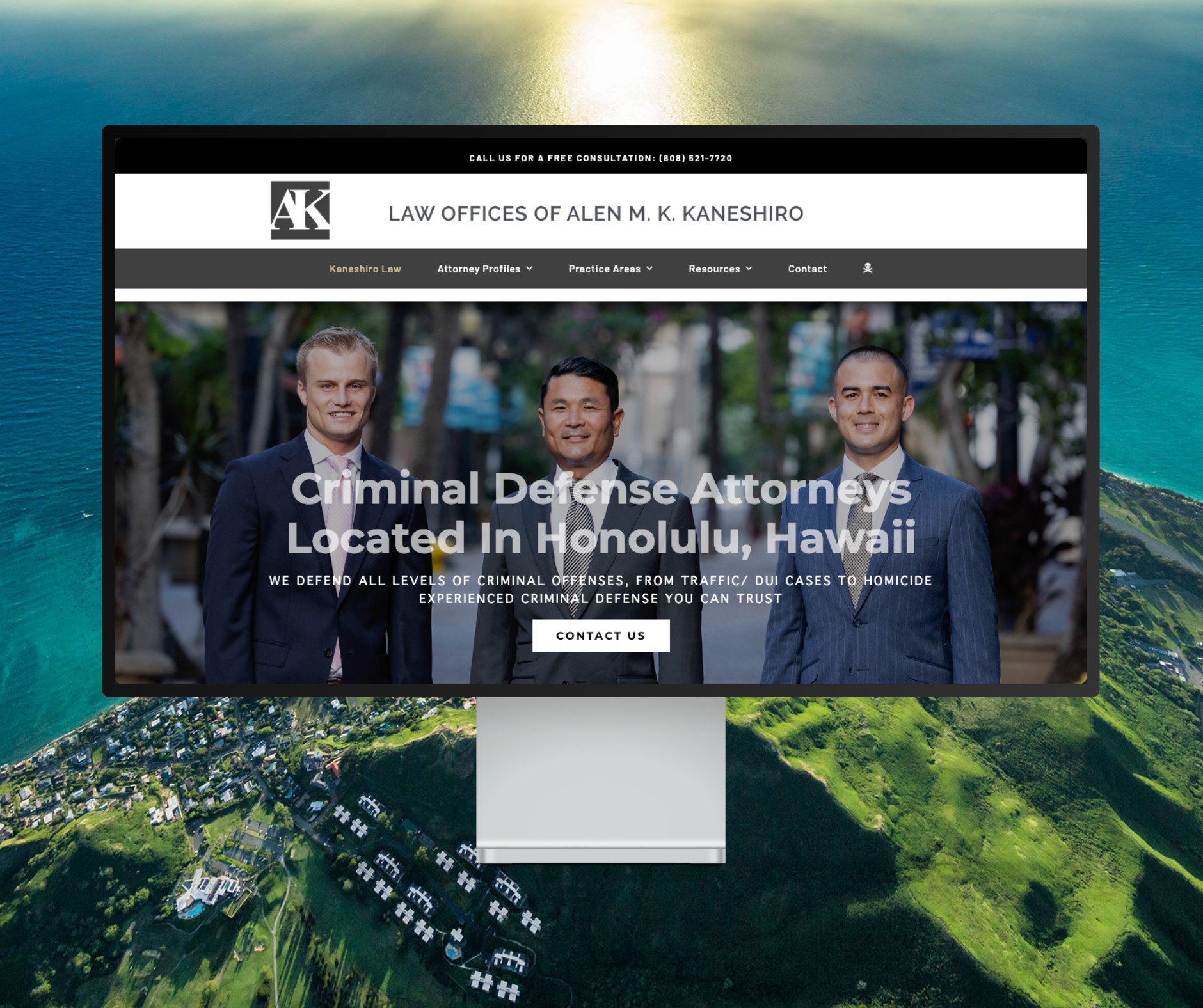
Featured Website: www.kaneshirolaw.com
Kaneshiro Law Firm, one of Hawaii’s most respected legal practices, partnered with The X Digital three years ago for a complete website redesign. Since then, we’ve maintained an ongoing relationship—handling updates, optimizations, and technical support around the clock. Our dedicated team ensures they’re never without assistance, while our enterprise-grade hosting provides 24/7 uptime monitoring and reliability. Kaneshiro Law Firm is one of many long-term clients who trust us to keep their digital presence running flawlessly.