Finding an honest web designer in Los Angeles is harder than it should be. The city has thousands of agencies, freelancers, and “full-service digital studios” competing for your attention — and the gap between the good ones and the expensive disappointments can cost you six figures and a year of momentum. We’ve spent 20+ years building, repairing, and rescuing websites, including plenty that came to us after a bad agency experience. So in this guide, we’re going to show you exactly how to vet a web design agency in 2026: the questions to ask, the red flags to walk away from, the pricing reality nobody puts on their website, and how to tell whether you’re talking to a salesperson or someone who’ll actually do the work.
Why Finding an Honest Web Designer in Los Angeles Is So Hard
Los Angeles is one of the most competitive web design markets in the country. That’s not automatically bad — competition should mean better work at better prices. But in practice, it’s created a market where anyone with a laptop and a Squarespace subscription can call themselves a web designer, and where some agencies win business through slick pitches rather than actual results.
Here’s what makes vetting web agencies in LA uniquely tricky:
- Extreme price dispersion. The same “5-page business website” quote can range from $1,500 to $50,000 depending on who you ask. Both ends of that range can be legitimate — and both can be a rip-off.
- Portfolio fog. Many LA agencies showcase work they didn’t fully do, or projects where their actual contribution was a theme install and a logo swap.
- The churn problem. Some agencies are built around closing deals, not keeping clients. They win you with a polished discovery call, then hand your project to whoever’s available that month.
- AI-era noise. In 2026, every agency claims to be “AI-powered.” Some genuinely use AI to work faster and smarter. Others just slapped the word on their homepage.
None of this means you should be paranoid. It means you should be systematic. The good news: honest agencies are actually easy to identify once you know what to look for — because honesty shows up in specific, observable behaviors, not vibes.
The telltale signs of an honest shop
In our experience, the agencies worth hiring tend to do these things consistently:
- They tell you what you don’t need. If a designer talks you out of a feature that doesn’t serve your goals, that’s a green flag, not a red one.
- They explain pricing in plain terms — what’s included, what’s not, and what happens if the scope changes.
- They ask about your business before pitching solutions. An agency that quotes you in the first ten minutes is selling a product, not solving a problem.
- They can show you live sites, not just mockups, and explain their specific role on each one.
- They talk about what happens after launch — hosting, maintenance, security, updates — not just the pretty launch-day screenshot.
The 10 Questions That Separate Real Agencies From Good Talkers
When you’re vetting web agencies, a structured conversation beats a casual chat every time. These questions are designed so that honest answers are easy to give and dishonest ones get awkward fast.
- Who exactly will work on my project? You want names and roles. If the answer is vague — “our talented team of specialists” — you may be buying a pitch and getting an intern.
- Can I see two or three live sites you built, and what was your role on each? Live URLs matter. Mockups and case studies can be embellished; a live site either works or it doesn’t.
- What platform will you build on, and why? A good answer starts with your needs, not their preference. If you need e-commerce flexibility, WordPress or WooCommerce might be right. If you’re running a product brand with complex inventory, Shopify may make more sense. “We only build on X because that’s all we know” is a limitation, not a recommendation.
- How do you approach speed and SEO during the build? A site that looks great but loads in six seconds or can’t rank is a liability. Ask specifically about Core Web Vitals, mobile performance, and on-page SEO fundamentals.
- Who owns the website when it’s done? This one catches a lot of people. You should own your domain, your hosting account (or at least have full access), and your content. Some agencies hold sites hostage to keep clients paying.
- What happens after launch? Every website needs ongoing care — updates, backups, security monitoring, content changes. Ask what their care plans include and what they cost.
- How do you handle scope changes and overruns? Honest agencies have a process for this. Dishonest ones say “don’t worry, it’s all included” — until it isn’t.
- What’s your experience in my industry? A team that’s built sites for contractors, tourism businesses, or healthcare providers already knows the compliance issues, customer expectations, and conversion patterns that matter.
- How will we communicate, and how often? You want a named point of contact and a predictable cadence — not a rotating cast of account coordinators.
- What would you tell me NOT to spend money on? This is our favorite question. It’s the fastest honesty test there is. A confident agency will happily tell you where you can save money, because they’re playing a long game.
Notice what’s missing from that list: questions about awards, office square footage, or how many followers they have. None of that affects whether your website will make you money.
Red flags that should end the conversation
- “Guaranteed first-page rankings in 30 days.” Nobody honest guarantees rankings. This is one of the oldest scams in the industry.
- Pressure to sign today. Legitimate agencies don’t need manufactured urgency.
- No live work samples. Excuses like “our clients prefer confidentiality” are occasionally true, but across an entire portfolio, it’s a problem.
- You can’t get a straight answer about price. Vagueness here almost always means the number goes up later.
- The proposal is a single page with a single number. You should know exactly what you’re getting, in what timeline, with what deliverables.
What Web Design in LA Actually Costs in 2026 (And What You Get)
We believe in being direct about money, so here’s the realistic picture for LA small business web design in 2026. Prices vary by scope and complexity, but these ranges reflect what quality work genuinely costs:
- Freelancer / small studio, template-based site: $2,000–$6,000. Fine for a simple brochure site if the freelancer is skilled and honest. The risk is limited bandwidth — if they get busy or disappear, your site is on its own.
- Small agency, custom WordPress build: $8,000–$25,000. This is the sweet spot for most small and mid-sized businesses: custom design, real SEO foundations, proper testing, and a team that sticks around.
- Larger LA agency, complex builds: $30,000–$100,000+. Justified for e-commerce platforms, custom web applications, or sites with serious integrations. Often overkill for a service business.
- Ongoing care and hosting: Typically $50–$300/month depending on what’s included. This is not an upsell gimmick — un-maintained WordPress sites get hacked, and a cleanup plus the SEO damage from a compromised site costs far more than years of maintenance.
Two honest warnings. First: the cheapest quote is usually the most expensive one. A $1,500 site that loads slowly, can’t rank, breaks on mobile, and needs a full rebuild in 18 months costs you far more than doing it right the first time. Second: the most expensive quote isn’t automatically the best. Some LA agencies price based on their overhead and their brand — not the value they deliver to you.
What you’re really buying isn’t pages or pixels. You’re buying a machine that turns visitors into customers. Judge every quote against that standard: does this investment make the phone ring, the bookings fill, or the cart convert? If a proposal can’t connect its line items to that outcome, keep shopping.
The AI question: what “AI-powered” should actually mean
Because we build our own AI tools — including an AI lead-generation chatbot and automated content systems — we’ll be blunt about this. In 2026, a legitimate agency’s AI claim should mean one of two things: they use AI internally to work faster (research, drafts, testing, analysis), or they implement AI features for you that measurably help (chatbots that capture leads, automation that saves staff hours). Ask them to explain specifically how. “We use AI in our process” with no detail behind it is marketing fluff. An agency that builds AI products can usually talk about this for twenty minutes without repeating themselves.
How to Vet a Web Agency Before You Sign Anything
Beyond the questions, there’s homework. It takes an afternoon, and it will save you from most bad outcomes.
- Check the live portfolio yourself. Open their sample sites on your phone. Do they load fast? Does the navigation make sense? Would you trust that business with your money?
- Read reviews with the right filter. Don’t count stars — look for specifics. “They rebuilt our site and our leads doubled” tells you something. “Great to work with” tells you nothing.
- Ask for a reference call. Honest agencies can produce a past client who’ll take your call in a day or two. Hesitation here is information.
- Look at how long clients stay. An agency whose client relationships span years is doing something right. Ask directly: “What’s your longest-running client relationship?”
- Review the contract for ownership and exit terms. You want clear language on who owns the domain, the site files, and the content — and what happens if you part ways.
- Test their responsiveness before they have your money. If it takes two weeks to get a proposal, imagine getting an answer when your site goes down on a Friday.
One more thing worth checking: whether the agency practices what it preaches. Run their own website through a speed test. Read a few of their blog posts. If their site is slow and their content is thin, their pitch about doing it right for you is worth exactly what it’s built on.
Remote-first vs. local-only: does location still matter?
Here’s an honest answer that surprises people: for most projects in 2026, it matters much less than agencies want you to believe. We’re a remote-first team founded in Hawaii, serving clients across the country — and the quality of communication matters far more than the zip code. What you actually need is a team that responds quickly, meets on video when it counts, understands your local market (whether that’s Los Angeles or anywhere else), and takes responsibility for results. A great remote agency beats a mediocre one with a downtown office every single time. That said, if in-person collaboration is important to you, weigh it deliberately — just don’t let proximity substitute for competence.
Conclusion: Choose the Team You’d Trust With the Next Five Years
Vetting web agencies comes down to one shift in mindset: you’re not hiring someone to make a website. You’re choosing a partner for how your business shows up online — your rankings, your leads, your security, your reputation. The honest web designer in Los Angeles you’re looking for is the one who asks hard questions about your business, tells you what you don’t need, shows you real work, and plans for the years after launch, not just the launch party.
That’s exactly how we operate at The X Digital. We’re a founder-led team with 20+ years of experience and over 1,000 projects behind us, we host and maintain what we build, and we’d rather tell you the truth than win a quick sale — because our goal is to be the last agency you ever need to hire. If you’re evaluating agencies right now, bring us your quotes and your questions. We’ll give you a straight assessment of what you actually need, even if that means spending less than you planned. Reach out for a conversation — no pitch deck required.
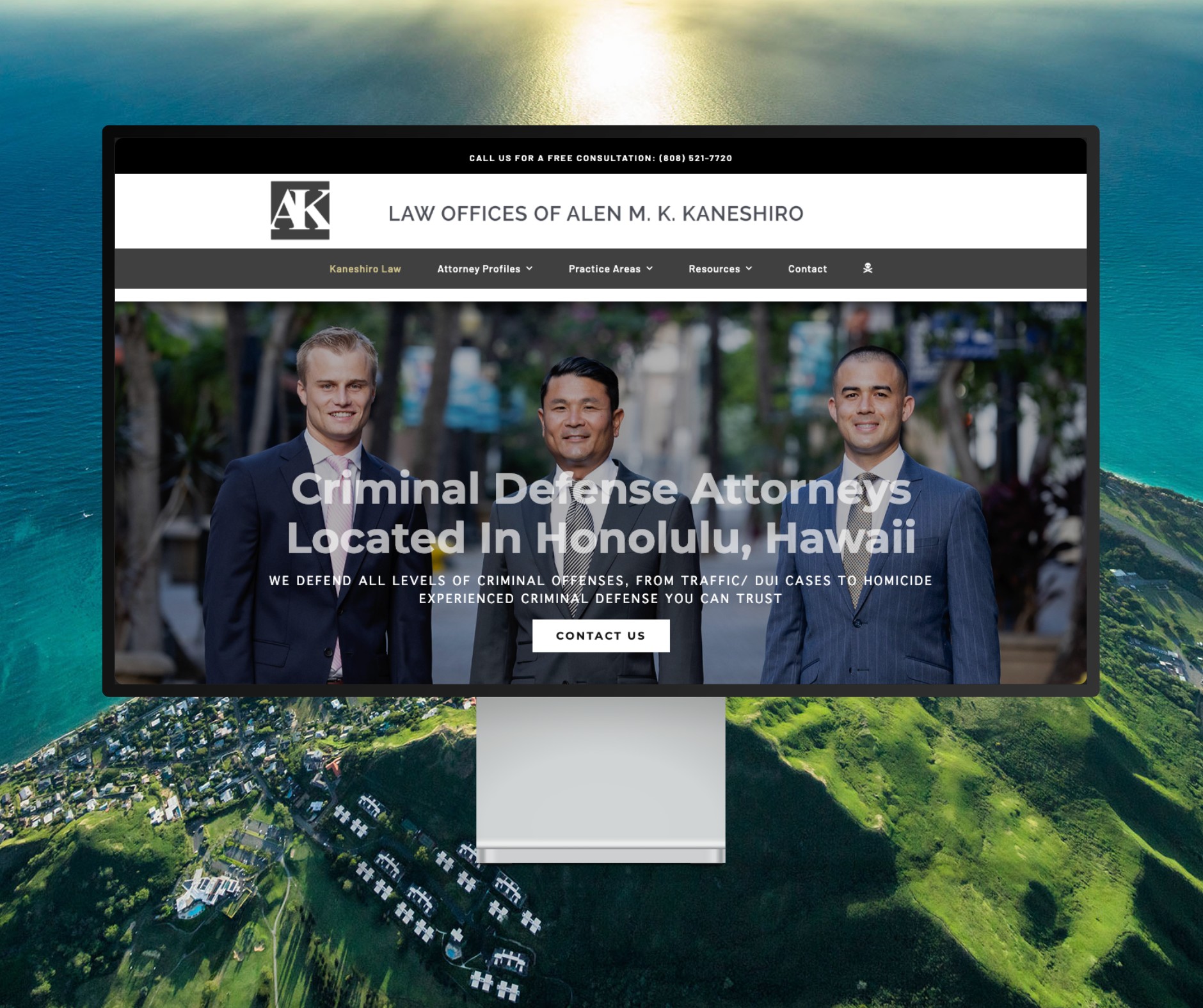
Featured Website: www.kaneshirolaw.com
Kaneshiro Law Firm, one of Hawaii’s most respected legal practices, partnered with The X Digital three years ago for a complete website redesign. Since then, we’ve maintained an ongoing relationship—handling updates, optimizations, and technical support around the clock. Our dedicated team ensures they’re never without assistance, while our enterprise-grade hosting provides 24/7 uptime monitoring and reliability. Kaneshiro Law Firm is one of many long-term clients who trust us to keep their digital presence running flawlessly.