

Local voice search is changing how customers find small businesses. Instead of typing “plumber near me” into Google, someone may ask, “Who can fix a leaking water heater nearby?” or “What time does the closest family dentist open?” These searches are conversational, immediate, and often connected to a real buying decision.
For a small business, that creates an opportunity—but not a reason to chase every voice-search trend. The fundamentals still matter: accurate business information, strong local SEO, useful content, positive reviews, and a fast website. Voice search optimization works best when it improves the experience for all potential customers, not just people speaking to a phone or smart speaker.
In this guide, we’ll explain how local voice search works, what information search engines and AI assistants rely on, and the practical steps you can take to become more visible. You’ll also learn what to prioritize, what to measure, and which common tactics are mostly hype.
Why Local Voice Search Matters for Small Businesses
Voice search is especially relevant to local businesses because many spoken searches have clear intent. A person asking, “Where can I get my car detailed today?” is probably not conducting casual research. They may be ready to call, visit, book, or request directions.
Voice assistants and answer engines may use information from search indexes, business directories, review platforms, websites, maps, and other trusted sources to provide an answer. The exact system varies by device and platform, and there is no guaranteed way to “rank number one” for every spoken query. However, businesses with complete, consistent, and useful online information are easier for these systems to understand and recommend.
This is where local voice search overlaps with traditional local SEO. Google Business Profile optimization, accurate contact details, helpful service pages, and genuine reviews remain important whether a customer types or speaks a query.
Voice searches tend to be specific
Typed searches are often short, such as “Maui electrician.” Spoken searches usually include more context: “Who is the best electrician near Kihei for an emergency?” They may mention a location, service, schedule, price range, or need.
That means your content should answer the questions customers actually ask. Think beyond broad keywords and consider practical phrases such as:
- “Do you offer same-day air conditioning repair?”
- “Are you open on Sundays?”
- “How much does a house cleaning service cost?”
- “Do you serve [specific neighborhood or town]?”
- “Can I book an appointment online?”
You do not need to force these exact questions into every page. Instead, use them to make your website clearer and more useful.
Build a Strong Local Search Foundation First
Before you create voice-specific content, make sure your basic business information is correct everywhere it appears online. An assistant cannot confidently recommend a business if it finds conflicting phone numbers, addresses, opening hours, or service descriptions.
Optimize your Google Business Profile
Your Google Business Profile is one of the most important assets in local search. Claim and verify it, then complete every relevant section. Include your real business name, accurate address or service area, phone number, website, hours, categories, services, photos, and booking information.
Choose the most accurate primary category rather than selecting a broad category simply because it has a larger audience. Add secondary categories only when they genuinely describe what you offer. Keep your profile current when hours change for holidays, seasonal schedules, or emergencies.
Regular activity can also help customers understand your business. Add appropriate photos, respond to reviews, and publish updates when you have something useful to share. These actions are not magic voice-search tricks, but they reinforce relevance and trust.
Keep business details consistent
Review your website, social profiles, local directories, industry associations, and major map services. Your business name, address, and phone number should be consistent wherever possible. If you move, change phone numbers, or alter your service area, update important listings promptly.
Also check that your website clearly displays:
- Your business name and location or service area
- A clickable phone number on mobile devices
- Opening hours and holiday exceptions
- The services you provide
- Areas you serve
- Clear directions, booking options, or contact forms
For service-area businesses, do not create thin pages for every nearby town just to attract searches. Explain your actual service area and create location pages only when they provide genuinely useful, locally relevant information.
Create Content That Answers Conversational Questions
Voice search optimization is largely an exercise in understanding customer language. People speak differently than they type, so your website should address complete questions and common follow-up concerns.
Use FAQs with real answers
An FAQ section can help answer questions about pricing, availability, service areas, preparation, timelines, and policies. Write answers in plain language. Put the direct answer near the beginning, then add enough detail to be useful.
For example, a landscaping company might answer, “How often should I schedule lawn maintenance in [location]?” A senior care provider could explain, “What is the difference between home care and assisted living?” A vehicle rental company might address, “What documents do I need to rent a car?”
Do not write FAQs only because a keyword tool suggested them. Speak with your customers, review emails and phone questions, and ask your staff what people repeatedly want to know. Those questions are usually more valuable than generic lists generated without business context.
Structure pages for quick understanding
Organize each service page so a customer—or an answer engine—can quickly identify what you do, where you work, and what to do next. Use descriptive headings, short paragraphs, bullet points, and clear calls to action.
For example, a local contractor’s service page might include:
- A clear explanation of the service
- The problems the service solves
- Typical timeframes or pricing factors
- The neighborhoods or communities served
- Relevant proof, such as reviews or project photos
- A phone number and simple inquiry form
Conversational content should still sound natural. Repeating phrases such as “best plumber near me” throughout a page will not make it more authoritative. It can make the page harder to read and less trustworthy.
Strengthen Trust Signals for Voice and AI Recommendations
When an assistant recommends a local business, it needs signals that the business is legitimate, relevant, and capable of serving the customer. No single factor guarantees visibility, but a strong reputation and clear business information give your company a better foundation.
Earn and manage genuine reviews
Reviews influence customer decisions and can support local visibility. Build a repeatable process for requesting feedback from customers who have completed a purchase or service. Make the request easy, but never offer incentives in exchange for positive reviews or pressure customers to use specific wording.
Respond to reviews professionally and specifically. Thank customers for positive feedback, and address negative comments without arguing or revealing private information. If a complaint involves a real service issue, explain how you are working to resolve it.
Reviews that naturally mention a service or location can help future customers understand what you do. However, asking customers to insert keywords is not a good strategy. Authentic detail is more valuable than manufactured language.
Use structured data carefully
Structured data is code that helps search engines interpret information on a webpage. LocalBusiness schema may identify details such as your business name, location, hours, phone number, and services.
It is worth implementing correctly, particularly on a well-built WordPress website. But structured data does not create a special voice-search ranking switch, and it cannot compensate for inaccurate content or a poor customer experience. The information in the markup should match what users can see on the page and what appears in your verified business listings.
Trust also comes from the website itself. Include a clear About page, contact information, service details, policies, credentials where relevant, and real photographs. For health, financial, legal, and other sensitive services, demonstrate appropriate expertise and make claims responsibly.
Improve the Mobile Experience and Measure Results
Many voice searches happen on mobile devices, often when someone is moving between tasks. If a customer finds your business but the website is slow, difficult to use, or missing a phone number, the search visibility has limited value.
Make the next step obvious
Test your website on a real phone, not only in a desktop browser. Check whether visitors can quickly:
- Call your business with one tap
- Find your address or service area
- See whether you are open
- Request an estimate or book an appointment
- Understand what happens after submitting a form
Compress oversized images, remove unnecessary plugins, and use reliable hosting. Site speed is not just an SEO concern; it affects whether a potential customer stays long enough to contact you. A secure, maintained WordPress website also reduces the risk of broken forms, outdated software, and unexpected downtime.
Track actions, not just rankings
Voice search reporting is imperfect. Search platforms generally do not provide a clean report showing every impression that came from a spoken query. Instead, look at the outcomes that matter to your business.
Monitor calls, direction requests, website visits from local listings, form submissions, bookings, and qualified leads. Google Search Console can reveal the questions and queries bringing people to your site, while analytics and call tracking can help connect traffic to action.
Review these numbers over time rather than reacting to a single week. Ask new customers how they found you, too. A simple question at the end of a call or booking form can uncover whether people discovered you through Google Maps, an assistant, a referral, or another channel.
What Small Businesses Should Do First
You do not need a large voice-search budget or a separate website. Start with the work that improves local visibility across every search experience:
- Claim and fully complete your Google Business Profile.
- Correct inconsistent business information across important directories.
- Write or improve service pages for your highest-value offerings.
- Add useful FAQs based on real customer questions.
- Build a consistent, ethical review-request process.
- Test your mobile website, contact forms, and click-to-call experience.
- Track calls, leads, bookings, and direction requests.
Skip promises that guarantee placement in Siri, Alexa, Google, or AI assistants. Search results depend on the query, location, device, competition, and the information available at that moment. The sustainable approach is to make your business easy to understand, easy to trust, and easy to contact.
Conclusion
Local voice search is not a separate replacement for SEO. It is another way customers discover and evaluate your business. The companies most likely to benefit are those with accurate local listings, useful conversational content, strong reviews, fast mobile websites, and clear next steps.
For a small business, the best starting point is practical: answer the questions customers ask, maintain your online information, and measure real inquiries instead of chasing vague rankings. If your website, Google Business Profile, and reputation are already strong, you are building a foundation that supports typed searches, voice assistants, map results, and emerging AI answer engines at the same time.
That is the durable strategy: not trying to trick an algorithm, but making it simple for the right customer to find, understand, and choose your business.
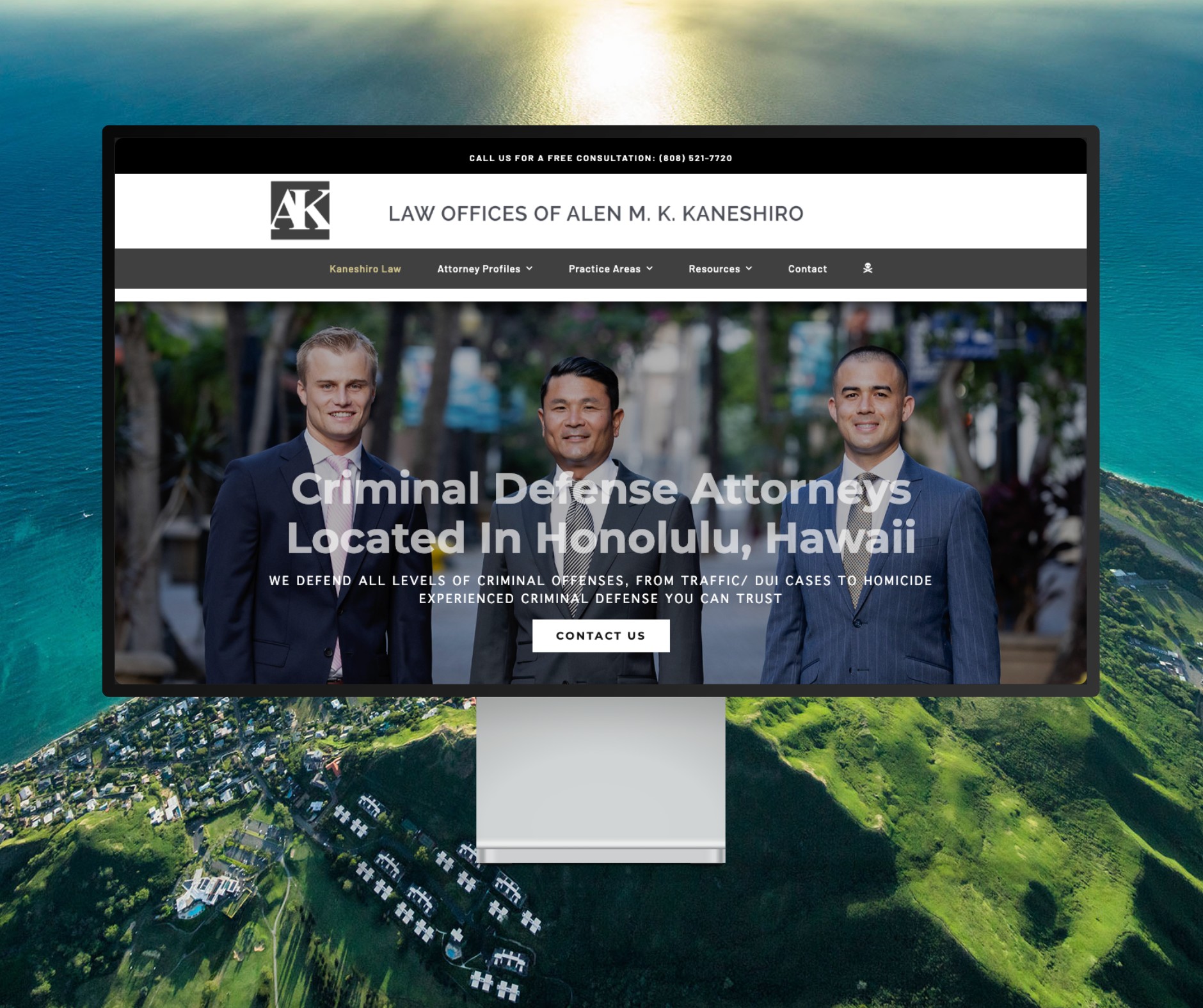
Featured Website: www.kaneshirolaw.com
Kaneshiro Law Firm, one of Hawaii’s most respected legal practices, partnered with The X Digital three years ago for a complete website redesign. Since then, we’ve maintained an ongoing relationship—handling updates, optimizations, and technical support around the clock. Our dedicated team ensures they’re never without assistance, while our enterprise-grade hosting provides 24/7 uptime monitoring and reliability. Kaneshiro Law Firm is one of many long-term clients who trust us to keep their digital presence running flawlessly.