

Maximizing ROI on Your Google Ads starts with a simple shift in perspective: clicks are not the goal—profitable customers are. For a small business, every advertising dollar has to work harder, especially when you’re competing against larger companies with bigger budgets and dedicated marketing teams.
The good news is that you don’t need a massive account or a complicated advertising strategy to improve results. You need accurate conversion tracking, campaigns built around real business goals, relevant landing pages, and a consistent process for cutting waste. In this guide, we’ll explain practical Google Ads optimization techniques for improving lead quality, controlling costs, and turning paid search into a more predictable source of revenue.
Maximizing ROI on Your Google Ads Starts With Better Measurement
You can’t optimize what you can’t measure. Many small businesses judge Google Ads by impressions, clicks, or even form submissions, but those numbers can be misleading. A campaign may generate plenty of leads while producing very few paying customers.
Start by defining what a valuable conversion means for your business. For a local service company, that might be a phone call lasting more than 60 seconds, a booked estimate, or a qualified contact form. For an e-commerce business, it may be completed purchases and profit—not simply order revenue.
Track the entire customer journey
At a minimum, your account should distinguish between:
- Low-value actions, such as page views or visits to a contact page
- Lead actions, such as calls, quote requests, and appointment bookings
- Revenue actions, such as purchases or closed sales
If your business closes sales over the phone or in person, connect those offline outcomes back to Google Ads whenever possible. Otherwise, Google may optimize toward people who submit inexpensive but low-quality leads rather than customers who actually buy.
Google says enhanced conversions can improve conversion measurement and support more effective bidding by securely sending hashed first-party customer data, such as an email address or phone number, for matching. For lead-generation businesses, enhanced conversions for leads can also help connect website inquiries with offline transactions. ([support.google.com](https://support.google.com/google-ads/answer/9888656?hl=en&utm_source=openai))
Give conversions realistic values
Not every lead has the same value. A service inquiry from a homeowner in your service area may be worth much more than a student, competitor, or out-of-area visitor. Assign values based on estimated revenue, close rate, or profit margin.
For example, if a $2,000 service has a 25% close rate and produces $500 in expected revenue per qualified lead, that is a more useful value than treating every form submission as identical. The data does not need to be perfect on day one. It does need to be directionally honest.
Build Campaigns Around Intent, Not Just Keywords
One of the most important PPC tips for small businesses is to organize campaigns around what people are trying to accomplish. Someone searching for “emergency plumber near me” has a different level of urgency and buying intent than someone searching for “how to fix a leaking faucet.” Combining both searches in one campaign can make performance difficult to understand.
Group your campaigns by service, product category, location, or customer intent. This gives you better control over budgets, ad messaging, and landing pages.
Prioritize high-intent searches
Begin with searches that indicate a person is close to taking action. Examples include:
- “Buy,” “book,” “schedule,” or “hire” searches
- Service-plus-location searches, such as “roof repair in Austin”
- Brand searches, when protecting your existing demand makes financial sense
- Product-specific searches with clear purchase intent
Informational keywords can be useful, but they often require a different offer and landing page. A visitor researching options may be better suited to a guide, email signup, or remarketing campaign than a direct sales page.
Use search-term data to reduce waste
Keywords are what you target. Search terms are what people actually typed. Review the search-term report regularly to find irrelevant queries and add negative keywords. A negative keyword prevents your ad from showing for searches that are unlikely to produce a profitable customer.
Common examples include “free,” “jobs,” “DIY,” “training,” “used,” or “reviews”—but the right exclusions depend on your business. Don’t block a term simply because it received a click. Block it when the intent clearly does not match what you sell.
Google is also expanding AI-powered campaign features. In April 2026, Google reported that AI Max for Search campaigns generated an average of 7% more conversions or conversion value at a similar cost per action or return on ad spend when the full feature set was used, compared with search-term matching alone. That is a Google-reported average, not a guarantee for every account, so test carefully and retain appropriate controls. ([blog.google](https://blog.google/products/ads-commerce/dsa-upgrade-to-ai-max-2026/?utm_source=openai))
Make Your Ads and Landing Pages Work as a Team
Even well-targeted traffic will not produce strong small business ROI if the ad promise and landing page experience do not match. A person searching for “same-day air conditioning repair” should not land on a generic homepage with no clear way to request service.
Each important campaign should lead to the most relevant page available. If you offer several services, create separate pages rather than forcing every visitor through one broad “services” page.
Write ads for the customer’s decision
Effective ads answer the questions a potential customer is already asking:
- Do you offer the exact product or service I need?
- Do you serve my location?
- Why should I trust you?
- What should I do next?
Use specific benefits instead of vague claims. “24/7 Emergency Plumbing in Honolulu” is more useful than “Quality Plumbing Services.” Where appropriate, include proof points such as years in business, warranties, financing, certifications, or transparent service areas. Just make sure every claim is accurate and supportable.
Improve the conversion path
Your landing page should make the next step obvious. Put the primary call to action near the top, repeat it naturally throughout the page, and make phone numbers easy to tap on mobile devices. Reduce unnecessary form fields and explain what happens after someone submits the form.
Page speed matters, but so does confidence. Include testimonials, photos of real work, clear pricing guidance when possible, frequently asked questions, and information about your team. Since The X Digital hosts and maintains websites for clients, we see this often: improving the website experience can increase advertising performance without increasing the ad budget.
Choose Bidding and Budget Strategies Carefully
Google Ads offers automated bidding options that use signals such as device, location, time, audience, and search context. Automation can be helpful, but it is only as good as the conversion data and values you provide.
Match the bid strategy to your data
For a new campaign with limited reliable conversion data, start with a strategy that gives you enough control to learn. As conversion volume and tracking quality improve, you can test automated options such as Maximize Conversions, target cost per action, or Maximize Conversion Value with a target return on ad spend.
Value-based bidding is most useful when your conversions have different values. Google’s guidance describes Maximize Conversion Value as a way to optimize toward the total value of conversions, with an optional target ROAS. For lead-generation businesses, Google also emphasizes combining offline conversion data with Smart Bidding so the system can focus on more valuable leads rather than treating every inquiry equally. ([thinkwithgoogle.com](https://www.thinkwithgoogle.com/_qs/documents/14033/final_uk_privacy_playbook.pdf?utm_source=openai))
Do not change bidding strategies every few days. Major changes can reset learning and make it difficult to identify what actually improved or damaged performance. Make one meaningful change at a time, then allow enough time and conversion volume for a fair evaluation.
Set a budget based on economics
Work backward from your numbers:
- Estimate the profit from an average new customer.
- Determine the maximum amount you can pay to acquire that customer.
- Use your close rate to calculate an acceptable cost per qualified lead.
- Compare that target with actual campaign performance.
For example, if your average customer generates $1,200 in gross profit and you are willing to spend $300 to acquire one, a 30% close rate means your target cost per qualified lead is approximately $90. These calculations will vary by industry, but they give you a rational basis for budget decisions instead of relying on an arbitrary monthly amount.
Use Google’s AI Features Without Giving Up Judgment
Google Ads is becoming increasingly automated. In May 2025, Google announced broader agentic capabilities for Google Ads and Analytics, building on its conversational campaign creation tools. Google said more than half a million advertisers had used its conversational experience to create higher-quality Search campaigns at that point. ([blog.google](https://blog.google/products/ads-commerce/ai-agents-marketing-advisor/?utm_source=openai))
These developments can save time, particularly for businesses that do not have an in-house marketing team. However, automation is not a substitute for strategy. Google’s systems do not know your true profit margins, which customers you cannot serve, or which leads waste your team’s time unless you provide that context.
Review automatically generated headlines, descriptions, search themes, audience suggestions, and landing-page selections before approving them. Watch for:
- Services you do not offer
- Locations outside your service area
- Unapproved discounts or inaccurate claims
- Broad wording that attracts low-intent traffic
- Compliance issues in regulated industries
Google’s newer AI Max tools include controls for messaging, matching, audience guidance, brand settings, and landing-page expansion. Google has also said that Dynamic Search Ads are scheduled for an automatic upgrade path to AI Max beginning in February 2027, while some other eligible campaign settings may upgrade earlier. Review your account and document your current setup before changes occur. ([blog.google](https://blog.google/products/ads-commerce/ai-max-new-features/?utm_source=openai))
Measure Profit, Then Improve One Thing at a Time
Google Ads optimization is an ongoing process, not a one-time setup. Review performance at least monthly, and more often when budgets are significant or campaigns are changing quickly. Focus on the metrics that connect advertising to business results:
- Cost per qualified lead
- Lead-to-customer close rate
- Customer acquisition cost
- Conversion value and profit
- Return on ad spend
- Impression share for your most valuable searches
When results are weak, diagnose the stage of the funnel. A low click-through rate may indicate poor targeting or weak ad messaging. Strong clicks but few conversions may point to a landing-page or offer problem. Plenty of leads but little revenue may signal poor qualification, slow follow-up, or inaccurate conversion goals.
At The X Digital, we generally recommend fixing measurement first, then targeting, then the landing-page experience, and finally bid and budget adjustments. That order prevents you from optimizing an account around bad data.
Conclusion: Make Every Google Ads Dollar More Accountable
Maximizing Google Ads performance for a small business does not require chasing every new feature or spending more than your competitors. It requires a disciplined system: track meaningful conversions, target high-intent searches, match ads to useful landing pages, assign realistic values, and review the results based on profit.
Automation can help you find opportunities, but your business judgment still matters. Start with one campaign, one clear goal, and one measurable improvement. If your tracking is unreliable, your campaigns are attracting the wrong searches, or your website is turning away ready-to-buy visitors, those problems should be solved before increasing your budget.
If you need help with Google Ads management, conversion tracking, landing pages, or a broader advertising strategy, The X Digital can help you build a plan around actual business outcomes—not vanity metrics.
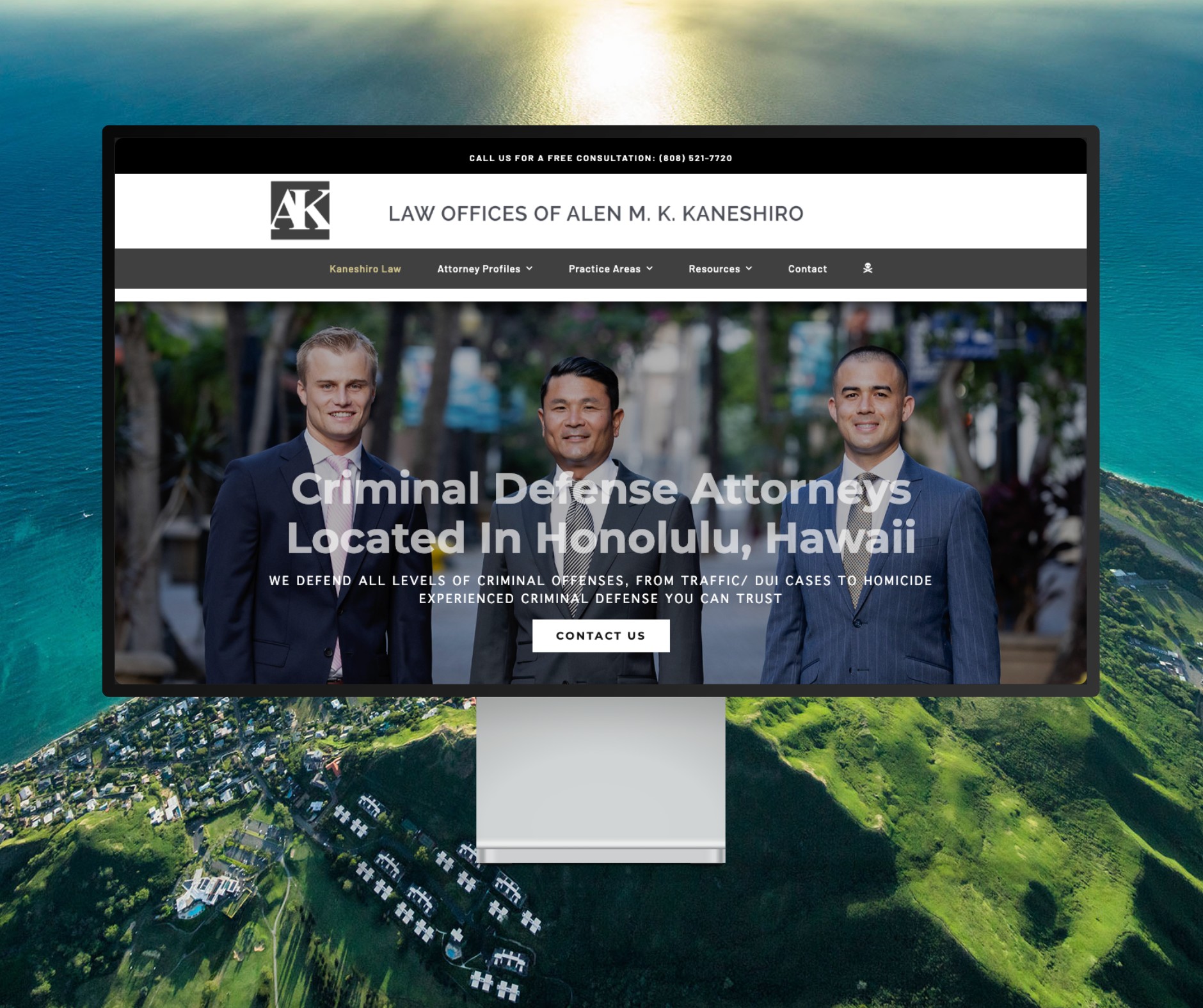
Featured Website: www.kaneshirolaw.com
Kaneshiro Law Firm, one of Hawaii’s most respected legal practices, partnered with The X Digital three years ago for a complete website redesign. Since then, we’ve maintained an ongoing relationship—handling updates, optimizations, and technical support around the clock. Our dedicated team ensures they’re never without assistance, while our enterprise-grade hosting provides 24/7 uptime monitoring and reliability. Kaneshiro Law Firm is one of many long-term clients who trust us to keep their digital presence running flawlessly.