

You’ve heard it a hundred times: if you want to rank locally, you need a Google My Business profile. Get that pin on the map, collect some reviews, and watch the leads roll in. But what happens when you don’t have a physical location Google will verify? What if you’re a service-area business working from home, a consultant who meets clients on their turf, or a mobile contractor who never sees customers at your registered address?
Here’s the truth: you can absolutely rank on Google without a Google My Business pin. It takes a different approach, but it’s not only possible—it’s often more sustainable than relying solely on map pack visibility. In this guide, we’ll walk through exactly how to build local visibility and drive qualified traffic when the traditional GMB route isn’t available or isn’t working for you.
Why Some Businesses Can’t Get a Google My Business Pin (And Why That’s Okay)
Google has tightened verification requirements significantly over the past few years. The platform wants to show real, staffed locations where customers can visit during posted hours. That philosophy leaves out a lot of legitimate businesses:
- Service-area businesses that serve customers at their locations, not yours (plumbers, electricians, mobile pet groomers)
- Home-based businesses where you don’t want your residential address public or Google won’t verify it
- Consultants and coaches who meet clients virtually or at coffee shops
- Businesses in shared office spaces where multiple companies use the same address
- New businesses that haven’t established the paper trail Google wants to see
If you’ve been rejected for verification, had your listing suspended, or simply don’t qualify under Google’s guidelines, you’re not alone. And you’re definitely not out of options. The reality is that local SEO without Google My Business has been working for businesses long before GMB existed, and it still works today—you just need to focus your energy in the right places.
How Google Ranks Local Businesses Beyond the Map Pack
When most people think “local SEO,” they picture the map pack—those three businesses with pins that appear at the top of search results. But that’s just one piece of real estate on the page. Below the map pack sit the organic results, and that’s where businesses without GMB listings can absolutely dominate.
Organic Local Results Still Drive Serious Traffic
Studies consistently show that while the map pack gets attention, the organic results below it capture the majority of clicks—especially for informational searches and longer-tail queries. When someone searches “best roofing contractor near me,” they might glance at the map. But when they search “how to choose a roofing contractor in Portland” or “roofing company with financing options,” they’re clicking organic results.
Google ranks these organic results based on traditional SEO factors: content quality, site authority, relevance, technical performance, and yes—local signals. You don’t need a GMB pin to send those signals. You need the right foundation.
Local Ranking Factors That Don’t Require GMB
Google determines local relevance through multiple data points. Here are the ones you can control without a business listing:
- NAP consistency (Name, Address, Phone) across your website and citations
- Location-specific content that demonstrates local expertise and service areas
- Local backlinks from chambers of commerce, local news sites, community organizations
- Structured data markup (LocalBusiness schema) telling Google exactly what and where you serve
- User behavior signals—how people interact with your site after clicking from search
Every one of these factors is entirely within your control, and collectively they can outweigh the advantage of a map pin—especially in competitive markets where dozens of businesses are fighting for those three map spots.
Building Local Authority Without a Map Pin: The Practical Playbook
Now let’s get tactical. These are the strategies we use with clients who need to rank locally without a business pin, and they work across industries and markets.
1. Optimize Your Website for Local Intent
Your website needs to make your location and service areas crystal clear—not just to visitors, but to Google’s crawlers. Start with these fundamentals:
Create dedicated location pages. If you serve multiple cities or regions, build a unique page for each one. Don’t just swap out the city name in a template—write genuine content about what makes that market unique, specific services you’ve completed there, and local knowledge that proves you actually work in the area. A page titled “Plumbing Services in Beaverton” that talks about common issues with older homes in the Raleigh Hills neighborhood carries more weight than a generic service page.
Add LocalBusiness schema markup. This structured data tells search engines your business type, service areas, contact information, and hours. Even without a GMB listing, schema gives Google the local signals it needs. Use Google’s Structured Data Markup Helper to generate the code, then add it to your site’s footer or header.
Embed a map showing your service area. A simple Google Map embed showing the regions you cover reinforces local relevance. It’s a visual signal to users and another geographic indicator for search engines.
2. Build Citations on Directories That Matter
Citations—mentions of your business name, address, and phone number on other websites—remain a core local ranking factor. The key is consistency and choosing directories that actually carry weight.
Focus on these first:
- Industry-specific directories—Houzz for contractors, Avvo for lawyers, Healthgrades for medical practices
- Local chambers of commerce and business associations
- Better Business Bureau (if you’re accredited or willing to join)
- Yelp, Bing Places, and Apple Maps (yes, even without GMB)
- Local news sites and community directories
Make sure your NAP information is identical across every listing. Variations—even small ones like “St.” versus “Street”—dilute the signal. If you’re a service-area business without a public address, use a consistent format like listing just your city and state, or consider a virtual office address if your business model supports it.
3. Create Content That Answers Local Questions
This is where you can genuinely outrank businesses that rely solely on their GMB listing. Most local competitors have thin websites—a homepage, a services page, maybe a contact form. If you publish helpful, locally-focused content, you create dozens of opportunities to rank for searches they’ll never capture.
Write blog posts and guides that answer questions your customers actually ask:
- “What permits do I need for a deck in [city]?”
- “How much does [service] cost in [region]?”
- “Best time of year to [do the thing you do] in [area]”
- “How to choose a [your profession] in [city]”
Each piece should demonstrate local knowledge—reference local regulations, mention neighborhood names, discuss weather patterns or soil conditions or architectural styles specific to your market. This content doesn’t just rank; it builds trust. When a potential customer reads an article that clearly comes from someone who knows their area, you’ve already differentiated yourself from the competition.
4. Earn Local Backlinks
A link from a local news site, community blog, or regional organization tells Google you’re a legitimate part of the local business ecosystem. These links are more valuable for local rankings than links from national directories or unrelated websites.
Practical ways to earn them:
- Sponsor a local event or youth sports team (most will link to sponsors)
- Offer expert commentary to local journalists covering your industry
- Participate in community initiatives and get mentioned on partner websites
- Guest post on local blogs or contribute to community publications
- Get involved with your chamber of commerce—most have member directories with followed links
Quality matters more than quantity. One link from your city’s main news site outweighs fifty links from random directories.
Alternative Platforms and Visibility Channels
Google isn’t the only game in town, and for businesses without GMB, diversifying your visibility can actually be an advantage.
Bing Places and Apple Maps
Both platforms have their own business listing systems, and both are often less strict about verification than Google. Bing Places feeds into Bing search results (which still capture about 6% of searches in the US), and Apple Maps powers Siri, Spotlight, and Maps on millions of iPhones. Claim and optimize your listings on both.
Nextdoor and Neighborhood Platforms
Nextdoor has become a powerful referral engine for local service businesses. Unlike Google, you don’t need a verified business location—just a legitimate business and some customer recommendations. The platform skews toward homeowners actively looking for contractors, cleaners, and home service providers, making it especially valuable for those industries.
Yelp and Niche Review Sites
Yelp remains a significant traffic driver in many markets, particularly for restaurants, home services, and professional services. Even if you can’t get a GMB pin, you can build a strong Yelp presence. The same goes for industry-specific review platforms—Angi for contractors, Thumbtack for service providers, and so on.
The strategy here isn’t just to create profiles—it’s to actively collect reviews and engage with them. A business with 50 detailed Yelp reviews and thoughtful responses often outperforms competitors with GMB listings but little engagement.
What About Paid Ads When Organic Isn’t Enough?
Sometimes you need visibility faster than SEO can deliver it, or you’re in a market where organic competition is intense. That’s where Google Ads becomes your alternative to map pack dominance.
Google Local Services Ads appear above even the map pack for many service categories—plumbers, electricians, locksmiths, and more. These ads require verification (including background checks for some industries), but the verification process is separate from GMB and often more accessible for service-area businesses.
Standard Google Search Ads let you target local keywords with geographic parameters. You can show up for “roofing contractor Portland” without a Portland address on Google Maps. The key is tight geographic targeting, location-specific ad copy, and landing pages that match the search intent.
We’ve run campaigns for clients who couldn’t get GMB verification, and in some cases, their cost per lead from ads was actually lower than competitors relying on organic map traffic—because the competition for ad space was less intense than the fight for those three map spots.
When You Should (and Shouldn’t) Keep Fighting for GMB
Let’s be clear: if you can legitimately get a Google My Business listing verified, you should. The map pack is valuable real estate, and having both a GMB presence and strong organic rankings gives you the most visibility possible.
But if you’ve been rejected multiple times, or your business model genuinely doesn’t fit Google’s requirements, there’s a point where you’re better off investing your energy in the strategies above rather than fighting a losing battle.
Keep trying if: You have a legitimate physical location where customers can visit, you’re willing to make your address public, and you simply haven’t figured out the right verification method yet. Sometimes it’s a matter of trying different verification options or appealing with better documentation.
Move on if: Google has explicitly told you your business doesn’t qualify, you’ve had listings suspended repeatedly, or you’re trying to use a virtual office or home address that doesn’t meet guidelines. The time and frustration cost of fighting Google’s systems often exceeds the return, especially when alternative strategies work.
Conclusion: Local Visibility Is Bigger Than One Platform
The map pack is powerful, but it’s not the only path to local customers. Businesses that focus exclusively on GMB often neglect the organic results, content marketing, and relationship-building that drive sustainable growth. When you rank on Google without GMB, you’re forced to build a more complete digital presence—and that foundation often outlasts algorithm changes and platform policy shifts.
Start with your website. Make it fast, clear about where you serve, and packed with genuinely useful local content. Build citations consistently. Earn links from your community. Show up on the platforms your customers actually use. And if you need faster results, consider ads as a bridge while your organic presence grows.
At The X Digital, we’ve helped dozens of businesses build local visibility without relying on Google My Business—and in many cases, they’ve outperformed competitors who had map listings but weak websites. If you’re stuck trying to get verified or you’re ready to build a local SEO strategy that doesn’t depend on a single platform, we’d be happy to talk through your specific situation. Sometimes the best path forward isn’t the obvious one.
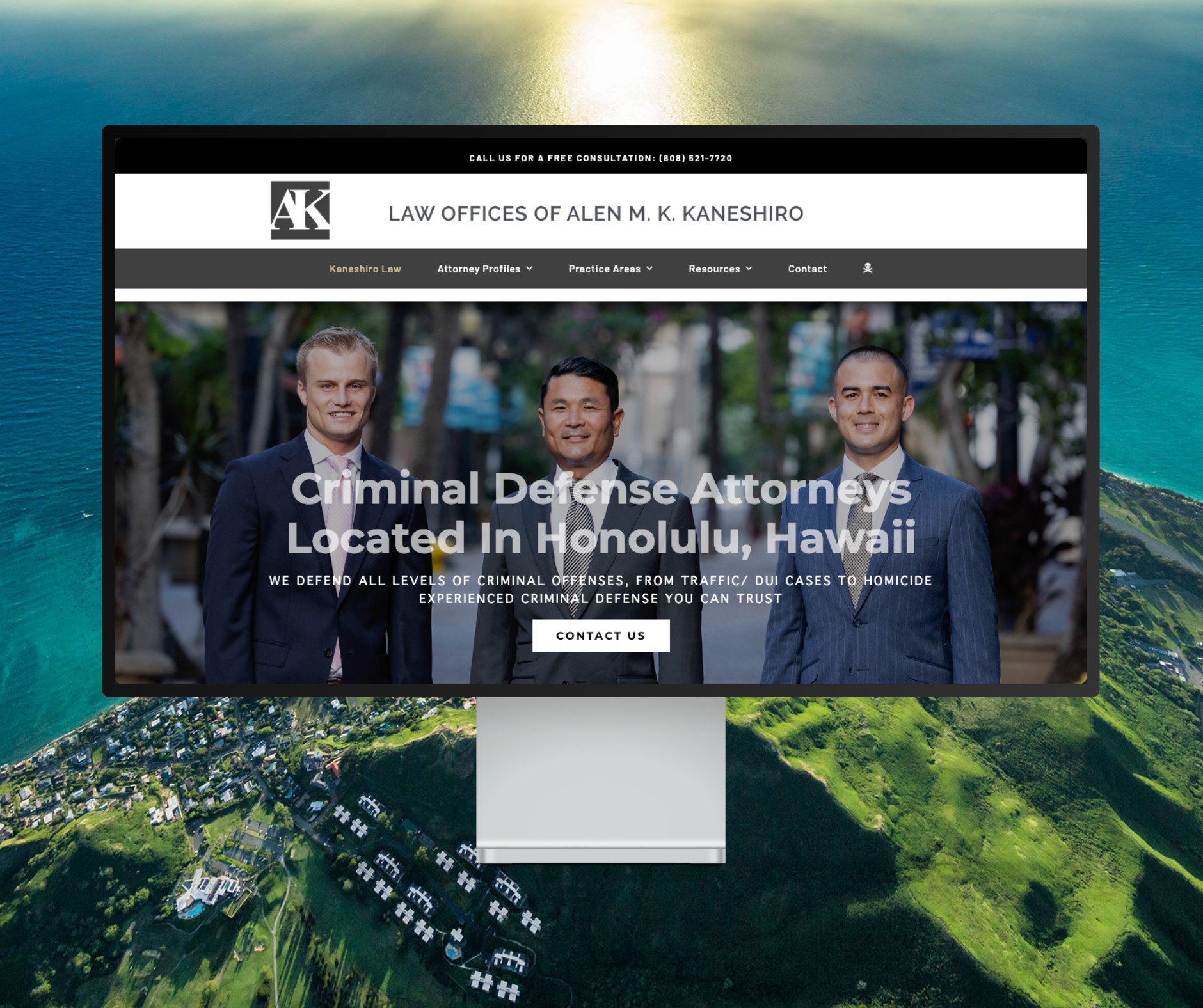
Featured Website: www.kaneshirolaw.com
Kaneshiro Law Firm, one of Hawaii’s most respected legal practices, partnered with The X Digital three years ago for a complete website redesign. Since then, we’ve maintained an ongoing relationship—handling updates, optimizations, and technical support around the clock. Our dedicated team ensures they’re never without assistance, while our enterprise-grade hosting provides 24/7 uptime monitoring and reliability. Kaneshiro Law Firm is one of many long-term clients who trust us to keep their digital presence running flawlessly.