

The real cost of ignoring local SEO for your small business isn’t just a lower position in Google. It’s the phone calls that never happen, the quote requests that go to a competitor, and the customers who choose a business they can find and trust in a few minutes. For a local company, search visibility is part of your storefront. If your business doesn’t appear when someone searches for a service nearby, it may as well be closed for that customer.
That matters because local buying decisions happen quickly. Recent BrightLocal consumer research found that 84% of US consumers had searched online for a local business in the previous three months, with most making a decision before the hour was over. In this guide, we’ll look at what ignoring local SEO really costs, why a neglected Google Business Profile can hurt revenue, and what small businesses should fix first.
The Real Cost of Ignoring Local SEO for Your Small Business
Local SEO is the work that helps your business appear in location-based searches, Google Maps, local listings, and increasingly, AI-generated recommendations. It includes your website, Google Business Profile, reviews, business information, location pages, local content, and the overall consistency of your online presence.
Ignoring it creates a gap between your actual reputation and your digital visibility. You may provide excellent service, have loyal customers, and know your community well. However, if your online information is incomplete or your competitors appear first, new customers may never discover you.
Customers are already searching
Local search usually comes with strong buying intent. Someone searching for “emergency plumber near me,” “Maui vacation rental,” “roof repair in Phoenix,” or “senior care services near me” is not casually browsing. They are often trying to solve a problem now.
Google’s own guidance says local rankings are primarily influenced by relevance, distance, and prominence. In plain English, Google wants to show businesses that match the search, are near the customer, and appear established or trusted. Complete business information, reviews, links, and accurate details all help Google understand that match. You can read the full explanation in Google’s official local ranking guidance.
If you ignore local search optimization, your competitors don’t need to be dramatically better than you. They only need to be easier to find, easier to contact, or more convincing at the moment a customer is ready to act.
The hidden cost is lost opportunity
Most owners can see the cost of an advertising campaign because the invoice is obvious. The cost of poor local visibility is harder to spot. It appears as:
- Fewer calls from people searching for your services
- Lower website traffic from your surrounding service area
- More price shoppers because your listing doesn’t communicate value
- Lost bookings when your hours or phone number are wrong
- Competitors collecting reviews and local links while you remain invisible
- Higher dependence on paid advertising to compensate for weak organic visibility
There’s also a compounding effect. A business with accurate information, useful content, strong reviews, and consistent customer activity tends to build more trust over time. A neglected business profile does the opposite: it makes every future marketing effort work harder.
How Poor Small Business Visibility Turns Into Lost Revenue
Small business visibility is not a vanity metric. Rankings matter because visibility creates opportunities for people to call, visit, book, request a quote, or compare your business with another option.
That doesn’t mean the business in position one automatically wins. In fact, current consumer research shows that people consider several signals before choosing a local business. BrightLocal found that consumers pay particular attention to how nearby a business is, its star rating, review count, listing completeness, pricing or offers, photos, and service category. Ranking position was only one factor, but you can’t be evaluated at all if your business is missing from the shortlist.
Being absent is worse than being imperfect
Many owners delay local SEO because their profile isn’t perfect. They may have only a few reviews, an older website, or limited photos. But waiting for perfection creates a bigger problem: customers cannot evaluate what they cannot find.
A complete, honest listing with ten genuine reviews is usually more useful than a neglected listing with no recent activity. Customers want basic facts first:
- What do you offer?
- Where do you serve customers?
- Are you open when they need you?
- How can they contact you?
- Do other customers describe a good experience?
- Can they see evidence of your work?
If your listing does not answer those questions, people will often move on rather than investigate. That is especially true on mobile, where a customer may be comparing several businesses while standing in a parking lot, sitting at home, or dealing with an urgent problem.
Weak visibility increases your SEO costs
Ignoring local SEO can also make your overall digital marketing more expensive. When your organic presence is weak, you may need to spend more on Google Ads, social media promotion, sponsorships, or third-party lead platforms to generate the same number of inquiries.
Paid advertising can be valuable, but it should not be the only way customers find you. A properly managed local presence can support paid campaigns by improving trust after someone clicks an ad. If a prospect sees a polished website but an incomplete Google profile, inconsistent hours, or unanswered negative reviews, the ad spend may produce a visit without producing a customer.
The smarter approach is not “SEO instead of advertising.” It is building a trustworthy local foundation so every marketing channel has a better chance of converting.
Your Google Business Profile Is Part of Your Sales Process
For many local businesses, the Google Business Profile is the first practical interaction a new customer has with the company. It may show your phone number, hours, service area, photos, reviews, directions, booking link, and website before the customer ever visits your homepage.
Google provides Business Profiles at no cost and allows businesses to manage their presence across Search and Maps. That makes the profile one of the highest-return starting points for digital marketing for small businesses. However, free does not mean automatic. The profile still needs to be claimed, verified, completed, monitored, and updated.
Small errors create large amounts of friction
A wrong phone number can turn a ready-to-buy customer into a missed call. Incorrect hours can create a frustrating visit. A missing service category can prevent Google from connecting your business with relevant searches. Old photos can make an active company look abandoned.
These problems are avoidable, but they are common. At a minimum, review the following:
- Business name, address, phone number, and website
- Primary and secondary categories
- Hours, holiday hours, and appointment information
- Service descriptions and service areas
- Current photos of your team, location, vehicles, products, or completed work
- Review responses and recent customer questions
- Links to booking, ordering, quoting, or contact forms
Also remember that Google does not treat a profile as a one-time form. Your business information should stay accurate as your operations change. Seasonal businesses, tourism companies, contractors, and service-area businesses need to be particularly careful because hours, availability, and service locations may change throughout the year.
Reviews influence trust, not just rankings
Reviews help people decide whether your business appears safe, capable, and worth contacting. They also provide language that helps future customers understand what you actually do.
Recent BrightLocal research found that 74% of consumers use at least two websites when reviewing local businesses, while 40% use two or more on average. That means your reputation is not limited to one profile. Depending on your industry, customers may also check Yelp, Facebook, Apple Maps, Tripadvisor, the Better Business Bureau, social media, or an AI tool.
The answer is not to chase every platform equally. Start with the places your customers use. Ask satisfied customers for honest feedback, make the request easy, and respond professionally to both positive and negative reviews. Never buy reviews or pressure customers to provide a specific rating. A smaller collection of real, detailed experiences is more valuable than a suspicious pattern of generic praise.
Local Search Is Changing, and Ignoring It Creates More Risk
Local SEO is no longer limited to ten blue links on a desktop screen. Customers now use Google Maps, mobile search, social platforms, review sites, video, and AI tools to research nearby businesses.
BrightLocal’s 2025 Local Consumer Review Survey found that more than three-quarters of US consumers consume video content when looking for information about local businesses. The same research also found that 48% of consumers read AI-generated review summaries before reading individual reviews, while 18% said they would be willing to make a decision based on the summary alone.
That shift has an important implication: your public information may be summarized by systems you do not control. If your business details are incomplete, your reviews are thin, or your website does not clearly explain your services, an AI-generated answer may not represent your business well—or may not mention it at all.
Build information that machines and people can understand
Good local SEO and answer engine optimization overlap in several practical ways. Both depend on clear, consistent, useful information.
Your website should clearly state:
- The exact services you provide
- The cities, neighborhoods, or service areas you cover
- Who your services are for
- What makes your approach different
- How customers can contact or book you
- Answers to common questions about pricing, timing, process, and availability
This does not mean publishing dozens of low-quality location pages or stuffing city names into every paragraph. It means creating genuinely useful pages for the areas and services that matter to your business.
Consistency builds confidence
If your Google profile says you close at 5:00 p.m., your website says 6:00 p.m., and a directory lists an old phone number, customers may hesitate. Search engines may also struggle to determine which information is correct.
Consistency across your website, business profiles, social accounts, and directories reduces friction. It also gives search engines more confidence when matching your business to a local query. This is one reason technical SEO, website maintenance, and local SEO should not be treated as separate silos.
What to Do If You’ve Been Ignoring Local SEO
You do not need to launch a massive campaign to start improving your local search presence. In most cases, the best first step is a practical audit followed by a short list of high-impact fixes.
Start here:
- Claim and verify your Google Business Profile. Make sure you control the listing and complete every relevant section.
- Correct your core information. Check your name, address, phone number, hours, website, categories, and service areas.
- Improve your website’s local pages. Explain your services and locations in plain language, with strong calls to action.
- Create a review process. Ask customers at the right time and respond to reviews consistently.
- Add real photos and useful updates. Show your work, team, location, products, and customer experience.
- Check your mobile experience. Make sure the site loads quickly and that calling, booking, and requesting a quote are easy.
- Track meaningful outcomes. Watch calls, form submissions, bookings, direction requests, and qualified leads—not just rankings.
Some businesses can handle these tasks internally. Others need help with technical issues, duplicate listings, poor reviews, location-page strategy, conversion problems, or a website that was never built for local search. The right level of support depends on your market, competition, goals, and available time.
Conclusion: Local SEO Is the Cost of Being Findable
The real cost of ignoring local SEO is not an abstract ranking problem. It is the steady loss of attention, trust, and opportunities while customers choose businesses that are easier to find.
The good news is that local search optimization does not require a giant budget or a complicated marketing machine. Start with accurate information, a complete Google Business Profile, a useful mobile-friendly website, genuine reviews, and consistent follow-through. Then build from there.
At The X Digital, we approach local SEO the same way we approach websites, hosting, and digital marketing as a whole: focus on the work that supports real business outcomes. If your website is a revenue channel—not just a brochure—your local presence deserves the same care as your storefront, phone system, and sales process.
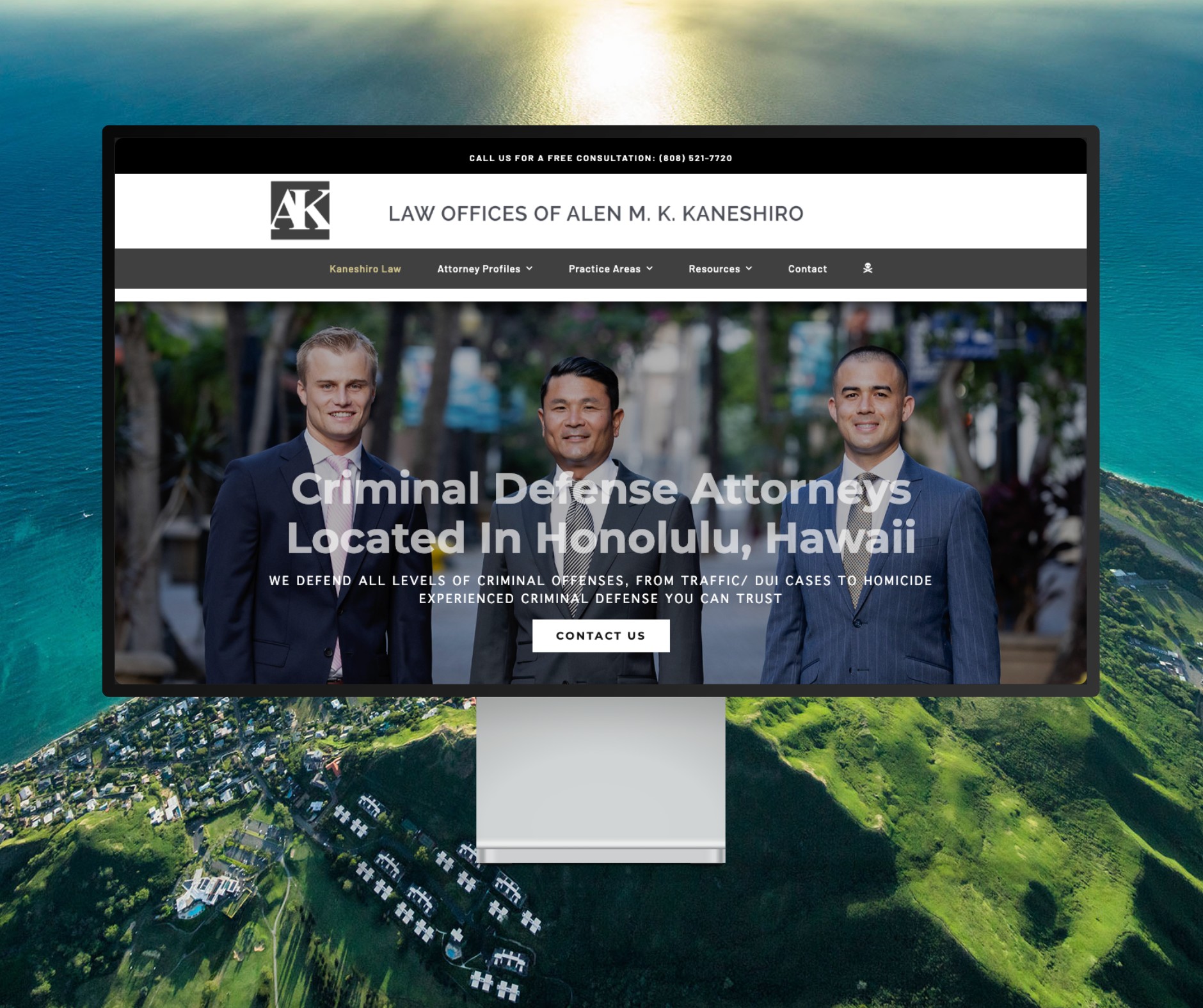
Featured Website: www.kaneshirolaw.com
Kaneshiro Law Firm, one of Hawaii’s most respected legal practices, partnered with The X Digital three years ago for a complete website redesign. Since then, we’ve maintained an ongoing relationship—handling updates, optimizations, and technical support around the clock. Our dedicated team ensures they’re never without assistance, while our enterprise-grade hosting provides 24/7 uptime monitoring and reliability. Kaneshiro Law Firm is one of many long-term clients who trust us to keep their digital presence running flawlessly.