

Google’s enhanced AI transparency features for ads are changing how advertisers and consumers understand AI-generated ads. As Google adds more automation to campaign creation, targeting, creative production, and optimization, businesses need to know what is being disclosed, where those disclosures appear, and what still remains the advertiser’s responsibility. The good news is that these updates aren’t designed to punish ordinary businesses for using AI. They’re intended to make advertising more understandable while preserving safeguards against misleading content. In this guide, we’ll explain Google’s latest AI transparency updates, how the “How this ad was made” panel works, what advertisers need to do, and how these changes should influence your digital marketing strategy.
What Google’s Enhanced AI Transparency Features for Ads Actually Do
On July 9, 2026, Google announced additional transparency features across its advertising products, including a new “How this ad was made” section inside My Ad Center. The panel is designed to help people understand whether generative AI was used to create or edit an ad.
Consumers can access the panel by selecting the three-dot menu or information icon on ads across Google Search, YouTube, and Discover. If Google’s generative AI advertising tools were used, Google says it will automatically add a disclosure to the ad’s My Ad Center panel. Advertisers who used AI tools outside Google’s advertising platform will also have a control for indicating that generative AI was involved.
Depending on local requirements, an AI label may also appear directly on the ad. That distinction matters. The disclosure may be visible inside the information panel in one situation, while a more prominent label may be required on the ad itself in another.
Google’s announcement is part of a broader effort to make AI-generated and digitally altered content easier to identify. The company says it already embeds imperceptible signals, including SynthID, into outputs from some of its generative AI tools. Google also introduced a requirement in 2023 to disclose synthetic or digitally altered content in election ads.
You can review the announcement in Google’s official update on AI transparency labels for ads.
What the disclosure does not mean
An AI disclosure does not automatically mean an ad is low quality, deceptive, or prohibited. AI can be used for relatively minor tasks, such as resizing an image, generating background variations, drafting headlines, or adapting creative for different formats.
In other cases, AI may create a substantial portion of the ad’s image, video, or wording. Google’s transparency tools are meant to provide context, not replace its existing ad review systems.
The important point for advertisers is simple: using AI is not a substitute for accuracy, originality, or human review. You remain responsible for what your ad says, shows, promises, and links to.
Why Google Is Expanding AI Transparency Now
Generative AI has made it faster and less expensive to create advertising assets. A small business can now produce multiple headlines, image concepts, video variations, product descriptions, and audience-specific messages in minutes. That can be helpful, especially for owner-operated companies without an in-house creative department.
However, the same tools can also produce content that is exaggerated, inaccurate, manipulated, or difficult for consumers to distinguish from reality. A generated image may show a product in a way that isn’t physically possible. An AI-written claim may imply results that a business cannot prove. A digitally altered testimonial or public figure likeness can create serious trust and compliance problems.
Google’s broader advertising safety work illustrates the scale of that challenge. In its 2024 Ads Safety Report, published in April 2025, Google said it launched more than 50 enhancements to its large language models during 2024. The company also reported permanently suspending more than 700,000 advertiser accounts associated with public-figure impersonation scams, which contributed to a 90% drop in reports of that type of scam ad.
Those figures come from Google’s own reporting, but they highlight an important reality: AI-related advertising policy changes are happening because bad actors are using the same tools legitimate advertisers use. Better disclosure helps consumers make informed judgments, while enforcement helps remove content that crosses the line.
Google’s existing policies continue to prohibit misleading and deceptive advertising, regardless of whether the content was created by a person, an AI system, or a combination of both. That means “the AI wrote it” will not be a useful defense if an ad makes an unsupported claim.
Transparency is becoming part of trust
Consumers increasingly expect companies to explain how automated systems affect what they see. This is especially true when an ad includes realistic people, product demonstrations, locations, voices, or events that never existed in real life.
For smaller businesses, transparency can be an advantage rather than a burden. A clear, accurate ad with appropriate disclosure may feel more trustworthy than polished creative that appears to hide how it was produced.
How the “How This Ad Was Made” Panel Affects Advertisers
The new panel primarily affects the consumer-facing side of advertising, but advertisers still need to prepare their accounts, creative workflows, and approval processes.
Google says disclosures will be automatic when advertisers use Google’s own generative AI advertising tools. When AI is used elsewhere, advertisers will have a control to indicate that generative AI was involved. The exact appearance and availability of labels may vary according to the market and applicable local requirements.
That means your team should not assume that every AI-generated asset will be handled identically. A generated image in a Performance Max campaign, an AI-assisted video on YouTube, and an election-related creative may be subject to different disclosure expectations.
A practical compliance checklist
Before launching AI-generated ads, review the following:
- Claims: Confirm that performance, pricing, availability, health, financial, and comparative claims are accurate and supportable.
- Images and video: Check that AI-generated people, products, locations, and demonstrations do not misrepresent what customers will actually receive.
- Testimonials: Never create fictional customer experiences and present them as genuine reviews.
- Identity and likeness: Avoid using a real person’s face, voice, name, or implied endorsement without permission.
- Landing pages: Make sure the destination page matches the ad and clearly explains important conditions, limitations, and pricing.
- Disclosure settings: Use available Google controls when AI was used outside Google’s own tools, especially when the creative was substantially generated or altered.
- Record keeping: Keep track of which tools created or changed the assets, who approved them, and what source material was used.
This doesn’t need to become a bureaucratic process for every headline variation. But if AI created a realistic image, changed the appearance of a product, or wrote a claim about a customer outcome, a human should inspect it before publication.
Disclosure is not the same as approval
An AI label does not make an otherwise prohibited ad acceptable. It also does not guarantee that Google will approve the ad. Disclosure answers the question, “Was AI used?” Ad compliance asks broader questions, such as:
- Is the offer legal and accurately described?
- Does the landing page provide the promised information?
- Could the ad mislead a reasonable customer?
- Does the advertiser have permission to use the content?
- Does the ad comply with industry-specific rules?
Businesses in health, finance, housing, employment, legal services, and other regulated areas should be particularly careful. AI can speed up production, but it does not reduce your legal or policy obligations.
What This Means for AI-Generated Ads and Campaign Performance
Google is adding transparency at the same time it is expanding AI throughout campaign management. In May 2025, Google announced new AI-powered creative tools, including image-to-video transformation powered by its Veo model, with availability in Merchant Center and plans for Google Ads. Google also introduced agentic capabilities intended to reduce the manual work involved in campaign creation and optimization.
In September 2025, Google announced that AI Max for Search campaigns was available globally in beta across Google Ads, Google Ads Editor, Search Ads 360, and the Google Ads API. Google also described new text guidelines intended to help advertisers steer AI toward creative that meets brand and business requirements.
These developments point to a larger shift: advertisers are moving from manually producing every ad variation to setting goals, providing brand guidance, supplying data, and reviewing machine-generated output.
That can improve efficiency, but it may also reduce visibility into exactly why a particular message, audience, or placement was selected. Transparency features help consumers understand the ad’s origins, while advertisers still need reporting and testing tools to understand performance.
Use AI as a production assistant, not your marketing director
For most small and mid-sized businesses, the safest approach is to give AI a defined role. For example, you can use it to:
- Generate headline and description variations from approved messaging.
- Adapt copy for different audience segments.
- Suggest creative concepts based on real products and services.
- Resize or reformat approved images and videos.
- Identify repetitive tasks in campaign management.
Then keep humans responsible for positioning, claims, approvals, brand voice, and customer experience. This division of labor is especially important for local service businesses. A contractor, senior care provider, or vacation rental company cannot afford an ad that promises a service, feature, or result it doesn’t actually provide.
How Small Businesses Should Respond to Google Ads AI Transparency
You don’t need to stop using AI-generated ads. You do need a clearer workflow.
Start by creating a short brand and compliance brief that tells your tools what they may and may not do. Include approved services, geographic areas, pricing rules, prohibited claims, preferred tone, and words or offers that require approval.
Next, build a simple review process:
- Brief: Define the audience, offer, objective, and approved facts.
- Generate: Use AI to create variations within those boundaries.
- Verify: Check claims, visuals, terms, and landing-page accuracy.
- Disclose: Use Google’s available AI disclosure controls when appropriate.
- Test: Compare results based on qualified leads or sales, not just clicks.
- Monitor: Watch for disapprovals, customer confusion, and mismatches between ads and actual service delivery.
It’s also worth reviewing your account access. If an automated tool can create or edit ads, confirm who can approve changes and whether notifications are enabled. Automation without oversight can quietly introduce incorrect prices, outdated services, or messaging your business would never approve.
Finally, remember that transparency is only one part of a responsible digital marketing strategy. Strong tracking, useful landing pages, accurate conversion data, and a clear offer still matter more than producing a larger volume of creative.
Conclusion: Treat AI Transparency as a Competitive Advantage
Google’s enhanced AI transparency features for ads reflect a broader change in online advertising. AI will increasingly help create, personalize, place, and optimize campaigns, but businesses remain accountable for the final experience customers receive.
The “How this ad was made” panel and related disclosure controls give consumers more context. For advertisers, the practical response is not fear or avoidance. It’s disciplined use: provide accurate inputs, set brand boundaries, review every meaningful claim, and disclose AI involvement when required or appropriate.
At The X Digital, we believe automation works best when it supports experienced judgment rather than replacing it. Whether you manage campaigns yourself or work with an agency, ask three questions before approving AI-generated creative: Is it true? Is it clear? And would we be comfortable explaining how it was made? If the answer is yes, AI can help you produce better advertising without sacrificing trust.
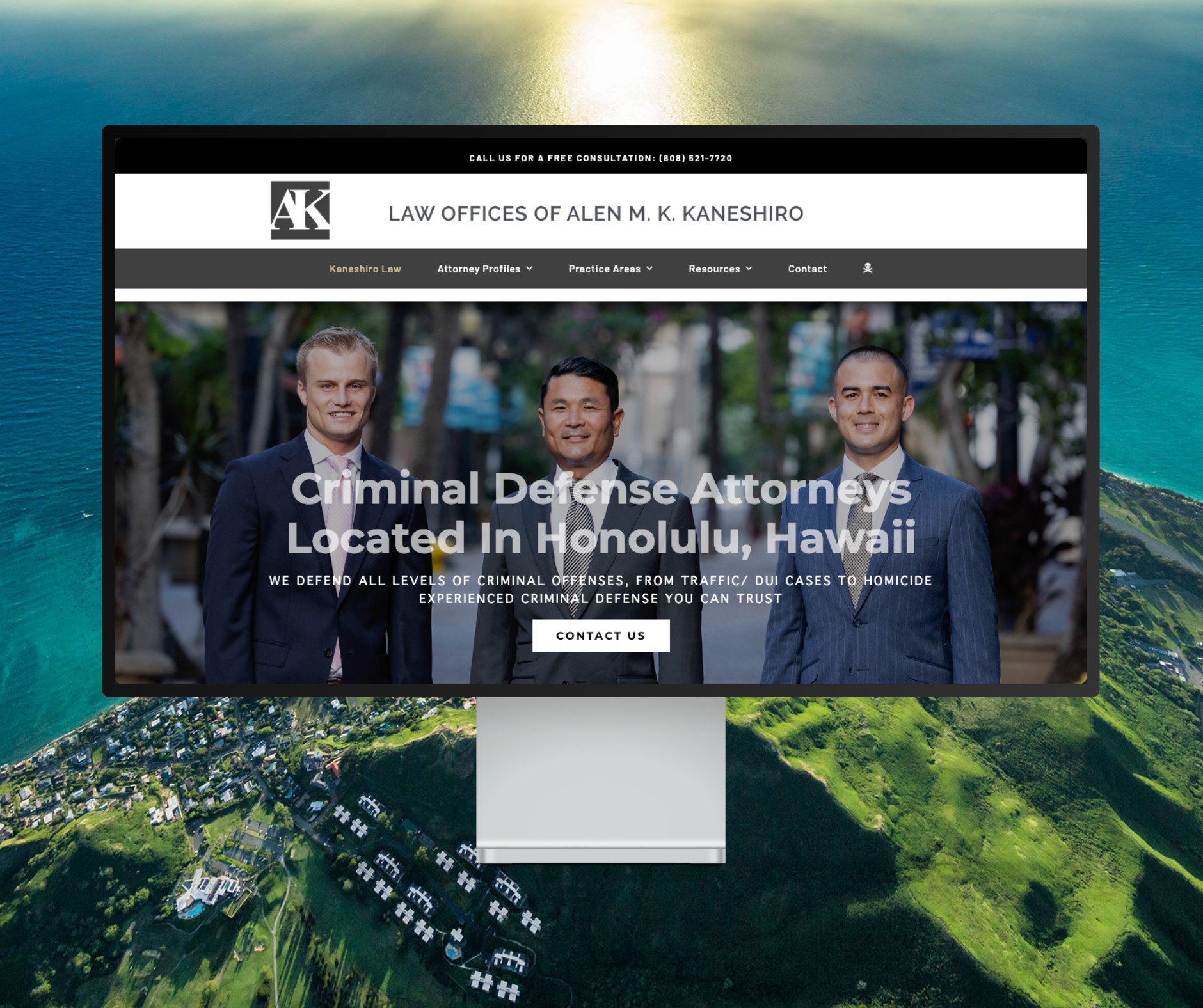
Featured Website: www.kaneshirolaw.com
Kaneshiro Law Firm, one of Hawaii’s most respected legal practices, partnered with The X Digital three years ago for a complete website redesign. Since then, we’ve maintained an ongoing relationship—handling updates, optimizations, and technical support around the clock. Our dedicated team ensures they’re never without assistance, while our enterprise-grade hosting provides 24/7 uptime monitoring and reliability. Kaneshiro Law Firm is one of many long-term clients who trust us to keep their digital presence running flawlessly.