

When you’re competing for the same customers in the same town, your website might be the only thing standing between you and the business down the street. We’ve seen it hundreds of times: two local companies offer nearly identical services at similar prices, but one consistently gets more calls, more form fills, and more foot traffic. The difference? Their website actually works.
If you’re in a market with real local competition—whether you’re a plumber in Phoenix, a dentist in Denver, or a contractor in Charlotte—web design matters more than you think. It’s not about looking pretty (though that helps). It’s about being the business someone chooses when they’re comparing three open tabs on their phone while sitting in their driveway.
In this article, we’ll walk through exactly why web design for competitive markets is different, what local buyers actually care about when they’re choosing between you and your competitors, and the specific design elements that turn browsers into customers when the stakes are high.
Why Local Competition Changes Everything About Web Design
When you’re the only game in town, your website just needs to exist. It can be slow, outdated, and confusing—and you’ll still get calls because people have no other option. But the moment there are two, three, or ten businesses offering what you offer within a 20-mile radius, your website becomes a competitive battleground.
Here’s what changes when local competition enters the picture: your website isn’t competing against some abstract standard of “good design.” It’s competing against the specific sites your potential customers are looking at right now, in real time, while they’re deciding who to call first.
The Three-Tab Test
Most local buyers don’t choose a business from a single website visit. They open multiple tabs—usually three to five—and compare. They’re looking at your homepage next to your competitor’s homepage. Your contact page next to theirs. Your service descriptions, your photos, your reviews, your pricing transparency (or lack of it).
In that moment, web design for local services becomes a direct comparison. Does your site load faster? Is it easier to find a phone number? Do your photos look more professional? Is your value proposition clearer? These aren’t abstract design principles—they’re the actual criteria someone uses to eliminate options and pick up the phone.
First Impressions Happen in Milliseconds
Research shows people form opinions about websites in 50 milliseconds. That’s not enough time to read anything—it’s purely visual and visceral. When someone is comparing you to a competitor, that snap judgment matters even more because they’re making it twice, side by side.
If your site looks outdated, cluttered, or unprofessional compared to the business in the next tab, you’re often eliminated before they even read your headline. We’ve watched this happen in user testing: a prospect opens three contractor websites, immediately closes one because “it just looks old,” and only seriously considers the other two.
The Design Elements That Create Competitive Advantage
So what actually matters when you’re trying to stand out from competitors online? After building and hosting websites for hundreds of local businesses over 20+ years, we’ve identified the specific design elements that consistently win head-to-head comparisons.
Speed Wins Before Content Does
If your site takes four seconds to load and your competitor’s loads in one second, they’ve already started reading while you’re still showing a white screen. Speed is the most underrated competitive advantage in local business web design.
Google found that 53% of mobile users abandon sites that take longer than three seconds to load. But in competitive markets, the threshold is even lower because the prospect has other options already open. They won’t wait—they’ll just switch tabs.
We host over 100 client sites on our managed infrastructure specifically because we’ve seen how much speed matters. A fast site doesn’t just improve user experience—it directly increases the percentage of prospects who stay long enough to become leads.
Mobile Design That Actually Works
More than 60% of local searches happen on mobile devices, often while someone is actively looking for a service right now. If your mobile site is a shrunken version of your desktop site with tiny buttons and hard-to-read text, you’re losing to competitors who built mobile-first.
Mobile design in competitive markets means:
- Click-to-call buttons prominently placed at the top of every page
- Simplified navigation that doesn’t require perfect thumb accuracy
- Fast-loading images optimized for cellular connections
- Forms that are easy to fill out on a small screen without endless zooming
- Readable text without requiring pinch-and-zoom
We’ve tested this repeatedly: when a prospect is comparing three local businesses on their phone, the one with the best mobile experience gets the call most often, even if their desktop site isn’t the prettiest.
Trust Signals That Separate You From the Pack
When someone doesn’t know you yet and is choosing between you and two other businesses, trust becomes the deciding factor. Your website needs to answer the unspoken question: “Why should I trust you over them?”
Effective trust signals include:
- Real photos of your actual team and work—not stock images that look identical to your competitor’s stock images
- Specific, verifiable credentials—licenses, certifications, years in business, number of projects completed
- Customer reviews and testimonials with full names and, when possible, photos
- Case studies or project galleries showing real results from real clients
- Professional photography that demonstrates the quality of your work
The businesses that win in competitive markets don’t just say they’re trustworthy—they prove it visually and specifically. Generic claims like “quality service since 2010” don’t differentiate you when your competitor says the same thing.
How to Stand Out When Everyone Offers the Same Thing
Here’s the uncomfortable truth about most local markets: the actual service differences between competitors are often minimal. You’re all licensed, insured, experienced, and capable of doing good work. So how does competitive advantage web design help when the underlying service is commoditized?
Clarity Beats Cleverness Every Time
When prospects are comparing multiple businesses, they don’t want to work hard to understand what you do or why you’re different. The clearest message wins.
We see businesses lose competitive battles because they tried to be clever with their homepage headline instead of clear. “Your Home’s Best Friend” doesn’t tell a prospect anything when they’re comparing you to “Licensed Plumbing Repair & Installation—Same-Day Service in Austin.”
Your homepage should answer three questions in the first five seconds:
- What do you do?
- Where do you do it?
- Why should I choose you?
The business that answers these questions most clearly and quickly usually wins the comparison, especially when the prospect is in a hurry or stressed about the problem they need solved.
Show Your Differentiators Visually
If you have genuine differentiators—whether it’s specialized equipment, unique training, a proprietary process, or exceptional warranty terms—don’t just mention them in paragraph text. Show them visually.
We worked with a local HVAC company competing against a dozen others in their market. Their differentiator was using thermal imaging cameras for diagnostics, something most competitors didn’t offer. Instead of just mentioning it, we added photos and a short video showing the technology in action. Their conversion rate from site visitors to quote requests increased by 34% because prospects could see the difference, not just read about it.
Make Contact Ridiculously Easy
In competitive markets, friction kills conversions. If a prospect has to hunt for your phone number, navigate through multiple pages to find a contact form, or fill out ten fields just to ask a question, they’ll go to the competitor who made it easier.
Best practices for low-friction contact:
- Phone number in the header of every page, clickable on mobile
- Contact form on the homepage—not hidden behind a menu click
- Simple forms asking for only essential information (name, contact method, brief description)
- Multiple contact options—phone, form, email, and increasingly, chat
- Clear response time expectations—”We’ll call you back within 2 hours during business hours”
We’ve built AI-powered chat tools like Zao Chat specifically for this reason: when a prospect visits your site at 11 PM and your competitors’ sites just have static contact forms, being able to have an immediate conversation (even with an AI assistant) creates a massive competitive advantage.
Local SEO and Design Work Together
Here’s something many businesses miss: in competitive local markets, you can’t separate web design from SEO. The design choices you make directly impact whether prospects find you in the first place.
When someone searches “emergency plumber near me” at 2 AM with a flooded basement, Google shows three local businesses in the map pack. If you’re not one of those three, your beautiful website doesn’t matter because no one sees it. But getting into that map pack requires design elements that many businesses overlook.
Design Elements That Impact Local Rankings
Google’s local ranking algorithm considers user experience signals that are directly tied to web design:
- Mobile usability—sites that work poorly on mobile rank lower in local results
- Page speed—faster sites get preference, especially for mobile searches
- Engagement metrics—if people immediately bounce back to search results, Google interprets your site as unhelpful
- Click-through rate—compelling title tags and meta descriptions (which appear in search results) drive more clicks, which signals relevance to Google
The businesses that dominate local search results in competitive markets typically have both strong SEO fundamentals and well-designed sites that keep visitors engaged. You need both—great rankings that drive traffic to a terrible website just waste the traffic.
Content Design for Local Authority
In competitive markets, content marketing isn’t optional—it’s how you demonstrate expertise and build authority that separates you from competitors who just have service pages.
But content design matters as much as content quality. A 2,000-word blog post formatted as one giant wall of text won’t get read, even if the information is valuable. Breaking content into scannable sections with clear headings, bullet points, and relevant images makes it actually useful to busy prospects comparing their options.
We use tools like Zao Flo to help clients publish consistent, well-formatted content that builds topical authority in their local market. When a prospect is researching their problem and your business has helpful, well-designed content while competitors only have basic service pages, you’re not just another option—you’re positioned as the expert.
When to Invest in Web Design (and When to Wait)
Not every local business needs to redesign their website immediately, even in competitive markets. But there are clear signals that your current site is costing you business.
You probably need a redesign if:
- Your site was built more than 4-5 years ago and hasn’t been updated
- It loads slowly (test it on a phone with a mediocre connection)
- It’s not mobile-responsive or the mobile experience is frustrating
- Your bounce rate is above 60% and average session duration is under 30 seconds
- You’re getting traffic but very few contact form submissions or calls
- You’re embarrassed to send prospects to your site
On the other hand, if your site is relatively modern, loads quickly, works well on mobile, and converts visitors at a reasonable rate, you might not need a full redesign—just strategic improvements to specific elements that create competitive advantage.
We’ve worked with clients where we improved conversion rates by 40% just by redesigning their contact forms, adding trust signals, and optimizing for speed—no full redesign required. The key is diagnosing what’s actually holding you back versus rebuilding for the sake of something new.
The Bottom Line: Your Website Is Your Silent Salesperson
In competitive local markets, your website works 24/7 as a salesperson who never takes a day off. When a prospect is comparing you to competitors at 10 PM on a Sunday, your site is making your case without you in the room.
The question isn’t whether web design matters—it’s whether your current design is winning or losing those silent sales battles happening right now while you’re focused on running your business.
At The X Digital, we’ve spent two decades building websites for businesses in competitive markets. We know what works because we’ve tested it hundreds of times across different industries and different levels of competition. If you’re losing business to competitors and suspect your website might be part of the problem, we can help you diagnose what’s actually holding you back and fix it.
Want to know how your site stacks up against your local competition? Reach out to our team and we’ll give you an honest assessment—including what you need to fix first and what can wait.
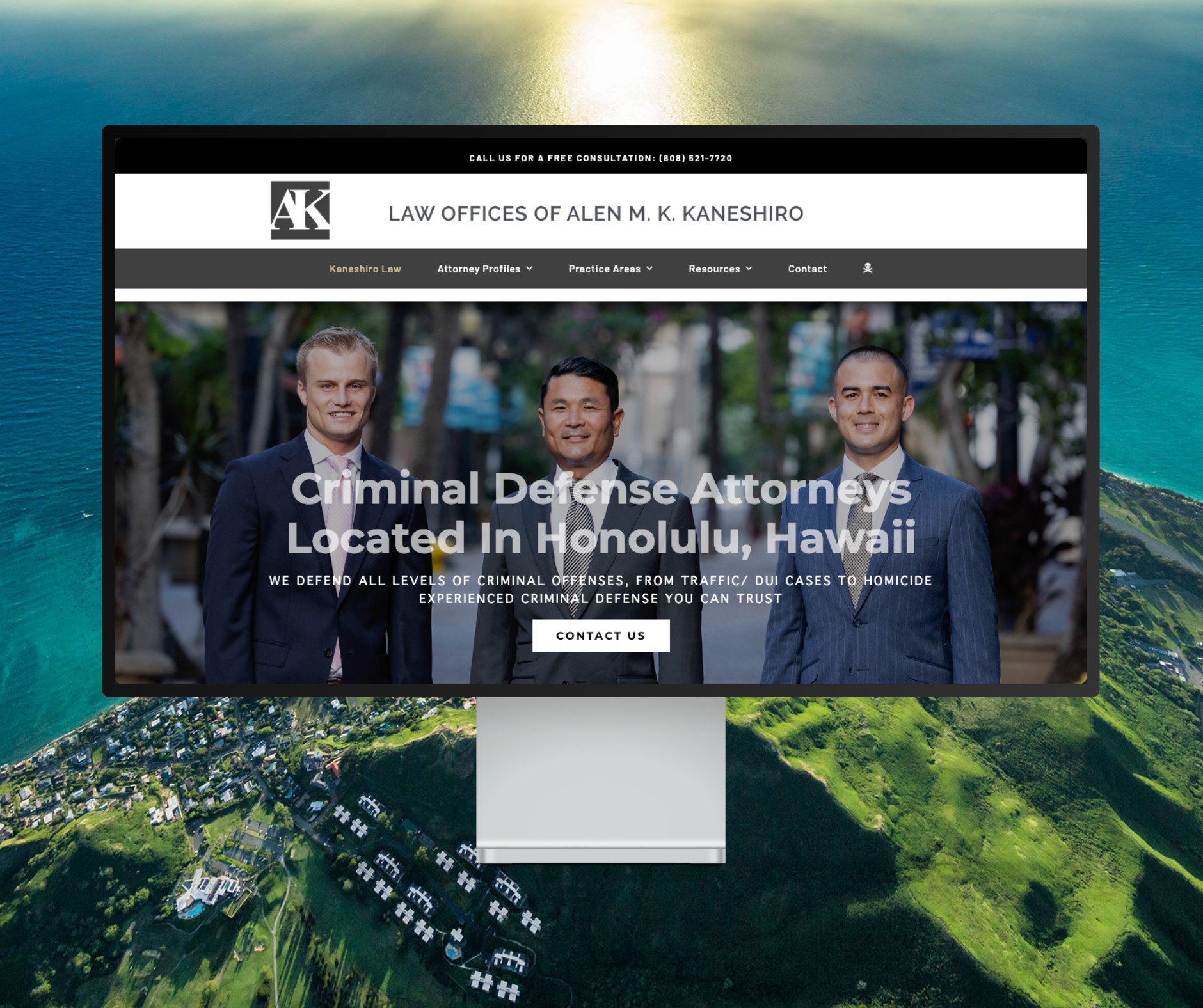
Featured Website: www.kaneshirolaw.com
Kaneshiro Law Firm, one of Hawaii’s most respected legal practices, partnered with The X Digital three years ago for a complete website redesign. Since then, we’ve maintained an ongoing relationship—handling updates, optimizations, and technical support around the clock. Our dedicated team ensures they’re never without assistance, while our enterprise-grade hosting provides 24/7 uptime monitoring and reliability. Kaneshiro Law Firm is one of many long-term clients who trust us to keep their digital presence running flawlessly.