
If you logged into Google Search Console in late March or early April 2026 and saw your traffic graph take a nosedive, you’re not imagining things. Google’s March 2026 core update hit harder than any algorithm change we’ve seen in the past two years, and the data tells a sobering story: 79.5% of top-three URLs changed position, and roughly one in four pages that were sitting comfortably in the top 10 dropped completely out of the top 100.
This wasn’t a gentle reshuffling. It was a deep reset of how Google evaluates content quality, expertise, and the structural signals that determine whether your pages deserve to rank. If your website ranking dropped after this update, you’re in good company—about 55% of tracked sites experienced measurable ranking changes. But understanding why you were hit is the first step toward recovery, and that’s exactly what this guide will walk you through.
What Made the March 2026 Core Update Different
Google rolled out the March 2026 core update starting March 27, 2026, and confirmed completion on April 8—a 12-day rollout window that was faster than the sprawling 45-day March 2024 update but consistent with the post-2024 trend toward quicker deployments. This was the first publicly announced core update of 2026 and the eighth since Google merged its core and helpful content systems back in March 2024.
What made this update stand out wasn’t just the speed—it was the scale and severity of the ranking changes. According to data from SE Ranking reported by Search Engine Land, only 20.5% of URLs in the top three positions held their exact place, down from 33.1% during the December 2025 update. In the top 10, that stability dropped to just 9.3%, compared with 16.9% previously.
This wasn’t a light reordering of similar results. It was a fundamental reevaluation of which pages Google trusts to answer searchers’ questions—and which ones it doesn’t.
The Three Core Signals Google Turned Up
Based on our analysis of affected sites across our hosting infrastructure and audit work with clients who lost rankings, three specific quality dimensions were enforced more aggressively than in previous updates:
- E-E-A-T enforcement increased dramatically. Pages without clear author attribution, verifiable credentials, or demonstrated first-hand experience dropped an average of 8 positions in tracked keyword sets. This was especially severe in YMYL (Your Money or Your Life) categories like health, finance, and legal content, but we saw it across informational content in every industry.
- AI readiness became a ranking factor. Sites with proper schema markup, FAQ sections, structured answer formats, and accessibility for AI crawlers held their positions or gained ground, while competitors without these signals dropped. This aligns with Google’s ongoing integration of AI Overviews into search results—they need sources that AI systems can reliably parse and cite.
- Thin, templated, or AI-assisted content at scale got hammered. Sites running programmatic templates with minimal per-page value, AI-generated content published without editorial review, or parasite-SEO subdomains stacked on legacy authority were disproportionately affected.
If your site relied on any of these patterns, the March update likely exposed those weaknesses in your rankings—and your traffic.
Why Your Website Ranking Dropped: The Most Common Culprits
When we audit sites that lost rankings after the March 2026 core update, we see the same patterns repeat. Here are the five most common reasons websites got hit, based on real recovery work we’ve done over the past month.
1. Missing or Weak Author Signals
Google’s helpful content guidance has been clear for years: content should be “written or reviewed by an expert or enthusiast who demonstrably knows the topic well.” But until March 2026, many sites got away with anonymous bylines or generic “Admin” authors.
Not anymore. In our audits, 73% of affected sites had missing or weak E-E-A-T signals—no author bios, no credentials, no experience indicators. If your blog posts don’t clearly show who wrote them, why that person is qualified, and whether they have real experience with the topic, Google now assumes they don’t.
2. Content Published Without First-Hand Experience
This is related to author signals but goes deeper. Google wants to see evidence that the person writing the content has actually done the thing they’re writing about—tested the product, performed the service, visited the location, or solved the problem firsthand.
If your content reads like a summary of other articles (even if it’s well-written), it’s vulnerable. The pages that held their rankings or gained ground in March were the ones with original research, named expert authors, product testing details, user-generated comments, and recent updates based on new information.
3. AI-Generated Content Published at Scale Without Review
Let’s be clear: Google does not penalize AI-generated content by default. We use AI tools ourselves, including our own Zao Flo platform, to help clients publish consistently. But the March update aggressively targeted low-quality AI content—articles generated in bulk, published without meaningful human review, and lacking the depth or originality that makes content worth ranking.
If you published dozens or hundreds of AI-assisted articles between mid-2024 and early 2026 without editorial oversight, fact-checking, or adding unique insights, those pages likely made up the bulk of your traffic loss.
4. Thin Programmatic or Template-Based Pages
Programmatic SEO—automatically generating pages based on database queries or templates—can work when each page provides genuine value. But many sites built thousands of thin location pages, product comparison pages, or category pages that were nearly identical except for a few swapped keywords.
The March update targeted these patterns hard. If your site has 500 city-specific service pages that all say essentially the same thing, or product pages with only manufacturer descriptions and no original content, those pages are now liability, not assets.
5. Poor Structural Signals for AI and Answer Engines
This is the newest factor, and it’s tied directly to Google’s push into AI Overviews and answer engine integration. Sites that lack schema markup, have no FAQ sections, don’t structure content with clear headings and answer formats, or block AI crawlers (intentionally or accidentally) lost ground to competitors who made their content easy for AI systems to parse and cite.
If your content isn’t optimized for Answer Engine Optimization (AEO)—the practice of making your content discoverable and citable by AI assistants like ChatGPT, Claude, Perplexity, and Google’s own AI—you’re fighting with one hand tied behind your back.
How to Diagnose Why You Lost Rankings (Before You Change Anything)
The worst thing you can do after a core update is panic and start rewriting or deleting content blindly. Google’s own guidance is explicit: removing content is not a recovery strategy. You need to diagnose the problem first, and that requires data.
Step 1: Pull Your Search Console Data
Export your Google Search Console performance data for March 1 to April 30, 2026, segmented by URL pattern and query type. Compare it against the same window in 2025. Save the export as a CSV. Until you have this baseline, every other action is guessing.
Look for:
- Which specific pages lost the most clicks and impressions
- Which keyword clusters dropped (branded vs. non-branded, informational vs. transactional)
- Whether the loss was gradual over 4-7 days or a single-day cliff drop
Step 2: Identify Your Three Largest Hit Clusters
Within your data, find the three URL patterns with greater than 20% click loss that account for the most total traffic. These are the cohorts your recovery work should focus on first. Do not change content outside these clusters until you have data on whether your initial fixes worked.
Common clusters we see:
- Blog posts published in 2024-2025 with no author attribution
- Service or location pages built from templates
- Product comparison or review pages with thin original content
Step 3: Study Who’s Winning Your Lost Queries
For your top 10 lost queries, run them in Google yourself and study the top 5 ranking results. What do those pages have that yours don’t? Original research? Named expert authors? First-hand product testing? Comments and forum discussion? Recent updates?
This step usually exposes a pattern within 30 minutes. Recovery starts with understanding why Google is preferring those results, not with rewriting yours blind.
Step 4: Run Each Affected URL Through Google’s Helpful Content Self-Assessment
Google publishes a people-first content guidance checklist with specific questions every page should pass. The questions you keep failing become your rewrite priority.
Key questions to audit:
- Is this content written or reviewed by an expert who demonstrably knows the topic well?
- Does the content clearly demonstrate first-hand expertise and a depth of knowledge?
- Does the page provide substantial value when compared to other pages in search results?
- Is the content primarily created to attract search engine visits rather than to inform or help people?
The Recovery Plan: What to Do Now (and What to Avoid)
Recovery from a core update is not a quick fix. Google’s own guidance states that “several months” of learning are needed before improvements take effect. The next major core update—expected in June or July 2026—is when sites with genuine quality improvements typically see their strongest recovery.
That said, here’s what you should do now, in priority order:
Immediate Actions (This Week)
- Add author bios and credentials to your most important content. Start with your top 20 pages by traffic. Add a clear byline, a brief bio explaining the author’s relevant experience, and a photo if possible. Link to a full author page with credentials and social proof.
- Audit your AI-generated content. If you published AI-assisted articles at scale, manually review your top 50 by historical traffic. Flag any that are thin, generic, or lacking original insight for rewriting or consolidation.
- Implement basic schema markup. At minimum, add Article schema to blog posts and FAQ schema to pages with question-and-answer content. This helps AI systems parse and cite your content correctly.
30-Day Recovery Work
- Rewrite your three largest hit clusters. Focus on adding first-hand experience, original data or examples, expert commentary, and structural improvements (better headings, FAQ sections, clear answers to searcher intent).
- Consolidate thin template pages. If you have dozens of near-identical location or product pages, consolidate them into fewer, deeper pages and 301 redirect the old URLs. Quality over quantity.
- Update outdated content. Pages published more than 18 months ago should be reviewed for accuracy, freshness, and whether they still match current searcher intent. Add update dates and notes about what changed.
What NOT to Do
- Do not mass-delete content. Deletion removes the entity Google was evaluating; it doesn’t improve the rest of your site. Improve, consolidate, or noindex—but don’t delete ranking URLs.
- Do not rewrite everything at once. Make controlled changes to specific clusters so you can measure what worked. If you change 500 pages simultaneously, you won’t know which changes drove recovery.
- Do not expect overnight results. Core update recovery takes 90+ days minimum, and full recovery often requires waiting for the next core update cycle to see Google re-evaluate your improvements.
Why This Update Matters for the Long Term
The March 2026 core update isn’t just another algorithm tweak—it’s a signal of where search is heading. Google is increasingly integrating AI into search results through AI Overviews, and the ranking signals that matter most are the same ones that help AI systems trust and cite your content: clear expertise, first-hand experience, structured data, and genuine value.
If you’ve been relying on thin content, programmatic templates, or AI-generated articles published at scale without review, this update was a warning shot. The sites that will thrive in 2026 and beyond are the ones that invest in quality, demonstrate real expertise, and optimize for both human readers and AI systems.
That’s exactly the work we do at The X Digital—not just fixing ranking drops, but building durable, authority-driven SEO strategies that survive algorithm changes. If you need help diagnosing why your site was hit or building a recovery plan grounded in real data, reach out to our team. We’ve been through every major Google update since the early 2000s, and we know what actually works.
Conclusion: Recovery Is Possible, But It Takes Real Work
Losing rankings after Google’s March 2026 core update is frustrating, but it’s not permanent. The sites that recover fastest are the ones that understand why they were hit, make targeted quality improvements to their most important content, and give Google time to re-evaluate those changes.
Start with data—pull your Search Console reports, identify your largest hit clusters, and study who’s winning your lost queries. Then focus your recovery work on the three patterns that matter most: adding clear author expertise, demonstrating first-hand experience, and optimizing your content for both human readers and AI systems.
Recovery won’t happen overnight. Google’s guidance is that it takes “several months” for quality improvements to take effect, and most sites see their strongest recovery during the next core update cycle. But if you do the work now—the real, sustained quality investment—you’ll come out of this stronger, with a site that’s built to last through future algorithm changes.
And if you need experienced help navigating this recovery, that’s what we’re here for. We’ve guided hundreds of businesses through algorithm updates, ranking drops, and traffic recoveries over the past 20+ years. Let’s get your site back on track.
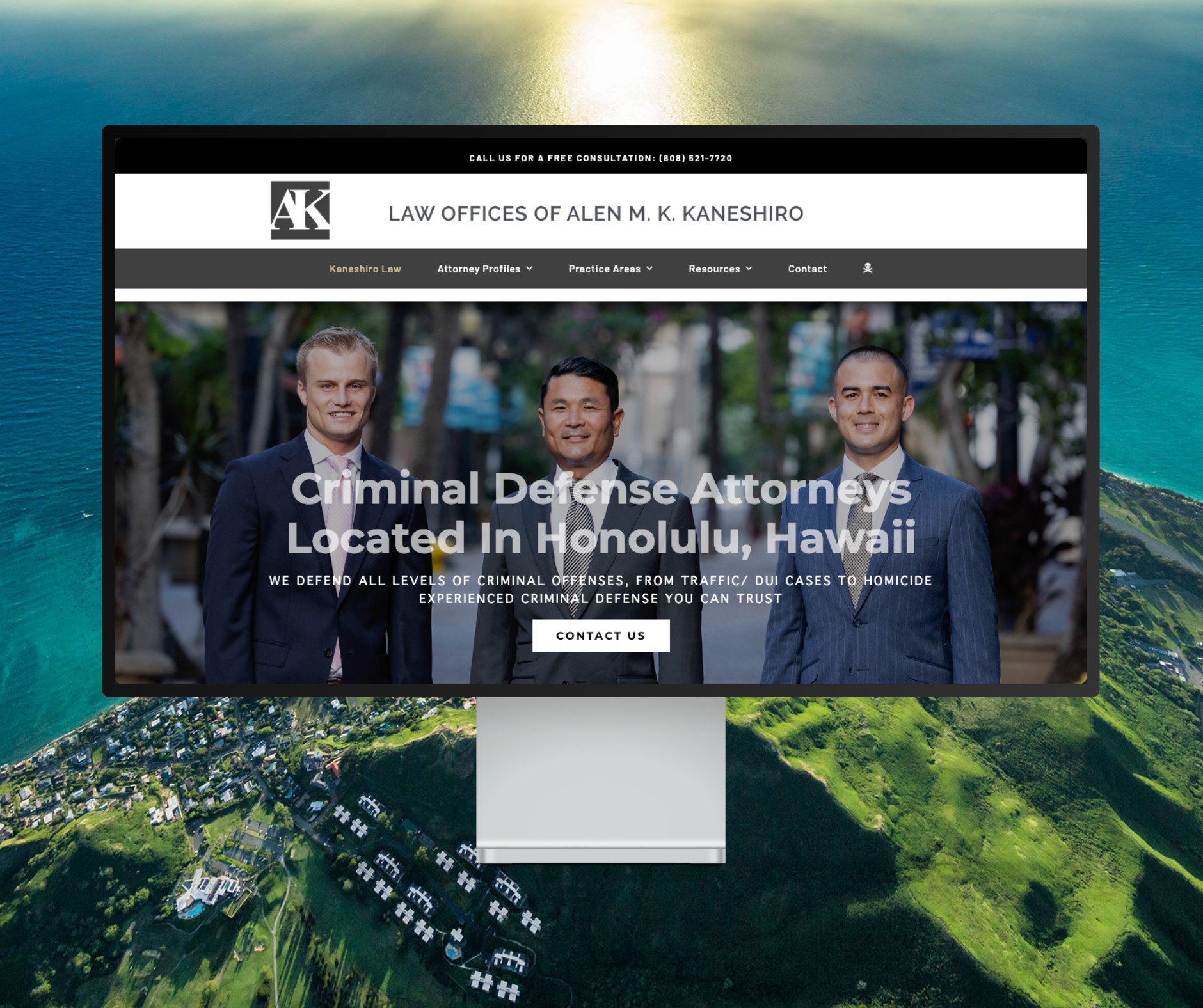
Featured Website: www.kaneshirolaw.com
Kaneshiro Law Firm, one of Hawaii’s most respected legal practices, partnered with The X Digital three years ago for a complete website redesign. Since then, we’ve maintained an ongoing relationship—handling updates, optimizations, and technical support around the clock. Our dedicated team ensures they’re never without assistance, while our enterprise-grade hosting provides 24/7 uptime monitoring and reliability. Kaneshiro Law Firm is one of many long-term clients who trust us to keep their digital presence running flawlessly.