
The headline might sound backwards, but it’s true: Google didn’t kill zero-click searches in 2026—it turbocharged them. And if your business depends on organic traffic from search, what’s happening right now isn’t just a trend. It’s a structural shift in how people find information online, and it’s rewriting the ROI of every dollar you’ve spent on SEO.
In the first four months of 2026, 68% of Google searches ended without a single click to any website. That’s up from 60% in 2024 and 49% in 2019. The culprit? AI Overviews—those AI-written summaries Google now places at the top of search results—are appearing on more than 20% of all searches and cutting click-through rates to the top organic result by nearly 60%.
If you’ve been watching your Google Analytics and wondering why traffic is down even though your rankings look fine, this is why. And if you’re still measuring SEO success purely by sessions and pageviews, you’re flying blind. Here’s what’s actually happening, what it means for your business, and—most importantly—what to do about it.
What Zero-Click Searches Really Are (And Why They’re Accelerating)
A zero-click search is exactly what it sounds like: someone types a query into Google, gets their answer directly on the results page, and never clicks through to a website. They might see a featured snippet, a knowledge panel, a “People also ask” box, or—increasingly—an AI Overview that synthesizes information from multiple sources and presents it as a complete answer.
This isn’t new. Google has been moving in this direction for a decade. Maps results, instant answers, and featured snippets have all trained users to expect answers without leaving Google. But the pace of change has dramatically accelerated in the last two years, and AI Overviews are the reason.
The Numbers Behind the Shift
According to research from SparkToro and Similarweb, the share of Google searches that result in at least one click—to any website, including Google’s own properties like YouTube or Maps—dropped 22% between June 2025 and May 2026. That’s not a sample of struggling sites. That’s data from tens of thousands of websites with professional marketers actively working to grow traffic.
When AI Overviews appear on a search result, the impact is even more severe. Ahrefs found that queries with AI Overviews see a 58% lower click-through rate for the top-ranking page compared to similar queries without them. Independent research from Pew found that searches triggering an AI summary produced a click only 8% of the time, versus 15% for searches without one.
The trend is clear, and it’s not reversing. Bain’s consumer research reports that roughly 80% of consumers now rely on zero-click results in at least 40% of their searches, cutting organic web traffic by an estimated 15–25% across the board.
What’s Driving the Change
AI Overviews are the accelerant, but they’re not the only factor. Google has spent years building features that keep users on Google. Knowledge panels answer “who is” questions. Featured snippets answer “how to” questions. Local packs answer “near me” questions. Shopping results answer product questions. And now AI Overviews answer complex, multi-part informational questions that used to require reading two or three articles.
From Google’s perspective, this makes perfect sense. The faster they can answer a question, the more searches a user will run, and the more ad inventory they can serve. From a business owner’s perspective, it means the organic traffic you used to count on is being intercepted before it ever reaches your site.
Why This Matters More Than You Think
If you’re a local contractor, an e-commerce store, or a service business that relies on your website to generate leads and sales, the zero-click era isn’t just a traffic problem. It’s a visibility problem, a brand problem, and—if you don’t adapt—a revenue problem.
The Content That’s Losing Traffic
Not all searches are created equal, and not all content is equally exposed. The queries losing clicks are overwhelmingly top-of-funnel, informational searches where an instant answer genuinely satisfies what the searcher came for. Think “how to remove a stain,” “what is a 401k rollover,” or “best time to visit Hawaii.”
These are the exact queries that used to drive awareness traffic—the kind of traffic that introduced your brand to someone early in their research process, built trust, and eventually converted weeks or months later. That funnel is now breaking at the top. The user gets their answer from Google, never visits your site, and you lose the chance to make a first impression.
The Content That’s Still Working
Branded searches, local business queries, and high-intent transactional searches are still converting to clicks much as they always did. If someone types “book a table at [your restaurant]” or “plumber near me,” they want to land somewhere and do something. AI Overviews don’t satisfy that intent.
Similarly, if someone searches for your business by name, AI Overviews are actually associated with an 18% increase in click-through rate, according to research from Amsive. The presence of an AI Overview in that context acts as social proof—it signals that your brand is established and credible enough to be cited by Google’s AI.
The takeaway: SEO still works, but the parts of SEO that work have shifted. If your entire strategy was built around ranking for informational keywords and hoping some percentage of that traffic would eventually convert, you need a new playbook.
The Hidden Opportunity: Getting Cited in AI Overviews
Here’s where it gets interesting. While AI Overviews are killing click-through rates, they’re creating a new form of visibility—and brands that get cited in those AI-generated answers are seeing surprising benefits.
Seer Interactive analyzed more than 3,000 informational queries and found that organic click-through rates collapsed from 1.76% to 0.61%—a 61% decline—on queries where AI Overviews appear. But brands cited in the AI Overview earned 35% more organic clicks and 91% more paid clicks than non-cited competitors on the same queries.
In other words, if Google’s AI mentions your brand, you win twice: once from the implied endorsement, and again from the halo effect that drives both organic and paid traffic. The challenge is that getting cited isn’t as simple as ranking well.
The Ranking-Citation Disconnect
Ahrefs analyzed 863,000 keywords and found that only 38% of pages cited in AI Overviews also rank in the top 10 organically for that query. Seven months earlier, that figure was 76%. The link between ranking and citation is breaking.
What does correlate with being cited? Genuine PR and media coverage, inclusion in independent “best of” and comparison lists, and a presence on platforms that AI systems draw on heavily—especially Reddit and YouTube. In other words, the signals that matter are increasingly off your own website.
How to Optimize for AI Citations
This is where Answer Engine Optimization (AEO) comes in. Unlike traditional SEO, which optimizes for ranking, AEO optimizes for being understood, extracted, and cited by AI systems—including Google’s AI Overviews, ChatGPT, Claude, Perplexity, and others.
Here’s what actually works:
- Structure your content for extraction. Put the direct answer in the first few sentences. Use clear headings, short paragraphs, and bulleted lists. AI models parse structure, not prose.
- Build genuine authority signals. Earn links from reputable publications. Get included in roundups and comparison articles. Contribute expert commentary to journalists. These are the signals AI models use to gauge credibility.
- Show up where AI systems look. That means Reddit threads, YouTube videos, and high-authority blogs—not just your own site. AI models train on the open web, and they weight certain platforms more heavily.
- Keep publishing the support content. Even if it doesn’t drive traffic, that FAQ page or how-to guide still influences what Google’s AI says about your category. You need to publish it so the AI gets it right.
What to Do Right Now: A Practical SEO Strategy for 2026
If you’re feeling like the ground just shifted under your digital marketing strategy, you’re not wrong. But panic isn’t a plan. Here’s what we’re advising clients to do—and what we’re doing for our own business.
Stop Using Traffic as Your Primary KPI
This is the hardest mindset shift, but it’s the most important. Traffic can fall even as revenue rises. Rand Fishkin’s advice is direct: replace traffic as a KPI and build a correlation dashboard instead. Track branded search volume, direct traffic, share of voice in AI answers, and—most importantly—revenue. Those are the metrics that matter.
Double Down on What Still Works
Branded searches, local SEO, and high-intent transactional keywords are still converting. If you’re a local business, your Google Business Profile and local pack presence matter more than ever. If you sell products, transactional keywords like “buy [product]” or “[product] near me” are still gold. Prioritize those.
Invest in Zero-Click Marketing
This means earning influence and growing brand awareness without requiring a visit to your website. Post natively on LinkedIn. Create short-form video for Instagram, TikTok, and YouTube. Engage in relevant Reddit threads. Write guest posts. Do podcast interviews. The goal is to be present where your audience pays attention, even if they never click through.
Optimize for AI Citations
Structure your most important content pages so the key information is in the first 200 words. Use schema markup. Build real authority through PR and third-party mentions. And yes, keep publishing—even if direct traffic from that content is declining, it still shapes what AI systems say about your brand and category.
Don’t Abandon Your Website
Even as traffic falls, your website remains the foundation. It’s where conversions happen. It’s where trust is built. And it’s the primary source AI systems use to understand what your business does and who it serves. Keep it fast, keep it updated, and keep publishing high-quality content—just don’t expect every piece to drive traffic the way it used to.
What This Means for Your Business in the Long Run
The zero-click era isn’t a temporary disruption. It’s the new normal, and it’s only going to intensify as AI systems get better at answering questions and more platforms adopt similar features. Google’s AI Mode—where users can have a back-and-forth conversation with Google’s AI—already shows a 93% zero-click rate and is doubling in usage every quarter.
But here’s the thing: the businesses that will thrive in this environment are the same ones that thrived before—the ones that build real brands, create genuinely useful content, and show up consistently where their audience pays attention. The tactics have changed, but the fundamentals haven’t.
SEO isn’t dead. It’s evolving. And the businesses that adapt—that optimize for AI citations, that build authority beyond their own website, that measure influence instead of just traffic—will be the ones that win in 2026 and beyond.
If your traffic is down and you’re not sure where to start, we can help. At The X Digital, we’ve been navigating these shifts with clients for more than 20 years, and we’ve built our own AI tools to stay ahead of the curve. Whether you need a full SEO audit, help optimizing for AI Overviews, or a strategy to rebuild your funnel in the zero-click era, we’ve done it before—and we can do it for you.
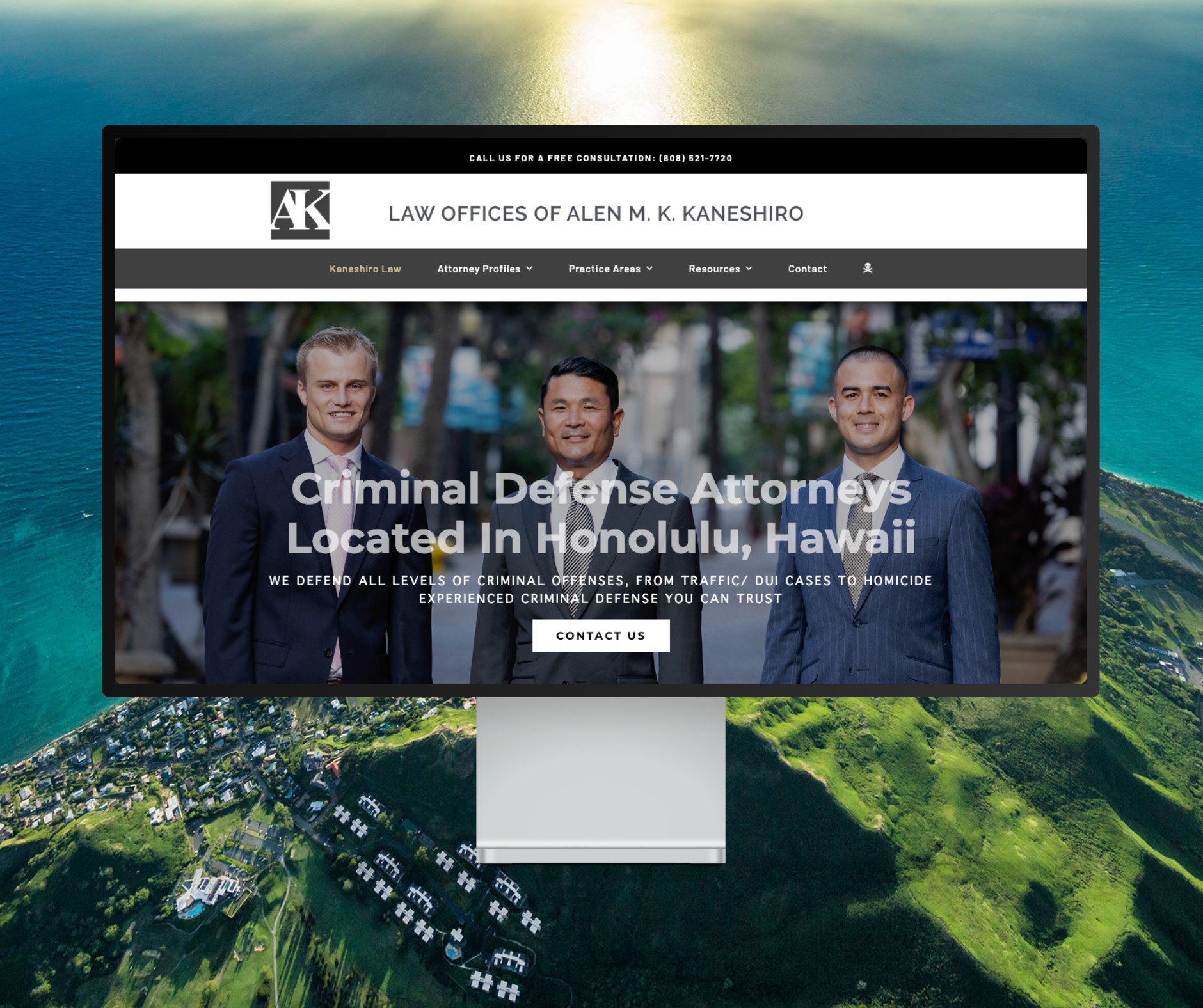
Featured Website: www.kaneshirolaw.com
Kaneshiro Law Firm, one of Hawaii’s most respected legal practices, partnered with The X Digital three years ago for a complete website redesign. Since then, we’ve maintained an ongoing relationship—handling updates, optimizations, and technical support around the clock. Our dedicated team ensures they’re never without assistance, while our enterprise-grade hosting provides 24/7 uptime monitoring and reliability. Kaneshiro Law Firm is one of many long-term clients who trust us to keep their digital presence running flawlessly.